A stiff broom and wet/dry vac are usually the better choice for mud inside a garage: sweep up grit, then vacuum the remaining slurry if your vac is rated for wet pickup. A pressure washer can spread mud, push water under walls or doors, and leave more water than you can easily recover. Use one only when the area is empty, drainage is suitable, and you can control the runoff.
Comparisons · Wed Sep 16
A stiff broom and wet vac after a muddy garage
A broom and wet/dry vac are usually the safer choice for mud inside a garage. Save the pressure washer for an empty, well-drained area where you can control runoff.
Start with the broom and wet vac indoors
Remove vehicles, stored items, and anything that could be damaged by water. Sweep or shovel up the thickest mud first; sending gritty clumps straight into a wet vac can clog the hose or fill the drum quickly.
Use a wet/dry vac only according to its manual. Set it up for wet pickup, including removing or changing the filter if the manufacturer requires it. Don’t use an ordinary dry-only vacuum for liquid. Work in small sections, and empty the drum before it reaches its fill limit.
For mud that has dried onto the floor, dampen a small area and loosen it with the broom before vacuuming. Avoid making a large puddle, especially near electrical outlets, stored chemicals, or a doorway leading into the house.
Even cleaning for suitable outdoor concrete
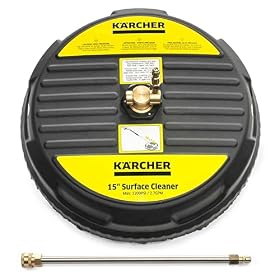 Kärcher Pressure Washer 15" Surface Cleaner Suitable for 2600 to 3200 PSIKÄRCHER
$64.99 as of
View on Amazon Dalmbox 16.5" Pressure Washer Surface Cleaner, 4-Wheel, 1/4” Quick ConnectDalmbox
$77.99 as of
View on Amazon Hourleey 30" Pressure Washer Surface Cleaner with Dual Handles, Stainless Steel Surface Cleaner with 4…Hourleey
$299.99 as of
View on Amazon
Product prices and availability are accurate as of the date/time indicated and are subject to change. Any price and availability information displayed on Amazon.com at the time of purchase will apply to the purchase of this product.
When a pressure washer makes sense
A pressure washer may be useful for a bare concrete apron or an empty garage floor that has a suitable drain and can be rinsed without water entering the home or escaping into an unwanted area. It is generally more practical outdoors, where you have room to direct runoff and collect or manage dirty water.
Before using one, check the floor finish and the washer manufacturer’s instructions. High-pressure water can damage paint, coatings, weak or deteriorated concrete, mortar, door seals, and nearby electrical equipment. Keep the spray away from outlets, switches, wall gaps, and the bottom of the garage door. Start with a wider spray pattern and more distance; increase cleaning force only if the surface and instructions allow it.
A surface-cleaner attachment can make rinsing a broad, suitable concrete area more even than using a narrow spray tip, but it still uses water and does not solve a drainage or runoff problem. Use only compatible attachments and follow their instructions.
Cleaning solution for washable concrete
 KÄRCHER Multi Purpose Pressure Washer Detergent, Highly ConcentratedKÄRCHER
$18.99 as of
View on Amazon KÄRCHER Concrete & Driveway Cleaner for Pressure Washers, up to 40 GalKÄRCHER
$17.99 as of
View on Amazon KÄRCHER Multi Purpose Pressure Washer Detergent,Removes Dirt and Grime from Fences,Siding,Patios,Driveways,Sidewalks,Concrete and More,Highly Concentrated,Makes up…Karcher
$37.53 as of
View on Amazon
Product prices and availability are accurate as of the date/time indicated and are subject to change. Any price and availability information displayed on Amazon.com at the time of purchase will apply to the purchase of this product.
Choose the cleanup method by the mess
- A few muddy footprints or a small spill: Sweep up solids and use a wet/dry vac for the remaining water and grit.
- A large amount of loose mud indoors: Shovel or sweep it out in manageable amounts first. Use the vac only for the residue, and empty it as needed.
- Dried mud on a sealed floor: Try a lightly dampened section and a stiff broom, then recover the dirty water with a wet/dry vac.
- A muddy outdoor apron or washable concrete area: A pressure washer may be appropriate if the surface can handle it and runoff can be controlled.
- Oil, fuel, or an unknown chemical mixed with the mud: Don’t wash it toward a drain or use a pressure washer to spread it. Follow the product’s cleanup directions and local disposal requirements.
Keep water and grit under control
Work from the cleanest part of the floor toward the mud, and avoid pushing dirty water under the garage door or into wall openings. Keep cords and electrical equipment away from wet areas; unplug equipment before changing filters or emptying it, as its manual directs. If water is near outlets, damaged wiring, or other electrical equipment, stop and get qualified help rather than continuing to spray or vacuum.
For a pressure washer, choose a nozzle and working distance appropriate to the surface, and test a small inconspicuous spot first. Don’t use a narrow, concentrated spray close to the floor. If dirty water cannot be contained or drained appropriately, use the broom-and-vac approach instead.
FAQ
Can I use a pressure washer inside my garage?
Usually, a broom and wet/dry vac are safer for indoor mud cleanup. A pressure washer can send water under walls or doors and create more runoff than you can recover. Consider one only if the garage is empty, the floor can handle it, and drainage and runoff are controlled.
Should I sweep mud before using a wet/dry vac?
Yes. Sweep or shovel up thick mud and grit first to reduce the chance of clogging the hose or filling the drum quickly. Use the vac only for the remaining slurry, with its wet-pickup setup configured as its manual specifies.
Can a pressure washer damage a concrete garage floor?
It can damage weak or deteriorated concrete and may strip coatings or paint. Follow the washer and surface instructions, begin with a wide spray at a greater distance, and test an inconspicuous spot before cleaning a larger area.