Running a pressure washer without water can damage its pump, but it does not always mean the entire pump is ruined. The repair cost depends on whether the damage is limited to seals or valves, whether the pump can be rebuilt, and whether a compatible replacement is available. Ask for an itemized quote for parts, labor, and any diagnostic or shipping charges, then compare the installed repair cost with replacing the washer.
Price & Buying · Sun Sep 20
Cost to Replace a Pressure Washer Pump After Running It Dry
A pump that ran without water may need new seals, a rebuild, or complete replacement. The total cost depends on the pump type, parts availability, labor, and whether the replacement fits your washer.
What determines the replacement cost?
There is no reliable one-size-fits-all price: pressure washer pumps and service rates vary widely. These factors have the biggest effect on the final quote:
- Pump design and serviceability: Some pumps have replaceable components or rebuild options; others are more practical to replace as a complete assembly.
- Parts availability: The exact pump may be difficult to source, especially for an older or less common washer. A substitute is only suitable if it matches the machine.
- Labor and shop charges: Ask whether the quote includes diagnosis, removal and installation, and testing. A minimum service charge can make a small repair uneconomical.
- Shipping and taxes: These can change the total when the correct part is not locally available.
- Warranty coverage: Check the washer and pump warranty terms. Damage from running without water may not be covered, but only the manufacturer or seller can confirm coverage for your unit.
Replacement pump for a specific pressure washer
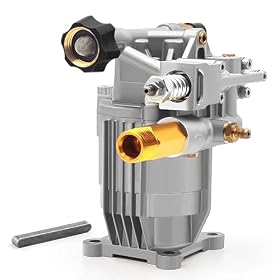 2800–3100 PSI Horizontal Pressure Washer Pump 3/4" Shaft 3100 PSI 2.5GPMEZJOB
$56.99 as of
View on Amazon TOOLCY Pressure Washer Pump 3/4" Shaft, 2600-3400 PSI, 2.5 GPMTOOLCY
$54.13 as of
View on Amazon Hochspuel 1" Shaft Triplex Pressure Washer Pump 4300 PSI 4.4 GPM Replacement Power Washer Pump…Hochspuel
$176.99 as of
View on Amazon
Product prices and availability are accurate as of the date/time indicated and are subject to change. Any price and availability information displayed on Amazon.com at the time of purchase will apply to the purchase of this product.
Get a useful repair quote
Before requesting a quote, find the washer’s make, model, and serial number. Ask the repair shop or parts supplier to confirm the pump’s compatibility using those details, not just its advertised pressure rating.
A compatible replacement may also need to match the pump’s drive arrangement, mounting, shaft dimensions, operating speed, flow, and pressure requirements. A pump that physically attaches but does not match the washer can perform poorly or create a safety or damage risk. Follow the washer and pump manufacturers’ specifications.
Request an itemized estimate covering:
- Whether the shop recommends a seal or valve repair, a pump rebuild, or full pump replacement—and why.
- The exact part and whether it is new, rebuilt, or otherwise described by the supplier.
- Labor, diagnosis, shipping, taxes, and any testing charges.
- The warranty on both the part and the repair.
Replacement machine if pump repair is uneconomical
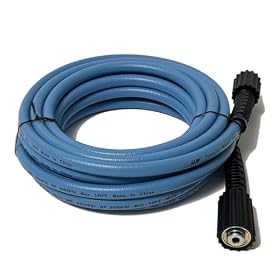 LULUW 25FT 1/4-inch High Pressure Washer Hose,3600PSI M22 14mm Replacement Power Washer Hose for Most…LULUW
$16.99 as of
View on Amazon FQRANBO 7108366 Pressure Washer Pump Manifold Replacement Kit Compatible with Simpson Cleaning Manifold for 510020…FQRANBO
$53.99 as of
View on Amazon ELEGRP G1215PA2 G20PASR Patented Auto-Monitoring GFCI Replacement Plug Assembly, Auto Reset 15 Amp Non-Grounded 2…ELEGRP
$18.99 as of
View on Amazon
Product prices and availability are accurate as of the date/time indicated and are subject to change. Any price and availability information displayed on Amazon.com at the time of purchase will apply to the purchase of this product.
Repair the pump or replace the washer?
Compare the full installed repair quote with the cost of a suitable replacement washer, including any accessories you would need to replace. Pump repair is more attractive when the washer is otherwise in good condition, the correct pump is available, and the repair has a clear warranty. Replacing the washer may make more sense when the pump is unavailable, other major components are also worn, or the repair total approaches the cost of a comparable new machine.
Do not choose a pump by price alone. Confirm compatibility for the exact washer model and consider whether the repair is supported by the manufacturer or a qualified service shop.
Before assuming the pump is burnt out
Running dry can overheat pump seals and internal parts, but weak or absent pressure can also come from a water-supply problem, a clogged inlet screen, an air leak, or a blocked nozzle. With the washer switched off and unplugged—or with the spark-plug lead disconnected on a gas model—turn off the water and release pressure according to the manual before inspecting it.
Check that the water supply is on and adequate, the inlet screen is clear, connections are secure, and the nozzle is not blocked. Do not run the washer to test it unless the manual’s startup procedure is followed and water is flowing through the pump. If it still leaks, makes abnormal noises, or will not build pressure, stop using it and have the pump assessed. Avoid opening a pressurized pump or attempting electrical or engine work beyond your experience.
FAQ
Does running a pressure washer dry always destroy the pump?
No. It can overheat seals and damage internal parts, but the extent of damage varies. Check the water supply, inlet screen, connections, and nozzle first; a repair professional can determine whether the pump needs a rebuild or replacement.
Can I replace just the pressure washer pump?
Often, but the replacement must be compatible with the exact washer. Confirm the drive, mounting, shaft dimensions, speed, pressure, and flow requirements using the manufacturer’s information or a qualified parts supplier.
Is it worth replacing a pressure washer pump?
It can be worthwhile if the washer is otherwise sound and the repair quote is substantially below the cost of a comparable replacement. Compare the complete installed cost, parts warranty, and condition of the rest of the machine.