A pressure washer can’t work properly if your garden faucet supplies water too slowly. Before buying or using a machine, measure the flow through the hose you’ll connect and compare that result with the washer’s stated water-supply requirements. If the supply falls short, choose a washer with a lower flow requirement or address the restriction—don’t try to make the pump run on too little water.
PSI & GPM · Wed Sep 23
Matching GPM to a Garden Faucet That Barely Flows
A pressure washer needs a steady water supply, not just a faucet with good-looking pressure. Measure the flow through your hose, then compare it with the washer manufacturer’s inlet requirements.
Measure the faucet’s usable flow
Test the faucet with the same hose you plan to use for the pressure washer. A faucet’s flow can look adequate without a hose but drop because of a long, narrow, kinked, or restricted hose.
- Open the faucet fully and run water through the hose for a few seconds.
- Direct the hose into a container with a known volume, such as a 1-gallon bucket.
- Time how long it takes to fill the container. Repeat the test to check that the flow is steady.
- Calculate gallons per minute (GPM): divide the gallons collected by the time in seconds, then multiply by 60.
For example, filling a 1-gallon container in 30 seconds works out to 2 GPM. This is a measurement of the supply through that hose under the test conditions—not a pressure washer rating.
For a more representative check, test while other water-using fixtures are operating as they normally would during cleaning. If the flow varies, use the lower, repeatable result when deciding whether the supply is sufficient.
Pressure washer suited to a limited water supply
 Greenworks 1700 PSI (1.2 GPM) Electric Pressure WasherGreenworks
$99.97 as of
View on Amazon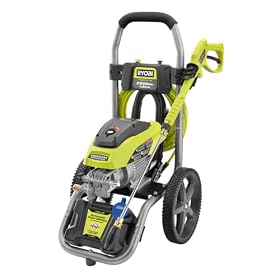 RYOBI 2500 PSI 1.2 GPM High Performance Cold Water Electric Pressure WasherRYOBI
$327.91 as of
View on Amazon Imdot Electric Pressure Washer 5000PSI Max 4.0GPM Portable Washer, BlueImdot
$159.99 as of
View on Amazon
Product prices and availability are accurate as of the date/time indicated and are subject to change. Any price and availability information displayed on Amazon.com at the time of purchase will apply to the purchase of this product.
Compare your result with the washer’s requirements
Check the owner’s manual or manufacturer specifications for the required inlet flow and any minimum or maximum inlet pressure. Use those instructions rather than assuming the washer’s advertised output GPM is the exact amount your faucet must deliver. If the manufacturer does not give a clear inlet-flow requirement, contact them before using a supply that seems marginal.
A measured flow that only just meets a stated minimum may leave little room for variation in household water use or hose restrictions. A steady supply comfortably above the minimum is preferable. If your faucet cannot provide that, look for a pressure washer whose requirements fit the measured supply.
PSI and GPM describe different things: PSI is pressure, while GPM is water volume per minute. A faucet that seems forceful at an open hose end may still deliver too little volume for a particular washer. Don’t choose by PSI alone.
Replacement water-supply hose if the current hose is restrictive or damaged
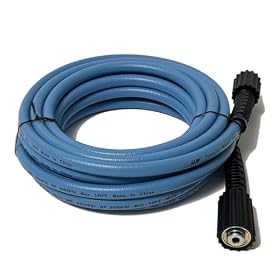 LULUW 25FT 1/4-inch High Pressure Washer Hose,3600PSI M22 14mm Replacement Power Washer Hose for Most…LULUW
$16.99 as of
View on Amazon Washing Machine Hoses 4ft 2 Pack, Burst Proof Stainless Steel Washer HosesAzeziann
$9.49 as of
View on Amazon Simpson Cleaning 40224 Morflex Series 3300 PSI Pressure Washer Hose, Cold Water Use, Inner Diameter,…SIMPSON
$25.71 as of
View on Amazon
Product prices and availability are accurate as of the date/time indicated and are subject to change. Any price and availability information displayed on Amazon.com at the time of purchase will apply to the purchase of this product.
Check for restrictions before changing machines
If your measured flow is unexpectedly low, check the simple causes first:
- Hose: Straighten kinks and check for crushing, damage, or a restrictive connector. Try a shorter or less restrictive hose if available, then repeat the bucket test.
- Faucet: Make sure it is fully open. If other nearby faucets or fixtures also have weak flow, the restriction may be in the home’s water supply rather than the pressure-washer hose.
- Inlet screen or filter: If the washer is already connected, shut it off and disconnect it according to the manual. Check the inlet screen for debris and clean it only as instructed. A clogged screen can restrict water entering the machine.
- Setup: Confirm the hose is connected to the washer’s water inlet, not its high-pressure outlet, and follow the manual’s startup and water-supply instructions.
Do not remove safety components, exceed the manufacturer’s inlet-pressure limits, or throttle the supply to reduce the washer’s flow. A pressure washer that is starved of water can overheat or damage its pump.
If the faucet still cannot supply enough water
Use a pressure washer whose specified supply requirements suit your available flow, or have a persistent household plumbing restriction assessed by a qualified professional. A storage tank or other alternate supply is only appropriate if the pressure washer manufacturer allows that arrangement and the setup can deliver the required flow and inlet pressure continuously. Don’t assume a tank will work simply because it contains enough water.
If the supply meets the manual’s requirements but the washer still surges or loses pressure, stop using it and check the manual for inlet and troubleshooting steps. Persistent trouble may require service. Never run the pump without water or keep operating it when the supply is inadequate.
FAQ
How do I calculate faucet flow in GPM?
Collect a known volume of water and time how long it takes. Divide the gallons collected by the number of seconds, then multiply by 60. Test through the hose you plan to use with the pressure washer.
Should my faucet’s GPM be higher than the pressure washer’s GPM?
Follow the washer manufacturer’s stated inlet-flow requirement; don’t assume its advertised output GPM is the exact required faucet flow. A steady supply comfortably above the stated minimum is preferable.
Can I use a buffer tank with a weak garden faucet?
Only if the pressure washer manufacturer permits it and the tank arrangement can maintain the required inlet flow and pressure. Confirm compatibility before connecting or operating the washer.
Can I reduce a pressure washer’s water use by partly closing the faucet?
No. Restricting the inlet can starve the pump and cause damage. Use the washer as directed or choose a model with requirements suited to your supply.