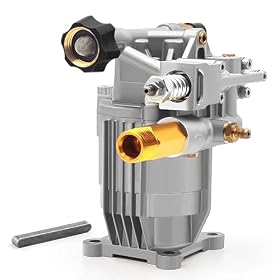
A pump replacement makes sense when the washer is otherwise sound and the repair quote is clearly below the cost of a comparable complete unit. Compare the full repair bill—not just the pump price—with replacement cost and compatibility.
The short answer
Replace the pump when the washer is in good condition, a compatible pump is available, and the total repair cost—including labor and any needed parts—is comfortably less than buying a comparable machine. Replacing the whole unit is usually the simpler choice when the pump is hard to source, the repair approaches the cost of a new washer, or the engine, motor, frame, or other major parts are also worn.
There is no useful one-size-fits-all price: pump type, machine compatibility, labor, and local parts availability can change the total substantially. Get a repair quote and compare it with a complete pressure washer that has similar pressure and flow, rather than comparing the pump’s purchase price with the new machine’s sticker price.
Product prices and availability are accurate as of the date/time indicated and are subject to change. Any price and availability information displayed on Amazon.com at the time of purchase will apply to the purchase of this product.
Compare the full repair cost with a comparable washer
A pump’s listed price is only part of the repair. Ask whether the estimate includes labor, seals or fittings, shipping, and any other parts needed to complete the job. If you plan to install it yourself, account for the correct tools and the possibility that a failed or incompatible part cannot be returned.
For the replacement-unit comparison, look for a machine suited to the same jobs. Consider both PSI and GPM: PSI is pressure, while GPM is water flow. A higher advertised PSI alone does not mean the new washer will perform better for your needs. Also compare the included hose, spray gun, and nozzles, since replacing missing or incompatible accessories can change the overall value.
A repair is more attractive if the washer is otherwise dependable and the pump is the only major problem. A new unit is more attractive if several costly parts are failing or the repair total is close to the cost of an equivalent washer.
Complete pressure washer for replacing the machine
Product prices and availability are accurate as of the date/time indicated and are subject to change. Any price and availability information displayed on Amazon.com at the time of purchase will apply to the purchase of this product.
Check pump compatibility before buying
Pressure washer pumps are not universal. Before ordering, use the washer’s make and model information and confirm compatibility with the machine manufacturer or a qualified parts supplier. Check the pump’s mounting pattern and shaft configuration, along with its rated PSI, GPM, and operating speed. The unloader and connections also need to match the washer’s setup.
Do not choose a pump solely because its pressure rating is higher. The engine or motor, drive arrangement, and other components must be suitable for the replacement pump. If compatibility cannot be confirmed, ask a repair shop to identify the correct part before spending money.
Factor in the washer’s condition and warranty
Look over the rest of the machine before approving a pump repair. On a gas washer, consider the engine’s condition and whether it starts and runs properly. On an electric washer, check for damage to the cord, switch, or motor housing without opening energized equipment. For either type, inspect the frame, hose, gun, and fittings for damage or leaks.
Check the owner’s manual and warranty terms before disassembly or repair. The warranty may cover a qualifying failure, and unauthorized work could affect coverage. If the machine is under warranty, contact the manufacturer or authorized service provider first.
A practical decision rule
Choose a pump replacement when the rest of the washer is in good shape, the correct pump is confirmed, and the complete repair quote is meaningfully lower than a comparable new unit.
Choose a new washer when the pump is unavailable, compatibility is uncertain, other major components need work, or the repair total is close to replacement cost.
Get another opinion when the diagnosis is unclear or the repair estimate does not explain which parts and labor it includes.
Before any inspection or repair, follow the owner’s manual. Shut the washer off, disconnect its power source, turn off the water, and release pressure as directed by the manufacturer. Do not open or work on a pressurized pump. If the repair involves electrical components, engine work, or pump removal you are not equipped to handle, use a qualified service professional.
FAQ
Is it worth replacing a pressure washer pump?
It can be worthwhile if the washer is otherwise in good condition, the replacement pump is confirmed compatible, and the full repair cost is clearly below the cost of a comparable new unit. Include labor and related parts in the comparison.
Can I put a higher-PSI pump on my pressure washer?
Do not assume a higher-PSI pump will fit or work safely. The mounting, shaft, operating speed, flow, unloader, and the washer’s engine or motor all need to be compatible. Confirm the correct replacement with the manufacturer or a qualified parts supplier.
Should I repair a pressure washer that is still under warranty?
Check the warranty and contact the manufacturer or an authorized service provider before disassembling the washer. Coverage and rules for repairs vary by product and warranty terms.