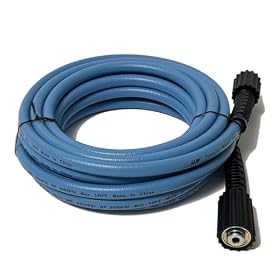
A pressure washer that pulses or loses pressure may not be getting enough water. Check the inlet screen, hose diameter and length, faucet flow, and connections before suspecting the pump.
If your pressure washer pulses, surges, or loses pressure, its water supply may be too restricted. A narrow, long, kinked, or partly blocked garden hose can limit the water reaching the pump. Check the washer’s manual for its required inlet flow and hose size before changing parts; don’t run the pump without an adequate water supply.
Confirm the hose is on the water inlet
The supply hose is the ordinary garden hose running from the faucet to the washer’s water inlet. It is different from the high-pressure hose that runs from the washer to the spray gun. A problem with the high-pressure hose is not fixed by changing the garden hose.
Turn the washer off before inspecting connections. For an electric unit, disconnect power; for a gas unit, stop the engine. Squeeze the trigger to release pressure before handling the connections, and follow the manufacturer’s instructions.
Check the inlet screen and hose
Inspect the inlet screen. With the water off and the supply hose disconnected, check the small screen or filter at the washer’s inlet for grit, scale, or debris. Clean it as the manual directs. Replace a damaged screen rather than running without it.
Look over the full hose. Straighten kinks and check for crushing, leaks, or a damaged connector. A hose that is too long or has a small inside diameter can restrict flow, especially when the washer needs a higher water volume.
Check the hose specification. Use the diameter and maximum length recommended in the washer’s manual. Many machines use a standard garden hose, but requirements vary; a larger-diameter hose may help on a long run, but it cannot make up for a weak water source.
Do not confuse hose diameter with the pressure rating of the washer’s high-pressure hose. The supply hose needs to deliver enough water, not withstand the pump’s outlet pressure.
Product prices and availability are accurate as of the date/time indicated and are subject to change. Any price and availability information displayed on Amazon.com at the time of purchase will apply to the purchase of this product.
Check faucet flow and setup
Open the faucet fully and make sure the supply hose is connected directly and securely. Avoid restrictive adapters, partly closed valves, or adding a narrow extension. If you are unsure about the source’s flow, disconnect the hose from the washer and briefly direct it into a bucket. Estimate the flow from the volume collected over a measured time, then compare it with the washer’s stated water requirement. Keep water away from electrical connections and do not operate the washer during this check.
Reconnect the supply, turn on the water, and let it flow through the washer with the machine off until the water runs steadily and air is cleared. Then operate the washer as directed in its manual. If the problem remains, check for loose inlet connections or damaged seals that could admit air or leak water.
Product prices and availability are accurate as of the date/time indicated and are subject to change. Any price and availability information displayed on Amazon.com at the time of purchase will apply to the purchase of this product.
When to replace a hose or seek service
Replace a hose that is split, crushed, badly corroded at its fittings, or still restricts flow after kinks and faucet limitations are ruled out. Choose a replacement that meets the pressure washer manufacturer’s specified diameter and length guidance.
If the faucet and hose provide the required flow, the inlet screen is clear, and the connections are sound but the washer still pulses or has weak output, stop using it and consult the manual or a qualified service technician. The pump may need inspection; continuing to run it with inadequate water can cause damage.
FAQ
What size garden hose does a pressure washer need?
Follow the pressure washer’s manual for the required hose diameter and maximum length. Requirements vary, and a long or narrow hose can restrict flow even if it fits the faucet and washer.
Can a small water supply hose damage a pressure washer?
Insufficient water can make a washer pulse or run improperly, and operating a pump without enough water can damage it. Turn the unit off if the supply is inadequate and correct the restriction before using it again.
Will a larger garden hose always fix a pressure washer that pulses?
No. A larger hose may help if the hose itself is restricting flow, but it will not fix a clogged inlet screen, a weak faucet supply, a kink, or a washer problem. Check the manual’s flow requirements and inspect the entire supply path.