The PSI you need depends on what you’re cleaning: delicate surfaces need low pressure, while durable concrete can often handle more. As a starting point, look around 1,200–1,900 PSI for vehicles and delicate cleaning, about 1,500–2,500 PSI for many home surfaces, and about 2,500–3,000 PSI for tougher concrete cleaning. These are broad ranges, not guarantees—use the surface and pressure washer manufacturer’s guidance, and begin with the lowest effective setting.
PSI & GPM · Thu Sep 17
What PSI You Actually Need for a Pressure Washer
Choose pressure washer PSI based on the surface and cleaning task, not the highest number on the box. Use the lowest effective pressure and account for GPM, nozzle, and distance.
Start with the surface, not the machine {#start-with-the-surface}
More PSI is not automatically better. Excessive pressure can strip paint, splinter wood, damage siding, or force water behind seals. On delicate surfaces, use a wider spray pattern, keep the nozzle moving, and start farther away. Test an inconspicuous area before cleaning the whole surface.
| Cleaning task | Approximate starting range | Practical caution |
|---|---|---|
| Vehicles, outdoor furniture, and other delicate items | 1,200–1,900 PSI | Use a wide spray pattern and keep the nozzle at a safe distance. Avoid directing spray at seals, trim, or electrical components. |
| Siding and many general home-cleaning jobs | 1,500–2,500 PSI | Follow the siding maker’s guidance; spray downward where appropriate and avoid forcing water behind panels. |
| Decks and fences | 1,200–2,000 PSI | Wood type and condition matter. Too much pressure or a narrow jet can gouge the surface. |
| Concrete and other durable masonry | 2,500–3,000 PSI | Check for cracks, coatings, or fragile joints. A suitable surface cleaner can help clean evenly. |
The ranges overlap because surface material, condition, detergent, and technique all affect what works. Painted or weathered surfaces may need less pressure than their material alone suggests.
Choose a pressure washer for mixed home tasks
 Westinghouse ePX3050 Electric Pressure Washer, 2100 Max PSI 1.76 Max GPM with Foam Cannon and…Westinghouse
$109.00 as of
View on Amazon Imdot 2026 New 5000 PSI Electirc Pressure Washer with 3 Levels Adjustable Pressure Gun, 4…Imdot
$159.99 as of
View on Amazon Imdot 2026 New 5000 PSI Electirc Pressure Washer with 3 Levels Adjustable Pressure Gun, 4…Imdot
$159.99 as of
View on Amazon
Product prices and availability are accurate as of the date/time indicated and are subject to change. Any price and availability information displayed on Amazon.com at the time of purchase will apply to the purchase of this product.
PSI is only part of cleaning performance {#psi-and-gpm}
PSI measures pressure; GPM measures water flow. PSI helps loosen grime, while GPM helps rinse it away. For larger areas, adequate flow can make a meaningful difference even if two machines have similar PSI ratings.
When comparing machines, check whether the listing gives working (rated) PSI or only a maximum PSI figure. Maximum pressure may describe a peak rather than the pressure available during ordinary operation. Compare working PSI and GPM when both are provided, and check the manual for the machine’s operating limits.
Find a wider spray nozzle for gentler cleaning
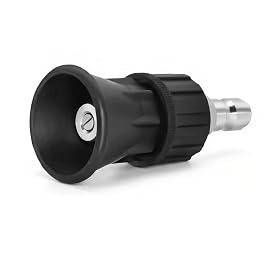 Pressure Washer Nozzle Guard, 40° 3.5 Orifice,1/4" Quick‑ConnectMINGOU
$8.99 as of
View on Amazon McKillans 40 Degree Pressure Washer Nozzle - Stainless Steel, High-Efficiency Cleaning, Durable Nozzle Guard with…McKillans
$26.97 as of
View on Amazon 7 Pack 25° Pressure Washer Nozzle Tips, 1/4 inch Quick Connect Replacement Sprayer Nozzles, 2.5…qingzhou
$7.49 as of
View on Amazon
Product prices and availability are accurate as of the date/time indicated and are subject to change. Any price and availability information displayed on Amazon.com at the time of purchase will apply to the purchase of this product.
Nozzle and distance change the pressure at the surface {#nozzle-and-distance}
A narrow spray concentrates force in a small area; a wider fan spreads it out. Use the widest spray pattern that can do the job, and move closer only gradually if cleaning is ineffective. A low-pressure soap setting is for applying detergent, not for blasting stuck-on grime.
Keep the nozzle moving rather than holding it over one spot. The pressure that reaches a surface also changes with distance, so a machine’s PSI rating does not tell you exactly how much force a particular spot will receive.
Choose a pressure washer without overbuying {#choose-a-pressure-washer}
For occasional car washing or light household cleanup, a lower-pressure unit may be the safer, more practical fit. If you routinely clean large concrete areas, prioritize enough working PSI and GPM for the job, while checking that the surfaces you own can tolerate the output.
Before buying, ask:
- What is the most delicate surface I expect to clean?
- Does the manufacturer provide working PSI and GPM, rather than only a maximum PSI claim?
- Can I use a wide spray pattern or otherwise reduce pressure for delicate work?
- Are replacement nozzles and accessories compatible with the machine?
Do not use a pressure washer on people, pets, or electrical equipment. Follow the manual, wear appropriate eye protection, and use extra caution around windows, damaged surfaces, and ladders. If you are unsure whether a surface can withstand pressure, use a gentler cleaning method or consult its manufacturer.
FAQ
Is 2,000 PSI enough for most home use?
It can be enough for many household tasks, including some siding, vehicle, and outdoor-furniture cleaning when paired with an appropriate nozzle and technique. It may be slow for large areas of tough concrete. Check working PSI and GPM, and prioritize the needs of your most delicate surface.
Is higher PSI always better?
No. Higher pressure can clean some durable surfaces faster, but it can also damage paint, wood, siding, and seals. Use the lowest effective pressure and test an inconspicuous area first.
What matters more, PSI or GPM?
Both matter. PSI is pressure and helps loosen dirt; GPM is water flow and helps rinse it away. Compare both figures when available instead of choosing by PSI alone.
Can I use a high-PSI pressure washer on a car?
A high-rated machine can sometimes be used for car washing if you select a suitable wide spray pattern, maintain distance, and avoid vulnerable areas. Follow the vehicle and washer manufacturers’ guidance; do not aim a concentrated jet at paint, seals, tires, or electrical components.