Pressure Washer for a Fence: How Much PSI and Which Nozzle?
The best pressure washer for a fence is one with adjustable pressure, a wide-angle nozzle, and enough flow for steady cleaning without stripping paint or gouging wood. Start with the lowest effective pressure and adjust only after testing an inconspicuous area.
Pressure washer for a fence
The right pressure washer for a fence should clean efficiently without removing paint, cutting into wood, or forcing water behind vinyl panels. For most residential fences, choose a washer with adjustable pressure or a low-pressure operating mode, use a 25- or 40-degree nozzle, and start several feet away from the surface. The correct setting depends on the fence material, its condition, and whether you are removing dirt, algae, mildew, or old finish.
Choose the pressure washer by fence material
Wood fences
Wood is the easiest fence material to damage. Excessive pressure can leave visible “wand marks,” expose soft grain, splinter boards, or strip stain and paint.
A compact electric pressure washer is often sufficient for a residential wood fence. Begin at the lowest useful pressure—commonly around 500 to 800 PSI at the surface—and increase gradually only if necessary. The washer’s maximum PSI is not the same as the pressure you must use.
Use a 25-degree or 40-degree spray pattern rather than a narrow 0-degree tip. A wider spray spreads the force over more of the board and is easier to control. Keep the wand moving in smooth, even passes and avoid lingering at the ends of boards, knots, joints, and damaged areas.
For an older, soft, peeling, or previously stained fence, hand cleaning with detergent and a soft brush may be safer than pressure washing.
Vinyl fences
Vinyl generally tolerates more pressure than weathered wood, but high pressure can still force water behind panels, damage seams, or mark the surface. Start with a wide-angle nozzle and a moderate setting. A pressure washer in roughly the 1,300- to 2,000-PSI range can be suitable for many vinyl cleaning jobs when used with care, but the lowest effective setting is the safer starting point.
Detergent is often more useful than extra pressure for green growth, dust, and general film. Rinse thoroughly so loosened dirt and cleaner do not dry on the vinyl.
Painted or stained fences
Paint and stain can be removed by pressure that would be harmless on newer, solid wood. Test a hidden section first. If the finish starts to lighten, flake, or develop lines, stop increasing pressure and switch to a wider spray, greater distance, or manual cleaning.
If you intend to repaint or restain the fence, pressure washing can be part of the preparation process—but it does not replace scraping, sanding, or allowing the wood to dry fully as required by the coating manufacturer.
Metal fences
Metal fencing usually needs less pressure than people expect. A wide spray can remove dirt and cobwebs without damaging the finish. Avoid directing a high-pressure stream at rusted spots, loose paint, electrical components, or joints that may allow water into hollow sections.
PSI is not the only specification that matters
PSI
PSI describes pressure. More PSI is not automatically better for a fence; excessive pressure is the main cause of surface damage.
GPM
GPM, or gallons per minute, describes water flow. Higher flow can rinse dirt and detergent faster, but it also uses more water. For a typical home fence, a modest electric washer can be easier to control than a large gas unit.
Adjustable pressure
Adjustable pressure, a pressure-control dial, or interchangeable nozzles makes a washer more useful for fence cleaning. Avoid relying on the machine’s maximum rating as your working setting.
Hose length and portability
A longer high-pressure hose can reduce the need to carry the machine repeatedly. Check that any replacement hose uses the correct fittings and pressure rating for the washer. An extension cord, if needed for an electric model, should be selected and used according to the manufacturer’s instructions; keep electrical connections away from standing water.
Product prices and availability are accurate as of the date/time indicated and are subject to change. Any price and availability information displayed on Amazon.com at the time of purchase will apply to the purchase of this product.
Which nozzle should you use?
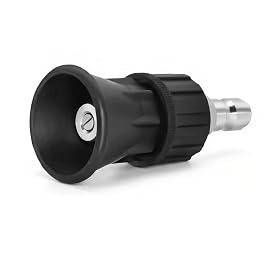
A 40-degree nozzle is the safest starting point for many fences because it produces a broad, relatively gentle spray. A 25-degree nozzle provides more cleaning force and may help with stubborn deposits on sound vinyl or solid, uncoated wood.
Avoid the 0-degree nozzle on fence boards. Its concentrated stream can gouge wood, remove finish, and leave permanent marks. Turbo or rotating nozzles can also be too aggressive for wood, paint, and weathered surfaces unless the manufacturer specifically indicates that they are appropriate and you keep them well away from the fence.
Keep the nozzle moving. Do not stop over one spot to remove a stubborn mark; use detergent, a brush, or a slightly closer pass with a wide-angle nozzle instead.
Product prices and availability are accurate as of the date/time indicated and are subject to change. Any price and availability information displayed on Amazon.com at the time of purchase will apply to the purchase of this product.
A safe fence-cleaning method
Inspect the fence. Look for loose boards, peeling paint, soft wood, open seams, cracked vinyl, rust, and unstable posts. Repair vulnerable areas before washing.
Protect nearby items. Move furniture and cover delicate plants or outdoor equipment. Keep spray away from outlets, light fixtures, gates with sensitive hardware, and neighboring property.
Dry-brush loose debris. Remove cobwebs, leaves, and loose dirt before adding water.
Apply detergent if appropriate. Use a cleaner labeled for the fence material and pressure washer. Follow its dilution and dwell-time instructions; do not let it dry on the surface.
Test a hidden area. Start with the widest nozzle and lowest practical pressure. Check for discoloration, raised grain, finish removal, or water intrusion.
Wash in manageable sections. Work from top to bottom when rinsing, using overlapping passes. Maintain a consistent distance and keep the wand moving.
Rinse completely. Cleaner left on the fence can leave residue or affect paint and stain.
Let the fence dry. Wood may need substantial drying time before painting or staining. Follow the coating manufacturer’s moisture and preparation requirements.
Product prices and availability are accurate as of the date/time indicated and are subject to change. Any price and availability information displayed on Amazon.com at the time of purchase will apply to the purchase of this product.
Common mistakes to avoid
Using the narrowest nozzle because the fence looks dirty: concentrated spray can damage the surface faster than it removes dirt.
Holding the wand too close: begin farther away and move closer in small increments.
Spraying directly into seams: water can enter behind vinyl panels or through gaps in wood construction.
Using too much detergent: stronger is not necessarily better, and residue can attract dirt.
Cleaning damaged wood aggressively: soft or rotten boards may need replacement rather than more pressure.
Ignoring runoff: detergent and dirty water can affect plants, painted surfaces, pets, and storm drains.
Starting with a gas pressure washer when a small electric unit is adequate: larger machines add weight, noise, and excess cleaning force.
When to choose a different cleaning method
Use a garden hose, soft brush, pump sprayer, or manual scrubber when the fence has delicate paint, deteriorated wood, loose components, or sensitive nearby landscaping. Pressure washing is not the best answer for every fence, particularly when the goal is to preserve an old finish rather than remove it.
A pressure washer is also not a repair tool. Replace rotten boards, stabilize loose posts, and address peeling coatings before cleaning. If the fence continues to shed paint or wood fibers at a low setting, stop rather than increasing pressure.
Bottom line
For most fence-cleaning jobs, prioritize control over maximum power. An adjustable electric pressure washer with a 25- or 40-degree nozzle is a practical choice for many homes. Start at low pressure, test an inconspicuous section, use detergent to do more of the cleaning, and increase force only when the fence clearly tolerates it. When the material is weathered or the finish is fragile, hand cleaning may prevent more damage than a stronger washer can solve.
FAQ
What PSI is best for washing a wood fence?
Start at the lowest effective setting, commonly around 500 to 800 PSI at the surface, and adjust gradually only after testing a hidden area. Weathered, soft, painted, or stained wood may require less pressure or hand cleaning.
Can I use a 0-degree nozzle on a fence?
It is best to avoid a 0-degree nozzle on fence boards. Its concentrated stream can gouge wood, strip finishes, and leave permanent marks. Start with a 40-degree nozzle and use a 25-degree nozzle only when the surface is sound and the wider spray is not sufficient.
Is an electric pressure washer enough for a fence?
For many residential wood and vinyl fences, a compact electric washer is sufficient and easier to control. The needed capacity depends on the fence size, soil level, water supply, and material condition; maximum PSI alone should not determine the choice.
Should I use detergent when pressure washing a fence?
Detergent can help remove algae, mildew, and embedded film without requiring excessive pressure. Use a product approved for the fence material and pressure washer, follow its dilution instructions, and rinse it completely before it dries.