Replacement O-rings before the first leaky weekend
A pressure washer O-ring is inexpensive, but the wrong size or material can leak immediately. Learn which seals to identify, how to measure them, and when replacing an O-ring is safer than replacing a fitting or pump.
A leaking pressure washer connection does not always mean the pump has failed. In many cases, a flattened, cracked, missing, or incorrectly sized O-ring is the cause. Replacing the seal before a busy cleaning weekend can prevent water loss, poor performance, and damage around the fitting—but only if the replacement matches the connection and the manufacturer’s requirements.
Find the leaking connection first
Turn the pressure washer off, unplug an electric model, shut off the water supply, and release pressure from the gun and hose before inspecting it. Do not try to tighten or remove a pressurized connection.
Dry the fittings, reconnect the water supply, and briefly pressurize the washer while keeping your hands away from high-pressure spray. Look for the first point where water appears. Common O-ring locations include:
A leak at a threaded fitting may require thread sealant, a replacement fitting, or a manufacturer-specified seal rather than an O-ring. Do not assume every visible leak can be fixed with a thicker O-ring.
Choose the correct replacement O-ring
Match the size
O-rings are sized by their inside diameter and cross-section. A seal that is slightly too large may pinch or extrude when the fitting is tightened. One that is too small may stretch, flatten, or fail to seal.
The best approach is to identify the pressure washer’s model and consult its parts diagram or owner’s manual. If the original O-ring is available, compare it with a known replacement using the dimensions supplied by the seller or manufacturer. Do not rely only on a listing described as “universal.”
If the old seal is swollen or flattened, its current dimensions may not represent its original size. The fitting’s groove or the equipment’s parts documentation is a more reliable reference.
Match the material
Material affects resistance to water, detergents, heat, and lubricants. Common seal materials include:
Nitrile rubber (NBR/Buna-N): Common for general water and oil resistance, but compatibility depends on the specific detergent and temperature.
EPDM: Often suitable for water-based applications and some detergents, but it is not compatible with every petroleum-based lubricant.
Viton or FKM: Used for certain chemical and temperature requirements, but it is not automatically the correct choice for every pressure washer.
Use the material specified by the pressure washer or pump manufacturer. A premium-sounding material is not a substitute for compatibility.
Check pressure and temperature requirements
A replacement seal should be rated for the pressure, temperature, and fluid used at that connection. The pressure rating of an O-ring is affected by the groove, backup rings, clearance, fitting design, and installation—not just the rubber compound.
Do not use a low-pressure faucet or plumbing seal in a high-pressure connection unless the manufacturer specifically approves it. If the manual does not provide enough information, contact the manufacturer or use an authorized replacement part.
Product prices and availability are accurate as of the date/time indicated and are subject to change. Any price and availability information displayed on Amazon.com at the time of purchase will apply to the purchase of this product.
Replace the O-ring without damaging it
After confirming the washer is depressurized:
Remove the fitting or disconnect the hose according to the manual.
Take out the old O-ring with a blunt plastic pick or another tool that will not scratch the sealing groove.
Clean dirt, grit, and old lubricant from the groove and mating surface.
Inspect the groove for nicks, corrosion, distortion, or sharp edges.
Lightly lubricate the new O-ring only with a lubricant approved for that seal material and application.
Seat the O-ring evenly without twisting it.
Reassemble the connection by hand first, then tighten only as specified. Excessive force can crush the seal or damage plastic fittings.
Run the washer briefly and check for leaks from a safe position.
Never stretch an O-ring over a sharp thread or install it over a dirty, damaged surface. If it must pass over threads, protect the seal from cutting and follow the equipment instructions.
Product prices and availability are accurate as of the date/time indicated and are subject to change. Any price and availability information displayed on Amazon.com at the time of purchase will apply to the purchase of this product.
O-ring kits versus individual seals
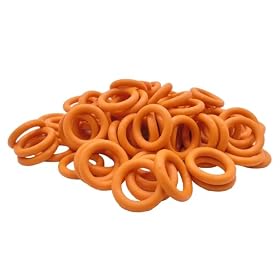
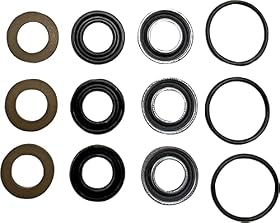
An individual replacement is usually the better choice when you know the exact connection and size. A kit can make sense when a pressure washer has several aging quick-connect seals or when the original part is difficult to identify, but the kit should still list dimensions, materials, and intended use.
Before buying a kit, check:
Whether it includes the correct inside diameter and cross-section
Whether the seals are intended for pressure washer connections rather than low-pressure plumbing
Whether the material is compatible with your detergent and water temperature
Whether it includes nozzle, hose, gun, and pump seals—or only one of those groups
Whether the listing identifies a compatible pressure washer model or part number
Avoid kits that provide no measurements or material information. A large assortment is not useful if none of the seals match the groove correctly.
Product prices and availability are accurate as of the date/time indicated and are subject to change. Any price and availability information displayed on Amazon.com at the time of purchase will apply to the purchase of this product.
When an O-ring will not solve the leak
Replace or repair the surrounding part instead of repeatedly changing the seal when:
The fitting is cracked, cross-threaded, or visibly damaged
The O-ring groove is deeply scratched or deformed
The hose end is damaged or its crimp is leaking
Water is leaking from the pump housing, shaft area, or between pump sections
The seal fails again immediately after correct installation
The connection requires a flat washer, bonded seal, or thread sealant rather than an O-ring
Pump disassembly can affect alignment, seals, valves, and warranty coverage. Follow the service manual, and have a qualified technician handle repairs when the leak is inside the pump or the correct repair procedure is unclear.
A simple pre-weekend inspection
Before storing or using the pressure washer, inspect the hose ends, gun, wand, pump fittings, and water inlet. Replace visibly flattened or cracked O-rings, but keep the replacements sealed in a clean bag away from heat and sunlight. Dirt on a spare seal can be enough to create a leak during installation.
If the washer still leaks after the correct O-ring is installed, stop using it until the connection is identified and repaired. High-pressure water can injure skin and can worsen damage to fittings or the pump.
How do I know which O-ring size my pressure washer needs?
Use the pressure washer model and parts diagram first. If that information is unavailable, identify the fitting and compare the original seal with replacement dimensions for inside diameter and cross-section. A swollen or flattened old O-ring may not provide reliable measurements.
Can I use any rubber O-ring in a pressure washer?
No. The seal must match the connection size and be compatible with the pressure, temperature, water, detergent, and lubricant used. Follow the manufacturer’s specified material and part number whenever possible.
Should I lubricate a pressure washer O-ring?
Only lightly, and only with a lubricant approved for the O-ring material and application. The wrong lubricant can swell or damage the seal. If the manufacturer says to install it dry, follow those instructions.
Why does a new O-ring still leak?
Common causes include the wrong size or material, dirt in the groove, a twisted seal, an over-tightened fitting, a damaged hose end, or a scratched sealing surface. If the leak comes from the pump housing or shaft area, an external O-ring may not be the correct repair.