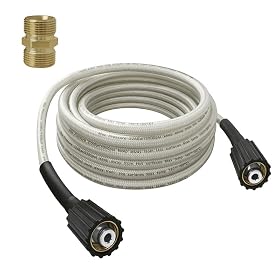
A short pressure-washer wand does not mean you should climb higher or use a stronger nozzle. The safer fix is usually a compatible telescoping or extension wand, paired with low-pressure cleaning and careful control around soffit vents.
A wand that cannot reach a second-story soffit is usually best solved with a compatible extension or telescoping wand—not a ladder, a more aggressive nozzle, or a higher-pressure setting. Soffits can contain vents and openings, so keep the spray controlled, use the lowest effective pressure, and avoid directing water upward into the attic space.
Check the pressure washer before buying an attachment
If the wand suddenly feels ineffective rather than simply too short, check the equipment first:
Inspect the nozzle. Turn off the pressure washer, relieve pressure, and remove the nozzle. Clear debris only as directed by the manufacturer. A partially blocked tip can create an uneven or weak spray.
Check the hose and inlet screen. Look for kinks, crushed sections, loose connections, or debris in the water inlet filter. A restricted water supply can reduce performance.
Look for leaks. Water escaping at the gun, hose, wand, couplers, or fittings can reduce usable pressure and make the equipment harder to control.
Confirm the setup. Make sure the correct nozzle is installed and that the machine has an adequate water supply. Do not assume a larger nozzle or a different tip will make an extension wand safer.
Check the detergent system. If you are using detergent, confirm that the pickup tube is connected and the tank or reservoir is not empty. Detergent flow is separate from the reach problem, but a blocked pickup can make cleaning appear ineffective.
Consider the pump or motor last. If the washer remains weak after the basic checks, follow the owner's manual. Stop using it if it makes unusual noises, overheats, leaks oil, or trips electrical protection. Pump or electrical repairs may require a qualified technician.
If the spray works normally at ground level and the only issue is height, an accessory is the appropriate next step.
Choose the right way to add reach
Telescoping wand
A telescoping pressure-washer wand gives additional height while keeping you on the ground. It is often the most practical choice for a second-story soffit because the length can be adjusted and stored more easily than a fixed-length pole.
Check the fully extended length, collapsed length, weight, grip design, and the maximum pressure and water temperature listed by the manufacturer. A long pole can become tiring and difficult to control, especially when the spray is aimed overhead.
Fixed extension wand
A fixed extension wand adds a set amount of reach to a compatible spray gun or wand. It can work well when you need a modest increase in height, but it may be awkward if the combined assembly becomes too long or heavy.
Do not assume that all pressure-washer fittings are interchangeable. Verify the connection type, pressure rating, temperature rating, and whether the attachment is approved for your pressure-washer model. Avoid stacking extensions unless the manufacturer specifically permits it.
Gutter or soffit-cleaning attachment
An angled gutter-cleaning attachment may help with certain roofline areas, but it is not automatically suitable for soffits. Some attachments direct water backward or upward, which can force water behind vents, fascia, or siding. Use one only when its instructions cover the material and cleaning direction involved.
Product prices and availability are accurate as of the date/time indicated and are subject to change. Any price and availability information displayed on Amazon.com at the time of purchase will apply to the purchase of this product.
Use less pressure around soffits
Soffits are not usually a surface where maximum pressure is helpful. High pressure can loosen paint, damage thin panels, drive water through ventilation openings, or push dirt into seams.
Use these practices:
Start with the lowest-pressure nozzle or setting that can remove the dirt.
Keep the spray moving rather than concentrating it in one spot.
Hold the spray at a shallow angle instead of aiming directly into vents or joints.
Begin farther away and move closer only if the material tolerates it.
Test an inconspicuous area first, especially on painted, vinyl, aluminum, or older soffits.
Use a suitable detergent and low-pressure application if the manufacturer allows it, then rinse gently.
A wide spray pattern is generally easier to control than a narrow, high-impact stream. Never use a zero-degree or similarly concentrated nozzle on a soffit unless the surface and equipment manufacturer specifically directs it.
Product prices and availability are accurate as of the date/time indicated and are subject to change. Any price and availability information displayed on Amazon.com at the time of purchase will apply to the purchase of this product.
Safety checks before working overhead
Keep both feet on stable ground and do not stand on a ladder while operating a pressure washer. The reaction force from the spray can shift your balance, and the extended wand can become difficult to control.
Before starting, inspect the area for overhead electrical lines, fragile trim, loose gutters, and people or pets. Keep electrical connections protected from spray and use the ground-fault protection required by the pressure-washer instructions. Wear eye protection and footwear with good traction.
Turn off the machine and release trigger pressure before changing nozzles, wands, or fittings. Keep the wand pointed away from people and surfaces that could be damaged while the machine is running.
Product prices and availability are accurate as of the date/time indicated and are subject to change. Any price and availability information displayed on Amazon.com at the time of purchase will apply to the purchase of this product.
When an extension wand is not the best answer
An extension may not be appropriate if the soffit is loose, badly rotted, peeling extensively, or difficult to identify as pressure-washer-safe. It is also a poor choice if you cannot maintain control of the pole at full length.
For delicate, painted, or heavily stained soffits, a ground-level soft-washing approach with a low-pressure applicator may be safer than trying to increase pressure. If the work requires reaching beyond safe control, hire a professional rather than using a ladder or improvising fittings.
If the pressure washer has a persistent loss of pressure after checking the nozzle, water supply, hose, leaks, and setup, repair the underlying problem before adding an extension. Replacing a worn accessory is reasonable when the washer operates normally and the existing wand is simply too short; replacing the entire unit is generally unnecessary unless the machine itself is unreliable or cannot support a compatible attachment.
Product prices and availability are accurate as of the date/time indicated and are subject to change. Any price and availability information displayed on Amazon.com at the time of purchase will apply to the purchase of this product.
FAQ
Can I use a pressure-washer extension wand on a second-story soffit?
Usually, yes, if the extension is rated for your pressure washer and has compatible fittings. Check its pressure and temperature limits, total length, and the manufacturer's instructions. Keep the spray low pressure and avoid directing water into soffit vents.
Should I use a ladder to reach a second-story soffit with a pressure washer?
No. Pressure-washer reaction force and hose movement can make a ladder unstable. Use a ground-operated extension or telescoping wand, or hire a professional if the area cannot be reached safely from the ground.
What nozzle should I use on a soffit?
Start with the widest, lowest-pressure spray pattern that can do the job. Test first in an inconspicuous area and avoid concentrated tips that can damage panels, paint, trim, or ventilation openings.
Why did my pressure washer become weak after adding a longer wand?
Check for a blocked nozzle, restricted water supply, kinked hose, leaking couplers, and an incorrect or oversized nozzle. A small pressure drop may occur with added length, but a major loss of performance can indicate a compatibility or equipment problem.