Best electric pressure washer: How to choose the right one
The best electric pressure washer depends on the surface, cleaning task, and balance of pressure and water flow—not just the highest PSI number. Use this guide to choose the right specifications and avoid common mistakes.
Best electric pressure washer
The best electric pressure washer is one that provides enough cleaning power for your job without making it easy to damage paint, wood, masonry, or other surfaces. For most household cleaning, compare PSI, GPM, nozzle options, hose length, electrical requirements, and portability rather than choosing by maximum PSI alone.
Electric pressure washers are usually a good fit for vehicles, outdoor furniture, patios, decks, siding, fences, and routine home maintenance. They are generally quieter, lighter, and easier to start than gas models, although they may have less maximum power and require access to a suitable electrical outlet.
Quick recommendations by job
Cars, bicycles, outdoor furniture, and windows: Choose a model with adjustable pressure or multiple nozzles. Lower-pressure control matters more than maximum output.
House siding and fences: Look for enough hose reach and a detergent option. Use a wider spray pattern and maintain a safe distance from the surface.
Patios, driveways, and walkways: Higher water flow and a compatible surface cleaner can make a bigger difference than an especially high PSI rating.
Decks and painted wood: Prioritize pressure control. Excessive pressure can strip finish, gouge soft wood, or force water beneath boards and siding.
Occasional light cleaning: A compact electric model is usually easier to store and move than a larger unit.
Large areas or heavy, frequent cleaning: An electric model may be adequate, but compare its rated performance with your workload. A gas pressure washer may be more appropriate when electrical access, runtime, or heavy-duty output is the limiting factor.
The specifications that matter
PSI and GPM
PSI, or pounds per square inch, describes pressure. GPM, or gallons per minute, describes water flow. PSI helps loosen dirt, while GPM helps rinse it away and can affect how quickly a large surface is cleaned.
A useful comparison is cleaning power, sometimes expressed as PSI × GPM. This is only a rough guide because real cleaning performance also depends on the pump, nozzle, spray pattern, distance, and water supply. Do not assume that the model with the largest advertised PSI is automatically the best choice.
Pay attention to whether specifications list maximum or rated/operating performance. Maximum figures may describe a brief peak under specific conditions, while rated figures are generally more useful for comparing normal operation. If a listing is unclear, consult the manufacturer’s specifications rather than estimating performance from marketing language.
Nozzles and pressure control
Nozzles change the spray angle and the concentration of water on the surface. Narrower spray patterns can clean aggressively but increase the risk of damage. Wider patterns are generally safer for broad surfaces and delicate materials.
Useful features may include:
Several quick-connect spray tips
An adjustable spray wand
A pressure-control dial or variable-pressure trigger
A low-pressure detergent nozzle
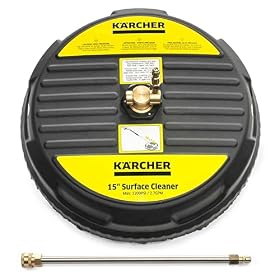
A surface-cleaner attachment for flat masonry
Never use a narrow, high-impact spray close to painted surfaces, window seals, soft wood, electrical fixtures, or damaged masonry. Start with the widest pattern, keep the wand farther away, and increase intensity only when the surface tolerates it.
Motor and electrical requirements
Electric pressure washers commonly plug into a standard household outlet, but the required amperage varies by model. Check the product’s electrical specifications and the circuit you plan to use.
Use a properly rated, outdoor-safe extension cord only when the manufacturer permits one. An undersized or excessively long cord can cause voltage drop, reduced performance, and overheating. Keep electrical connections dry, use ground-fault protection where required, and follow local electrical rules. Do not modify plugs or bypass safety devices.
Hose length and power-cord length
A longer high-pressure hose can be more useful than a longer power cord because it lets you leave the machine near a water source while moving around the work area. However, hose length, storage, flexibility, and connection type all affect convenience.
Before buying, consider:
The distance from your outdoor faucet to the cleaning area
Whether the hose connection is easy to access
How neatly the hose and cord store on the unit
Whether replacement or extension hoses are available
Whether the hose is rated for the machine’s pressure and connection system
Do not assume that every pressure-washer hose or garden-hose fitting is interchangeable.
Detergent system
A built-in detergent tank or siphon can simplify washing siding, vehicles, and outdoor furniture. Check whether the system uses a dedicated tank, an onboard container, or a hose that draws detergent from an external bottle.
Detergent is often applied through a low-pressure setting. If the machine will not draw soap, verify that the correct nozzle is installed, the detergent hose is not blocked, the valve is open, and the product is diluted as directed. Use only cleaning solutions approved for the pressure washer and the surface.
Pump and construction
The pump is a key durability component, but pump terminology can be confusing and varies by manufacturer. More important buying questions include whether replacement parts are available, what maintenance the manufacturer specifies, and whether the machine is intended for occasional or frequent use.
A compact plastic housing can be entirely suitable for light household work. A heavier frame, larger wheels, and better hose storage may be worthwhile if you regularly clean large areas or move the machine over uneven ground. Weight is not a direct measure of cleaning performance.
Product prices and availability are accurate as of the date/time indicated and are subject to change. Any price and availability information displayed on Amazon.com at the time of purchase will apply to the purchase of this product.
Features worth paying for
The most useful features depend on how you work:
Adjustable pressure: Helpful when moving between vehicles, siding, concrete, and wood.
Long high-pressure hose: Reduces the need to reposition the machine.
Large wheels or a stable frame: Makes transport easier over rough surfaces.
Onboard detergent storage: Convenient for routine washing.
Replaceable nozzles and hoses: Makes wear items easier to maintain.
Thermal or overload protection: Helps protect the motor, but it does not replace proper use.
Compact storage: Important if the washer will live in a garage, shed, or closet.
A compatible surface cleaner: Useful for cleaning flat concrete more evenly than a wand alone.
Avoid paying extra for attachments you will not use. A good hose, appropriate nozzles, and pressure control are usually more valuable than a large accessory bundle.
Product prices and availability are accurate as of the date/time indicated and are subject to change. Any price and availability information displayed on Amazon.com at the time of purchase will apply to the purchase of this product.
How to avoid surface damage
Pressure washing is not automatically safe just because the machine is electric. Before cleaning, identify the surface and check the manufacturer’s care instructions when available.
Remove loose objects and sweep away grit.
Test the widest spray pattern in an inconspicuous area.
Keep the wand moving instead of holding the spray in one spot.
Start farther from the surface and move closer gradually.
Avoid forcing water behind siding, under shingles, into vents, or around electrical components.
Use caution around window seals, caulk, damaged paint, soft wood, and crumbling mortar.
Rinse cleaning chemicals according to their instructions and protect nearby plants when necessary.
A pressure washer is not a substitute for repairing loose paint, damaged siding, deteriorated mortar, or leaking seals.
Product prices and availability are accurate as of the date/time indicated and are subject to change. Any price and availability information displayed on Amazon.com at the time of purchase will apply to the purchase of this product.
Electric versus gas pressure washers
Choose an electric pressure washer when you value lower noise, simpler starting, reduced maintenance, and easy use around the home. It is especially practical for jobs that can be completed near an outdoor outlet and faucet.
Consider gas power when you need extended operation away from electrical outlets, greater mobility across a large property, or performance suited to demanding commercial-style work. Gas models also bring fuel storage, engine maintenance, exhaust, and typically more noise.
For many homeowners, an electric model is the better match because it is easier to store and more likely to be used for routine cleaning. The right choice still depends on the size and frequency of the jobs.
Setup and use checklist
Before starting:
Connect the garden hose and turn on the water fully.
Inspect the high-pressure hose, fittings, cord, plug, and spray tip.
Purge air from the system according to the instructions.
Confirm that the selected nozzle is appropriate for the surface.
Keep electrical connections away from standing water.
Do not run the pump without an adequate water supply.
Use eye protection and suitable footwear.
Release trigger pressure before disconnecting hoses or changing accessories. Shut the unit down according to the manufacturer’s procedure instead of leaving it running unattended.
Common problems and what to check
The pressure washer has weak pressure
Check the water supply first: the faucet should be fully open, the garden hose should not be kinked, and the inlet screen should be clean. Then inspect the high-pressure hose and spray tip for kinks, blockage, or damage. A partially blocked nozzle is a common cause of weak or uneven spray.
If the machine has a detergent attachment installed, remove it temporarily and test the standard spray setup. A clogged detergent system or incorrect low-pressure nozzle can change the output.
The motor starts and stops
A thermal protector may have shut the motor down after overheating. Turn the unit off, disconnect it, and allow it to cool according to the instructions. Check for restricted water flow, a blocked nozzle, an undersized extension cord, or a circuit that is overloaded.
If the unit repeatedly trips a breaker, overheats, smells burned, or makes abnormal electrical noises, stop using it. Have it inspected by a qualified professional or follow the manufacturer’s warranty and service process.
The washer leaks
Turn off the water and release pressure before inspecting connections. Check O-rings, quick-connect fittings, the garden-hose washer, and the high-pressure hose for cuts or flattening. Replace damaged seals or hoses with parts rated for the machine.
A leak from the pump housing or an internal connection generally requires authorized service or replacement rather than improvised repair.
The detergent is not being drawn
Confirm that the machine is set to the detergent-compatible nozzle or pressure setting. Check the detergent tube for kinks or blockage, verify the pickup end is submerged, and use the recommended dilution. Some systems will not draw detergent at high pressure.
If the hose is clear and the correct setting is being used but the system still will not siphon, a replacement pickup tube or service may be needed.
When to replace the machine
A replacement pressure washer is reasonable when the pump or motor has failed, a compatible replacement part is unavailable, repair costs approach the price of a suitable new unit, or the machine no longer matches your work. Replace worn hoses, O-rings, nozzles, and filters when those are the only failed components.
Choose the replacement based on your most demanding regular job, not the largest number printed on the box. If you mainly wash cars and furniture, controllable pressure and gentle spray options matter. If you clean large concrete areas, prioritize usable water flow, hose reach, and surface-cleaner compatibility.
FAQ
What PSI is best for an electric pressure washer?
For general household cleaning, the appropriate PSI depends on the surface and the machine’s rated output. Cars, painted surfaces, and wood require more caution and pressure control, while concrete can generally tolerate more cleaning force. Use the manufacturer’s guidance and start with a wide spray pattern at a greater distance.
Are electric pressure washers powerful enough to clean concrete?
Many electric pressure washers can clean patios, sidewalks, and other household concrete, especially when paired with the correct nozzle or a compatible surface cleaner. Larger or heavily stained areas may take longer than they would with a higher-flow machine.
Is higher PSI always better?
No. Higher pressure can increase the risk of stripping paint, gouging wood, damaging mortar, and forcing water behind siding or seals. Water flow, nozzle selection, distance, and pressure control all affect results.
Can I use an extension cord with an electric pressure washer?
Only if the manufacturer allows it and the cord is properly rated for the washer’s electrical requirements and length. Use outdoor-rated ground-fault protection where required, keep connections dry, and never use a damaged or undersized cord.
Why does my electric pressure washer lose pressure?
Check the faucet, garden hose, inlet screen, high-pressure hose, and spray nozzle for restricted flow or blockage. Also verify that the detergent attachment or low-pressure nozzle is not installed when testing normal pressure. Repeated overheating, breaker trips, or internal leaks require service.