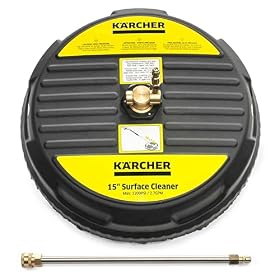
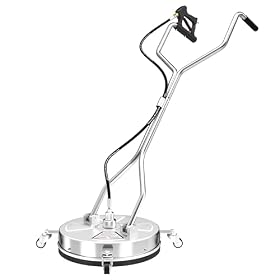
A surface cleaner is usually the better choice for washing large, flat concrete because its enclosed rotating nozzles clean a wider area more evenly. A wand remains more useful for edges, steps, stains, narrow spaces, and spot cleaning.
A surface cleaner is usually better than a pressure washer wand for large areas of concrete because it covers more ground and helps produce a more even finish. A wand is still useful for edges, corners, steps, stubborn spots, and areas where a round attachment cannot reach.
The right choice depends on the concrete’s condition, the washer’s flow rate and pressure, and how much control you need.
Surface cleaner versus wand: the quick comparison
Factor
Surface cleaner
Wand with nozzle
Large driveways and patios
Faster and more consistent
Slow, with more visible overlap marks
Edges and corners
Limited reach
Excellent control
Spot cleaning
Less precise
Better for concentrated cleaning
Risk of streaks
Lower when used correctly
Higher if the nozzle is held too close or moved unevenly
Setup
Requires a compatible attachment
Usually included with the pressure washer
Water use
Depends on the attachment and washer
Depends on the selected nozzle and washer
Best use
Open, mostly flat concrete
Detail work, steps, edges, and stains
For many concrete-cleaning jobs, the best approach is not either-or: use the surface cleaner for the main area, then switch to the wand for edges and difficult spots.
Why a surface cleaner is usually better for concrete
A surface cleaner has a housing that covers rotating spray nozzles. As the internal bar spins, the nozzles clean a circular path beneath the attachment. You move the cleaner across the slab in overlapping passes instead of manually guiding one narrow spray pattern.
This provides several practical advantages:
More even coverage: The spray height and distance from the concrete stay more consistent.
Faster cleaning: The attachment cleans a wider path than a single wand nozzle.
Fewer visible stripes: Consistent movement and overlapping passes reduce uneven bands.
Less overspray: The housing helps contain some spray compared with an exposed wand nozzle.
Less tiring detail work: You do not need to hold one spray tip at the same distance for the entire job.
A surface cleaner does not automatically prevent damage. Moving too slowly, using an attachment that is not compatible with the washer, or cleaning damaged concrete can still create problems.
Surface cleaner attachment for large concrete areas
Product prices and availability are accurate as of the date/time indicated and are subject to change. Any price and availability information displayed on Amazon.com at the time of purchase will apply to the purchase of this product.
When a wand is the better choice
A wand is more useful when precision matters than speed. Use it for:
Concrete edges along walls, garage doors, and curbs
Corners and narrow strips that a round cleaner cannot reach
Steps, vertical risers, and irregular surfaces
Oil marks, algae patches, and other isolated stains
Pre-rinsing loose dirt and debris
Rinsing away loosened residue after using a surface cleaner
Testing a small inconspicuous area before cleaning the entire slab
A wand also gives you more control over the spray pattern. A wider fan pattern is generally more forgiving for broad rinsing, while a narrower pattern can provide more cleaning force in a small area. Narrow, concentrated spray patterns require extra caution because holding them too close or staying in one place can etch or scar concrete.
Product prices and availability are accurate as of the date/time indicated and are subject to change. Any price and availability information displayed on Amazon.com at the time of purchase will apply to the purchase of this product.
The specifications that matter
Pressure and flow rate
Do not choose a surface cleaner based on PSI alone. The attachment must be compatible with both the pressure and the gallons-per-minute (GPM) output of the pressure washer.
PSI affects the force available at the spray tips.
GPM affects how much water the cleaner can use and how quickly it can rinse away dirt.
The surface cleaner’s stated operating range should match the pressure washer’s actual output.
Follow the surface cleaner and pressure washer manufacturers’ compatibility guidance. An attachment designed for a higher-flow machine may perform poorly on a low-flow washer, while using an unsuitable attachment can affect cleaning performance or equipment operation.
Cleaning width
A wider surface cleaner can cover more concrete per pass, but it is not always the best match for a small or low-flow pressure washer. The usable cleaning width should be appropriate for the machine’s output and the size of the area.
For a small patio, a compact attachment may be easier to maneuver. For a large driveway, a wider compatible attachment can reduce cleaning time. The manufacturer’s recommended washer range matters more than width by itself.
Nozzle type and replacement parts
Surface cleaners use spray tips or nozzles that can wear, clog, or become damaged. Use replacement parts specified for the attachment rather than guessing based only on appearance.
If the cleaner spins unevenly, leaves circular marks, or produces a weak spray from one side, inspect the nozzles and the rotating assembly after shutting off the washer and relieving pressure. Do not reach into the attachment while it is connected to a running pressure washer.
Wheels and skirt design
Wheels can make a surface cleaner easier to guide across a driveway or patio. A skirt or enclosed housing can help control spray, but it does not make the attachment safe to use against every surface. Keep the cleaner level and follow the instructions for its intended orientation.
Concrete-cleaning pressure washer nozzle set for detail work
Product prices and availability are accurate as of the date/time indicated and are subject to change. Any price and availability information displayed on Amazon.com at the time of purchase will apply to the purchase of this product.
How to avoid streaks and concrete damage
Sweep first. Remove loose gravel, leaves, and debris that could interfere with the cleaner or become projectiles.
Check for damage. Avoid directing high-pressure water at loose edges, crumbling concrete, exposed aggregate that is already shedding, or failing joints.
Test an inconspicuous area. Check for color change, surface erosion, and the appearance of a clean or dirty boundary.
Keep the cleaner level. Tilting can change the spray distance and cause uneven cleaning.
Move at a steady pace. Stopping over one spot can create a noticeably cleaner circle or damage the surface.
Overlap each pass slightly. Gaps between passes can leave dirty stripes.
Work in manageable sections. Do not let dirty runoff dry on adjacent concrete.
Rinse thoroughly. Use the wand to rinse remaining debris, edges, and nearby surfaces.
Avoid using a narrow, concentrated wand spray as a general-purpose concrete-cleaning pattern. It may remove dirt quickly in one small area while leaving lines, etching, or contrasting clean spots around it.
A practical cleaning sequence
1. Prepare the area
Move vehicles, furniture, planters, and other obstacles. Sweep the concrete and protect nearby items from overspray. Keep people and pets away from the work area.
2. Apply detergent only when appropriate
If the washer and surface allow detergent use, choose a product suitable for the concrete and follow its label. Detergent can help with organic grime and general soil, but it does not replace proper rinsing or mechanical cleaning.
3. Rinse loose dirt
Use the wand with a suitable fan spray to remove loose debris before bringing out the surface cleaner.
4. Clean the open area with the surface cleaner
Keep the attachment flat, use overlapping passes, and maintain a steady walking speed. Follow the attachment’s instructions for starting, stopping, and operating distance.
5. Detail with the wand
Clean edges, corners, steps, expansion joints, and isolated stains. Use a wider spray pattern and greater distance when you are unsure how the concrete will react.
6. Final rinse
Rinse dirty water away before it dries. Inspect the slab after it dries, since wet concrete can make results difficult to judge.
Troubleshooting uneven results
The surface cleaner leaves stripes
Check that you are overlapping passes and moving at a consistent speed. Make sure the cleaner is level and that both spray nozzles are installed correctly and free of blockage. A mismatch between the attachment and the pressure washer can also reduce cleaning consistency.
The cleaner does not spin properly
Turn off the pressure washer, disconnect the water supply as directed, and relieve pressure before inspecting it. Check for debris around the rotating bar, clogged tips, damaged nozzles, or a worn rotating component. Replace only parts approved for that attachment.
The wand cleans better than the surface cleaner
The wand may be concentrating more force into a smaller area, but that does not mean it is the better tool for the entire slab. Confirm the surface cleaner is compatible with the washer and that its nozzles are in good condition. If the cleaner is too large for the washer’s flow rate, it may perform poorly.
The concrete looks patchy after cleaning
Patchiness may come from uneven passes, different ages or finishes in the concrete, old stains, repairs, or areas that have absorbed contamination. Let the surface dry before judging the final result. Do not keep increasing pressure indefinitely; stronger cleaning can damage the slab without removing a stain that has penetrated the material.
Water and dirt collect under the attachment
Check that the cleaner is being used on a suitable surface and that its skirt, wheels, or housing are correctly assembled. Use the wand to manage runoff and avoid allowing dirty water to dry on nearby areas.
Which one should you buy?
Choose a surface cleaner if you regularly clean driveways, patios, sidewalks, garage floors, or other broad, mostly flat concrete areas. It is the better productivity and consistency tool when its pressure and flow requirements match your washer.
Choose or keep a wand if you mainly clean small areas, steps, edges, narrow paths, vertical surfaces, or individual stains. A wand is also essential as a companion tool even when you buy a surface cleaner.
If the attachment and pressure washer are compatible, a surface cleaner is generally the most practical upgrade for large concrete jobs. If the concrete is badly cracked, spalled, painted, sealed, or otherwise delicate, follow the surface manufacturer’s guidance and use a conservative approach. For uncertain or valuable surfaces, consider advice from a qualified cleaning professional before using high pressure.
FAQ
Is a surface cleaner better than a wand for a concrete driveway?
Usually, yes. A compatible surface cleaner covers a wider path and helps maintain a more even spray distance, making it faster and less likely to leave wand-shaped stripes. Use the wand for the driveway edges, corners, and spot treatment.
Can a surface cleaner damage concrete?
Yes. It can damage weak, deteriorated, or improperly finished concrete if used with excessive pressure, an incompatible washer, a clogged or damaged nozzle, or slow stationary passes. Test a small area and follow the manufacturer’s instructions.
Do I still need a wand if I have a surface cleaner?
Yes. A wand is useful for rinsing, edges, corners, steps, vertical areas, and stains that the round surface cleaner cannot reach.
What matters more for a surface cleaner, PSI or GPM?
Both matter. PSI affects spray force, while GPM affects water delivery and rinsing capacity. Match the cleaner to the pressure washer’s specified pressure and flow range instead of choosing by PSI alone.
Why does my surface cleaner leave circular or striped marks?
Common causes include moving too slowly, stopping in one place, failing to overlap passes, tilting the cleaner, clogged or mismatched nozzles, and using an attachment that does not match the washer’s output.