For a small patio, a compact electric pressure washer with moderate pressure is usually easier to control than a large gas model. The right choice depends on the patio material, dirt type, water access, and whether you plan to use a surface cleaner.
A compact electric pressure washer is usually the best choice for a small patio. Look for roughly 1,500 to 2,000 PSI and enough water flow for steady cleaning, rather than buying the highest-powered machine available. Excessive pressure can damage mortar, strip paint, etch softer concrete, and force water into joints.
The best pressure washer for your patio depends on its surface. Sound concrete can generally handle more cleaning power than brick, pavers, painted concrete, wood, or older surfaces with loose joints. Start with the widest nozzle and lowest effective pressure, then increase carefully only if needed.
What to look for in a small-patio pressure washer
Moderate pressure and usable water flow
PSI describes water pressure, while GPM describes water flow. PSI helps break up stuck-on dirt; GPM helps carry that dirt away. For a small residential patio, moderate PSI with consistent flow is typically more useful than extreme PSI.
A compact electric unit in the 1,500–2,000 PSI range is a practical starting point for many patios. Check the manufacturer’s specifications carefully because some products advertise maximum or “peak” PSI rather than the pressure delivered during normal operation. A higher advertised number does not automatically mean faster or safer cleaning.
Choose more cautiously if the patio is made from:
Painted or sealed concrete
Brick with aging mortar
Sand-set pavers
Natural stone
Wood or composite decking
Concrete with cracks, spalling, or exposed aggregate
Electric power for convenience
For a small patio, an electric pressure washer usually makes more sense than a gas model. Electric units are generally lighter, quieter, and easier to start, and they do not require fuel or engine maintenance. Their power cord and water hose limit mobility, but those limitations are rarely serious for a small cleaning area.
Before buying, confirm that you have a suitable outdoor electrical outlet and a hose long enough to reach the work area. Use the manufacturer-approved extension-cord guidance if an extension cord is permitted. Keep electrical connections away from standing water, and use a properly protected outdoor circuit.
A gas pressure washer may be reasonable when the patio is large, heavily stained, far from electrical power, or part of a broader property-cleaning routine. For one small patio, its extra weight, noise, exhaust, and maintenance are often unnecessary.
Match the pressure washer to the patio surface
Concrete
Sound, unpainted concrete can usually tolerate more pressure than other patio materials, but it can still be etched by holding the nozzle too close or using a narrow spray pattern. A wide-angle nozzle is the safer starting point. Keep the wand moving and make overlapping passes rather than concentrating the spray in one spot.
Oil, rust, algae, and embedded grime may require detergent and dwell time rather than simply increasing PSI. A pressure washer can remove loose dirt without necessarily removing every deep stain.
Pavers and brick
Pavers and brick need care around joints. A narrow, powerful spray can remove joint sand or weaken older mortar. Use a wider spray, avoid directing water straight into joints, and test an inconspicuous area first.
If the patio uses polymeric joint sand, follow the joint-sand manufacturer’s cleaning and re-sanding instructions. Cleaning may require replacing material that is washed out.
Natural stone
Natural stone varies widely in hardness and porosity. Slate, limestone, sandstone, and other softer or more porous materials may be damaged by aggressive pressure or harsh detergents. Confirm the stone-care guidance before cleaning, use the lowest effective setting, and test first.
Painted or sealed surfaces
Pressure can lift paint, remove sealer, or expose the surface underneath. Use a broad spray pattern, maintain more distance, and avoid assuming that a powerful machine is better. If the coating is already peeling, pressure washing may make the problem worse.
Wood and composite surfaces
If the “patio” includes a wood deck, use a lower-pressure approach and keep the nozzle moving with the grain. A pressure washer can gouge wood quickly. Composite decking also has manufacturer-specific cleaning instructions, so check those before using a pressure washer.
Compact electric pressure washer for patio cleaning
Product prices and availability are accurate as of the date/time indicated and are subject to change. Any price and availability information displayed on Amazon.com at the time of purchase will apply to the purchase of this product.
Nozzles and accessories that matter
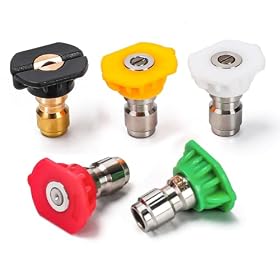
Wide-angle nozzle
A wide spray pattern distributes force over a larger area and is the safest starting point for most patio surfaces. The exact color and angle coding can vary, so follow the pressure washer manufacturer’s instructions rather than relying only on nozzle color.
Narrow-angle nozzle
A narrow spray can remove stubborn marks but increases the risk of surface damage. Use it sparingly, keep it farther from the surface than you might expect, and do not use it on fragile materials unless the surface manufacturer allows it.
Surface cleaner
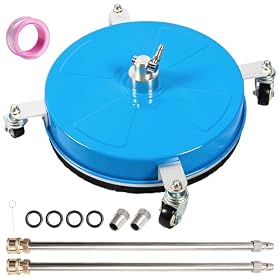
A pressure-washer surface cleaner can be useful on a small concrete patio because its enclosed rotating spray bars clean more evenly than a handheld wand. It can reduce striping and overspray, but it must be compatible with the pressure washer’s connection and operating range.
A surface cleaner is less appropriate for loose-joint pavers, fragile brick, soft stone, or damaged surfaces unless its instructions specifically allow that use. It also will not remove every stain by itself; detergent and pretreatment may still be necessary.
Detergent tank or soap applicator
Detergent can help with algae, mildew, greasy soil, and organic buildup. The pressure washer’s detergent system may apply soap at low pressure, followed by a clean-water rinse. Use only a detergent approved for pressure washers and suitable for the patio material.
Avoid allowing detergent to dry on the surface, nearby plants, glass, or metal. Protect landscaping and rinse thoroughly according to the detergent label.
Pressure washer surface cleaner for concrete patio
Product prices and availability are accurate as of the date/time indicated and are subject to change. Any price and availability information displayed on Amazon.com at the time of purchase will apply to the purchase of this product.
How to choose without damaging the patio
Use this practical decision process:
Identify the surface. Concrete usually offers more tolerance than brick, pavers, stone, paint, or wood.
Check its condition. Avoid aggressive cleaning on loose joints, cracks, flaking coatings, soft stone, or crumbling concrete.
Choose moderate power. A compact electric unit around 1,500–2,000 PSI is a sensible range for many small patios.
Prioritize control. Adjustable pressure, interchangeable nozzles, and a manageable wand are more valuable than maximum PSI.
Check the hose and cord arrangement. The machine is less useful if you cannot reach the entire patio safely.
Consider a surface cleaner for sound concrete. It can make results more uniform, provided the accessory matches the machine.
Test first. Clean a hidden area, let it dry, and inspect for etching, color change, coating loss, or loosened joint material.
Product prices and availability are accurate as of the date/time indicated and are subject to change. Any price and availability information displayed on Amazon.com at the time of purchase will apply to the purchase of this product.
A safe cleaning method
Sweep away loose debris before connecting the pressure washer. Cover or move delicate items, protect nearby plants, and make sure windows, doors, outlets, and vents are not being directly sprayed.
Apply an appropriate detergent if needed, allowing it to work for the label-specified time without drying. Begin with a wide spray and stand farther away from the surface. Keep the wand moving in consistent passes. Work from the area farthest from the drainage point toward the point where dirty water can leave safely.
Do not use the pressure washer from a ladder, point the spray at people or animals, or direct high-pressure water at electrical equipment. Wear eye protection and suitable footwear. Stop if the surface starts to pit, shed coating, lose joint sand, or show an unexpected color change.
Product prices and availability are accurate as of the date/time indicated and are subject to change. Any price and availability information displayed on Amazon.com at the time of purchase will apply to the purchase of this product.
When a small pressure washer is not the right choice
A pressure washer may not solve severe oil contamination, deep rust, deteriorated concrete, widespread efflorescence, or a failing sealer. These problems may need specialized cleaners, mechanical repair, resealing, or professional service.
If the patio is valuable, fragile, heavily damaged, or made from a material you cannot identify, confirm the cleaning method with the surface manufacturer or a qualified professional before using pressurized water.
Bottom line
For most small patios, choose a compact electric pressure washer with moderate pressure, a wide-angle nozzle, and adjustable or easily controlled spray. A unit around 1,500–2,000 PSI is a practical starting point for sound concrete, while brick, pavers, natural stone, painted surfaces, and wood require a more cautious setting and technique. Buy for control, compatible accessories, and safe reach—not the highest PSI number on the box.
FAQ
How much PSI do I need to clean a small patio?
Many small patios can be cleaned with a compact electric pressure washer in the roughly 1,500–2,000 PSI range. Use lower effective pressure for brick, pavers, natural stone, painted surfaces, wood, and any damaged material, and follow the surface manufacturer’s guidance.
Is a 2,000 PSI pressure washer too powerful for a patio?
Not necessarily, but the pressure can still damage a patio if the nozzle is too narrow, the wand is held too close, or the spray stays in one place. Start with a wide-angle nozzle at a greater distance and test an inconspicuous area first.
Should I use a surface cleaner on a small patio?
A surface cleaner can provide more even results on sound concrete and may reduce striping from a wand. Check that it is compatible with your pressure washer, and use caution on loose-joint pavers, brick, soft stone, or damaged surfaces.
Can pressure washing remove patio stains?
It can remove loose dirt and some organic buildup, but deep oil, rust, mineral deposits, and old discoloration may require a suitable pretreatment or specialized cleaning method. Increasing pressure is not always the safest or most effective solution.