The best pressure washer for a deck is usually an adjustable electric model with moderate pressure, a useful detergent system, and compatible nozzles. Learn what PSI and GPM you need and how to avoid damaging deck boards.
The best pressure washer for a deck is usually a compact electric model with adjustable pressure and a flow rate suited to light- and medium-duty cleaning. A deck does not need the highest PSI available: excessive pressure can strip wood fibers, damage soft boards, remove coatings, or leave visible lines in composite materials.
For most residential decks, prioritize pressure control, the correct nozzle, and steady technique over maximum power. A gas pressure washer can make sense for a very large or heavily neglected deck, but it also increases the risk of surface damage if used too aggressively.
What to look for in a deck pressure washer
Moderate, adjustable pressure
Look for a washer that lets you reduce pressure for delicate surfaces rather than forcing you to use its maximum output. The appropriate setting depends on the deck material, its condition, and the manufacturer’s cleaning instructions.
As a general starting point:
Composite decking: Use the lowest effective pressure and follow the decking manufacturer’s instructions. Some composite boards can be damaged by concentrated spray or excessive heat.
Soft wood, such as pine or cedar: Use especially conservative pressure. Soft grain can fur, splinter, or show wand marks.
Harder wood: It may tolerate more pressure, but old, weathered, painted, or previously stained boards can still be damaged.
Painted or stained decks: Begin with low pressure in an inconspicuous area. Pressure can lift loose coatings or expose bare wood.
The pressure rating printed on a machine is often its maximum value, not the setting you should use on a deck. A model with an adjustable spray wand or pressure-control feature is generally easier to use safely.
Useful water flow without unnecessary excess
Flow rate, measured in gallons per minute (GPM), affects how quickly the washer rinses away dirt and detergent. Higher flow can improve productivity, but it does not automatically make a washer safer or better for a deck.
A practical deck-cleaning machine should provide enough flow for a consistent rinse while remaining manageable with your outdoor water supply. Check the washer’s water requirements and your hose connection before buying. A machine that requires more water than your supply can provide may perform poorly or cycle repeatedly.
Nozzle options that support safer cleaning
A pressure washer with several nozzle choices is more useful than one with a single aggressive spray. For deck cleaning, you will typically want:
A wide-angle spray for general rinsing
A lower-pressure option for detergent application or delicate areas
A nozzle or accessory approved for the washer and the deck material
Avoid using a narrow, concentrated nozzle on deck boards. Turbo or rotating nozzles can clean quickly, but they may leave circular marks or remove wood fibers if used too close to the surface. They are usually a poor first choice for finished or weathered decking unless the manufacturer specifically permits them.
A detergent system you can control
Deck cleaner can help loosen algae, mildew, pollen, and ground-in dirt so you do not need to rely on pressure alone. A built-in detergent tank, siphon tube, or compatible foam applicator can make application easier.
Choose a cleaner labeled for your deck material. Do not assume that a strong household cleaner is safe for composite boards, painted surfaces, nearby plants, or metal hardware. Rinse thoroughly and follow the cleaner’s dilution and dwell-time instructions.
A hose and wand that are easy to handle
Deck cleaning involves repeated passes, corners, stairs, and railings. A flexible high-pressure hose, a comfortable trigger gun, and a wand that is not excessively heavy can make the job easier and help you maintain a steady distance from the boards.
Storage also matters. Look for a design that keeps the hose, cord, wand, and nozzles organized. A machine that is difficult to set up may encourage rushed work or improper nozzle changes.
Electric or gas pressure washer for a deck?
Electric models are the better fit for most decks
An electric pressure washer is usually sufficient for a typical residential deck. Advantages include lower noise, simpler starting, less maintenance, and easier control for moderate cleaning jobs. You will need a suitable outdoor outlet, a properly rated extension setup if the manufacturer permits one, and a water source nearby.
Keep electrical connections dry and use the protection required by the manufacturer and local electrical rules. Do not operate electrical equipment in standing water or with damaged cords, plugs, or connectors.
Gas models suit large or heavily soiled areas
A gas washer may be useful for a large deck, extensive stairs, or multiple outdoor surfaces that require longer cleaning sessions. However, greater available pressure and flow can damage decking more quickly. It also brings fuel, exhaust, storage, maintenance, and starting considerations.
For a single deck, choose a gas model only if its pressure can be controlled and you are comfortable following conservative cleaning practices. Never use a gas pressure washer in an enclosed or poorly ventilated area.
Product prices and availability are accurate as of the date/time indicated and are subject to change. Any price and availability information displayed on Amazon.com at the time of purchase will apply to the purchase of this product.
How to pressure wash a deck without damaging it
Read the deck and pressure washer instructions. Some composite manufacturers restrict pressure washing or specify a maximum pressure, nozzle, and distance.
Clear and inspect the deck. Remove furniture, rugs, loose debris, and decorations. Replace protruding nails, loose fasteners, or damaged boards before washing.
Sweep first. Removing dry dirt reduces the amount of pressure and water needed.
Test a hidden area. Use the widest suitable spray at low pressure. Let the area dry before judging whether the surface has changed.
Apply an appropriate cleaner. Use the washer’s detergent setting or a compatible applicator. Allow the product to work for the stated time, but do not let it dry on the deck.
Keep the wand moving. Hold it at a consistent distance and spray with the grain on wood boards. Do not stop in one place.
Use overlapping passes. Work in manageable sections so you can rinse dirt away before it dries.
Rinse thoroughly. Cleaner left behind can discolor a surface or affect a later stain or coating.
Let the deck dry completely. Wait before sanding, staining, sealing, or replacing furniture, following the coating manufacturer’s instructions.
Product prices and availability are accurate as of the date/time indicated and are subject to change. Any price and availability information displayed on Amazon.com at the time of purchase will apply to the purchase of this product.
Do you need a surface cleaner?
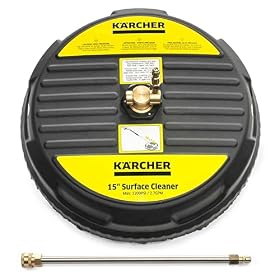
A surface-cleaner attachment can make broad, flat areas more consistent than a wand alone. Its enclosed spray arms help reduce visible striping and overspray, but compatibility matters. The attachment must be suitable for the pressure washer, and the deck manufacturer must allow its use.
Use extra caution on wood. A surface cleaner that is too aggressive, too heavy, or operated incorrectly can still leave marks. It may be more appropriate for concrete around the deck than for delicate deck boards.
Product prices and availability are accurate as of the date/time indicated and are subject to change. Any price and availability information displayed on Amazon.com at the time of purchase will apply to the purchase of this product.
Pressure washer features that are less important
Some features are convenient but should not outweigh safe pressure control:
Maximum PSI by itself
Very narrow high-pressure nozzles
Large fuel capacity for a typical residential deck
Extra-long wands that are difficult to control
Accessories that are not approved for your washer or surface
A simpler machine with controllable output and compatible accessories is often a better deck-cleaning choice than a more powerful machine with limited control.
Product prices and availability are accurate as of the date/time indicated and are subject to change. Any price and availability information displayed on Amazon.com at the time of purchase will apply to the purchase of this product.
When a pressure washer is not the right tool
Do not pressure wash boards that are rotting, badly cracked, loose, or structurally unsafe. Pressure can force water into damaged areas and worsen the problem. Repair or replace compromised boards first.
For delicate finishes, newly applied coatings, or composite decking with strict care requirements, a garden hose, soft brush, and approved cleaner may be safer. If you are unsure whether a coating or material can tolerate pressure washing, contact the deck or coating manufacturer before starting.
Bottom line
For most decks, choose an easy-to-control electric pressure washer with moderate output, a wide spray option, detergent compatibility, and a manageable hose and wand. Start at low pressure, test first, keep the spray moving, and increase cleaning power only when the surface clearly allows it. The safest machine is not necessarily the most powerful one; it is the one that gives you enough control to remove dirt without removing the deck’s surface.
FAQ
What PSI is safe for washing a deck?
There is no single safe PSI for every deck. Composite, soft wood, weathered boards, and coated surfaces usually require lower pressure than sound hardwood. Follow the deck manufacturer’s instructions, start at the lowest effective setting, use a wide spray, and test an inconspicuous area first.
Is an electric pressure washer powerful enough for a deck?
An electric pressure washer is sufficient for many residential decks, especially when paired with an appropriate cleaner and a controlled spray. A gas model may be useful for very large or heavily soiled areas, but its additional power increases the risk of surface damage.
Can I use a turbo nozzle on a wood deck?
A turbo nozzle can be too aggressive for wood decking and may leave marks, remove fibers, or damage coatings. Use the widest suitable spray first and follow both the pressure washer and deck manufacturer’s instructions.
Should I use a pressure washer on composite decking?
Only if the composite decking manufacturer allows it and specifies how to do so. Use low pressure, a suitable wide spray, and a consistent distance. Some composite surfaces can be permanently marked by concentrated spray.
How close should a pressure washer nozzle be to a deck?
The correct distance depends on the washer, nozzle, pressure, and deck material. Begin farther away than you think necessary, keep the wand moving, and move closer only if the surface remains undamaged and the manufacturer’s guidance permits it.