The best pressure washer for a driveway has enough cleaning power to remove embedded dirt without being unnecessarily aggressive. Here is how to choose the right PSI, GPM, nozzle, and accessories for concrete, asphalt, and paver driveways.
Best pressure washer for a driveway
For most driveway cleaning, choose a pressure washer with moderate-to-high cleaning power, a reliable detergent option, and a compatible surface-cleaner attachment. Concrete can usually tolerate more pressure than asphalt or older pavers, but technique matters as much as the machine’s maximum PSI. Avoid choosing solely by the highest pressure number: gallons per minute (GPM), nozzle selection, and consistent cleaning distance also affect results.
What to look for in a driveway pressure washer
PSI and GPM
PSI, or pounds per square inch, measures pressure. It affects how aggressively the water strikes the surface and helps loosen stuck-on grime, algae, and some stains.
GPM, or gallons per minute, measures water flow. Higher flow can rinse debris faster and improve cleaning productivity, especially across a large driveway.
A machine’s practical cleaning performance depends on both figures. A pressure washer with high PSI but very low water flow may feel aggressive at the nozzle while taking longer to rinse a broad surface. For driveway work, prioritize a balanced combination of pressure and flow rather than the maximum advertised PSI alone.
Electric or gas power
An electric pressure washer is usually the convenient choice for a typical residential driveway. It is generally easier to start, quieter, and simpler to store, but you need a suitable outdoor outlet and an extension cord should only be used if the manufacturer permits it and specifies the correct type.
A gas pressure washer can make more sense for a long or heavily soiled driveway where portability and sustained cleaning capacity matter. It requires fuel, ventilation, engine maintenance, and safe outdoor operation. Never run a gas-powered pressure washer in a garage, shed, or other enclosed area.
A long enough hose
A short hose forces you to move the machine repeatedly and can make it easier to pull the pressure washer over or drag it across wet surfaces. Check the included hose length and whether replacement or extension hoses are approved for that model. Do not assume that any generic hose is suitable for a high-pressure connection.
Detergent control
A detergent tank or downstream detergent system can help with organic grime, road film, and general dirt. Use only cleaning products approved for pressure-washer use and for the surface you are cleaning. Apply detergent with the appropriate low-pressure setting, allow it to dwell according to the product instructions, and rinse thoroughly before the solution dries.
Match the pressure washer to the driveway surface
Concrete
Concrete is usually the most forgiving driveway material, but it can still be damaged by concentrated pressure, a worn surface, or an operator holding the nozzle too close. Oil, rust, and deeply embedded stains may not disappear with water pressure alone.
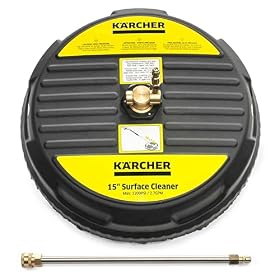
A surface cleaner is often a better choice than a narrow nozzle for large concrete areas. It uses rotating jets beneath a housing to clean more evenly and helps reduce visible striping.
Asphalt
Asphalt generally requires a more conservative approach. Excessive pressure or heat can loosen aggregate, damage the binder, or worsen existing cracks and soft spots. Use the least aggressive setting that removes the dirt, keep the nozzle moving, and avoid concentrating the spray on one area.
Check the asphalt’s condition before cleaning. If it is crumbling, badly cracked, or unusually soft, pressure washing may cause more harm than good. A gentle rinse and appropriate surface-safe cleaner may be preferable.
Pavers and brick
Pavers can tolerate cleaning, but strong spray may remove joint sand or expose weak edges. Begin with a wider spray pattern and lower pressure, particularly on old, loose, or deteriorated pavers. Keep the wand at a consistent height and avoid spraying directly into joints.
If joint sand is removed, the driveway may need fresh joint material afterward. Some installations also require a compatible sealer, but sealing should wait until the surface is clean and fully dry.
Coated or decorative concrete
Painted, sealed, stained, or decorative concrete needs extra care. Pressure can lift a coating or leave uneven-looking marks. Follow the coating manufacturer’s cleaning guidance, test an inconspicuous area first, and avoid assuming that ordinary bare concrete settings are safe.
Product prices and availability are accurate as of the date/time indicated and are subject to change. Any price and availability information displayed on Amazon.com at the time of purchase will apply to the purchase of this product.
Nozzles and accessories that matter
Nozzle selection
A wider spray pattern is safer for general driveway cleaning. Narrow, aggressive nozzles can cut into surfaces, leave stripes, or remove more material than intended when held too close.
A low-pressure nozzle or detergent nozzle is used for applying cleaning solution. A higher-pressure option may be useful for stubborn areas on sound concrete, but it should be introduced cautiously and kept moving.
Never remove or modify a nozzle while the pressure washer is running. Relieve pressure as directed by the manufacturer before changing accessories.
Surface cleaner
For a broad concrete driveway, a surface cleaner is often the most useful accessory to buy with the pressure washer. It can produce a more uniform finish than sweeping a wand back and forth and may reduce splashback.
Check that the surface cleaner is compatible with the pressure washer’s pressure and flow requirements. An attachment rated for a substantially different output may clean poorly or be unsafe to use.
Turbo or rotary nozzle
A turbo nozzle rotates a concentrated spray and can remove stubborn buildup efficiently. It is also easier to misuse than a wide fan nozzle. Avoid it on asphalt, delicate coatings, deteriorated concrete, and pavers unless the surface and accessory instructions clearly allow it.
Product prices and availability are accurate as of the date/time indicated and are subject to change. Any price and availability information displayed on Amazon.com at the time of purchase will apply to the purchase of this product.
How to pressure wash a driveway without damaging it
Inspect the surface. Look for loose concrete, cracks, crumbling asphalt, lifted pavers, exposed aggregate, coatings, and damaged joints.
Clear the area. Remove vehicles, planters, toys, and loose objects. Sweep away leaves and loose grit.
Protect nearby areas. Keep spray away from doors, vents, outdoor outlets, vehicles, and fragile landscaping. Avoid directing water toward the building.
Pre-rinse with a wide spray. Start with the least aggressive nozzle and maintain a consistent distance.
Apply appropriate detergent if needed. Follow the cleaner’s label and the pressure washer’s instructions.
Work in manageable sections. Keep the wand or surface cleaner moving at a steady pace. Overlapping passes slightly can help prevent stripes.
Rinse thoroughly. Flush away loosened dirt and detergent, including along edges and drainage paths.
Let the surface dry before judging the result. Some discoloration is easier to evaluate after the concrete, pavers, or asphalt has dried.
Do not point the spray at people, animals, skin, electrical equipment, or fragile surfaces. Wear eye protection and sturdy footwear. Pressure-washer spray can cause serious injury even when it does not appear powerful from a distance.
Product prices and availability are accurate as of the date/time indicated and are subject to change. Any price and availability information displayed on Amazon.com at the time of purchase will apply to the purchase of this product.
When a pressure washer is not the right solution
Pressure washing may not remove every type of stain. Rust, oil, paint, efflorescence, and deep organic discoloration often need a surface-specific chemical treatment, repeated cleaning, or professional restoration. Using more pressure is not always the correct response and can permanently scar the driveway.
If the surface is already failing, ask a qualified contractor or follow the paving manufacturer’s recommendations before cleaning. For a small, lightly soiled driveway, renting a machine or hiring a service may be more practical than storing and maintaining a pressure washer.
Bottom line
The best pressure washer for a driveway is one with balanced pressure and water flow, a usable hose length, compatible detergent delivery, and accessory support for a surface cleaner. Choose a gentler setup for asphalt, pavers, coatings, and worn surfaces; concrete gives you more flexibility but still rewards consistent technique. A moderate machine used with the correct nozzle is generally safer and more effective than simply buying the highest-PSI model.
FAQ
What PSI is best for cleaning a driveway?
The appropriate PSI depends on the surface and its condition. Sound concrete can generally tolerate more pressure than asphalt, pavers, or coated surfaces. Start with a wide spray pattern and the lowest effective pressure, then increase cautiously if needed and allowed by the surface and equipment instructions.
Is a surface cleaner better than a pressure-washer wand for a driveway?
For a broad, sound concrete driveway, a compatible surface cleaner often produces a more even finish and reduces striping. A wand is more useful around edges, steps, narrow areas, and surfaces that require especially careful control.
Can pressure washing damage asphalt?
Yes. Excessive pressure, a concentrated nozzle, or holding the spray too close can loosen aggregate or damage the asphalt binder. Use a conservative setting, keep the spray moving, and avoid pressure washing asphalt that is soft, crumbling, or badly deteriorated.
Should I use detergent when pressure washing a driveway?
Detergent can help with organic grime and road film, but it is not necessary for every cleaning job. Use a pressure-washer-compatible product that is safe for the driveway material, apply it as directed, and rinse thoroughly before it dries.
Why does my driveway look striped after pressure washing?
Striping usually results from uneven wand speed, inconsistent spray distance, overlapping errors, or using a narrow nozzle across a large area. A compatible surface cleaner and slower, more consistent passes can help produce a more uniform finish.