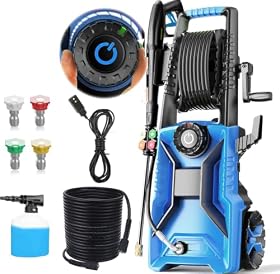
For an HOA patio and one car, the best choice is usually a compact electric pressure washer with adjustable pressure, moderate water flow, and easy storage—not the most powerful gas model.
For an HOA patio and one car, choose a compact electric pressure washer with adjustable pressure, moderate water flow, and a 25- or 40-degree spray option. That combination is easier to store, quieter around neighbors, and less likely to damage automotive paint, siding, patio coatings, or grout than a high-powered gas machine.
Before buying, check your HOA’s rules for washing hours, water runoff, noise, and where equipment may be stored. Some communities restrict driveway washing or allow only water-conscious cleaning methods.
What to look for
Moderate pressure, not maximum pressure
A pressure washer’s PSI describes water pressure, while GPM describes water flow. PSI helps loosen dirt; GPM helps rinse it away. For this job, both matter, but maximum PSI is not the goal.
Look for:
Adjustable pressure or multiple spray tips: Useful because a car needs gentler cleaning than concrete.
Moderate water flow: Enough flow to rinse efficiently without making runoff difficult to control.
A 25- or 40-degree nozzle: These spread the spray and are safer for paint, trim, and many patio surfaces.
A detergent application method: Helpful for road film on a car and organic grime on a patio.
A compact electric design: Usually simpler to store and quieter than a gas pressure washer.
A hose and power cord long enough for the work area: This reduces the need to move the machine repeatedly.
A machine advertised with very high PSI is not automatically better. Excessive pressure can etch concrete, remove joint sand, strip paint, damage wood, or force water behind vehicle trim and seals.
Electric is usually the better fit
An electric pressure washer is generally the practical choice for one car and a residential patio. It avoids fuel storage, engine maintenance, and exhaust. It is also typically more neighbor-friendly for an HOA setting.
Use a properly grounded outdoor outlet and follow the manufacturer’s instructions for extension-cord use. Keep electrical connections away from standing water, and use a weather-appropriate outdoor-rated setup. If the outlet, cord, or pressure washer shows damage, stop using it and have the issue addressed by a qualified professional.
A gas pressure washer makes more sense when you regularly clean large driveways, long walkways, heavy equipment, or other areas where portability and sustained output matter more than quiet operation and easy storage.
Choosing the right setup for the patio
Concrete and pavers
Concrete can usually tolerate more pressure than a car, but the correct setting still depends on its condition and finish. Start with a wider spray pattern and keep the nozzle moving. Test an inconspicuous area first.
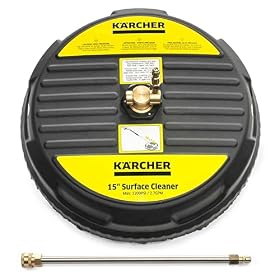
A surface cleaner is often more useful than a narrow wand spray for a patio. Its rotating spray bars can help produce a more even result and reduce visible striping. Choose one that is compatible with the pressure washer’s pressure and flow requirements.
For pavers, be cautious around joints. Strong spray can remove joint sand or disturb older pavers. Hold the cleaner level, avoid lingering in one spot, and plan how dirty water will drain before starting.
Coated, painted, or delicate patios
Painted concrete, stamped concrete, sealed surfaces, wood, and composite materials require more caution. Use the lowest effective pressure, a wider fan pattern, and greater distance from the surface. A garden hose, soft brush, or low-pressure cleaning attachment may be safer than aggressive pressure washing.
Do not assume that a patio is safe simply because it is made of concrete. Coatings, cracks, repairs, and weak edges can respond differently from the surrounding slab.
Compact electric pressure washer for patio and car
Product prices and availability are accurate as of the date/time indicated and are subject to change. Any price and availability information displayed on Amazon.com at the time of purchase will apply to the purchase of this product.
Choosing the right setup for one car
Use a wide spray pattern and keep the wand moving. A car-washing process should loosen and rinse dirt rather than blast it against the paint.
Recommended practices include:
Pre-rinse from the top down.
Use a car-safe detergent when needed.
Keep the nozzle several feet away at first, then adjust gradually if necessary.
Avoid the 0-degree nozzle on the vehicle.
Do not aim directly at door seals, window seals, badges, sensors, charging ports, locks, or damaged paint.
Use separate wash media for wheels and painted panels to reduce the chance of transferring abrasive brake dust.
Rinse thoroughly before drying with suitable automotive towels.
A foam cannon can help cover the vehicle with detergent, but foam alone does not remove all bonded or gritty contamination. Follow the detergent maker’s dilution instructions and confirm that the product is suitable for vehicle finishes.
Product prices and availability are accurate as of the date/time indicated and are subject to change. Any price and availability information displayed on Amazon.com at the time of purchase will apply to the purchase of this product.
Accessories that matter more than extra PSI
Surface cleaner
For the patio, a compatible surface cleaner can make cleaning faster and more uniform than sweeping a narrow spray across the slab. Confirm the pressure and flow requirements before buying; an attachment that demands more water than the washer supplies may clean poorly.
Replacement or longer hose
A longer pressure hose can make it easier to work around a car or patio without dragging the machine. Use only a hose rated for pressure-washer service and compatible with the fittings.
Car-washing nozzle or foam attachment
A wide-angle nozzle and a detergent attachment are more relevant to car care than a turbo nozzle. Turbo nozzles concentrate impact and are best reserved for suitable hard surfaces, not automotive paint or delicate patio finishes.
How to use the pressure washer without damaging anything
Read the HOA rules and inspect drainage. Keep dirty water from flowing into prohibited areas, storm drains, neighboring property, or landscaped areas if local rules restrict that runoff.
Clear loose debris. Sweep the patio and rinse loose grit from the vehicle before using pressure.
Test a hidden area. Check the patio finish, paint, or sealant before cleaning the full surface.
Start with the widest spray and lowest useful pressure. Increase force only when the surface clearly requires it.
Keep the nozzle moving. Holding the spray in one place can leave marks or remove material.
Work from cleaner areas toward dirtier areas or from the top down. This limits recontamination.
Use detergent only when appropriate. Let it dwell according to its instructions, but do not allow it to dry on the surface.
Control runoff and rinse water. Use absorbent barriers or redirect water only where permitted and practical.
Shut down and store it correctly. Disconnect water and power according to the manual, drain the hose, and protect the unit from freezing temperatures.
When a different pressure washer is the better choice
Choose a more capable machine if you regularly clean large paved areas, thick algae, farm equipment, or multiple vehicles. Choose a gentler setup—or skip pressure washing—if the patio is painted, badly cracked, made of soft wood, or covered by a failing coating.
For one car and an HOA patio, replacing a compact unit may be reasonable when the pump leaks, the motor repeatedly trips protection, the hose connection cannot seal, or the machine no longer reaches its normal pressure after the filter, hose, inlet screen, and fittings have been checked. Do not open or repair electrical components unless you are qualified to do so; follow the manufacturer’s service guidance instead.
The best match for this use is not the strongest pressure washer available. It is a manageable electric unit with adjustable output, a wide spray option, a detergent method, and enough hose length to clean both surfaces while keeping runoff and noise under control.
FAQ
What PSI is safe for washing a car?
Use the lowest effective pressure with a wide spray pattern, keep the nozzle moving, and avoid concentrated tips. The exact safe setting depends on the washer, nozzle, distance, vehicle finish, and paint condition, so test cautiously and follow the vehicle-care and pressure-washer instructions.
Can I use the same pressure washer for a patio and a car?
Yes. Use a gentler, wider spray and car-safe detergent for the vehicle, then use the appropriate setting and attachment for the patio. Do not use a turbo or 0-degree nozzle on automotive paint or delicate surfaces.
Is an electric pressure washer enough for a patio?
For a residential patio, an electric unit is often sufficient, especially when paired with a compatible surface cleaner. Heavily embedded grime, large areas, or frequent commercial-style cleaning may justify a more powerful machine.
Do I need a surface cleaner for one patio?
No, but it can make the work more even and reduce wand striping on suitable hard surfaces. Check that the attachment’s pressure and water-flow requirements match the pressure washer.