The best pressure washer for siding provides controllable pressure, steady water flow, and the right low-pressure nozzle—not simply the highest PSI rating. Use this guide to choose a machine that cleans effectively without forcing water behind siding or damaging the finish.
The best pressure washer for siding is usually a machine with adjustable or controllable pressure, moderate water flow, and a reliable detergent application system. Siding does not need the highest PSI available; excessive pressure can strip paint, scar vinyl, dent aluminum, or force water behind panels and into wall cavities.
For most homes, an electric pressure washer with a pressure range suitable for light- to medium-duty cleaning is easier to control than a large gas model. The right choice still depends on the siding material, the amount of dirt, and whether you are cleaning mold, algae, dust, or loose surface debris.
What to look for in a pressure washer for siding
Adjustable pressure or a gentle operating setting
Pressure control is the most important feature. A washer should let you reduce the force at the wand or use a wider spray pattern for delicate surfaces. A machine with a very high maximum PSI is not automatically better for siding because the maximum setting may be too aggressive for routine house washing.
If the manufacturer lists both maximum and rated PSI, pay attention to the rated or working figure and follow the manual's recommended settings. Maximum numbers can describe peak capability rather than the pressure maintained during normal cleaning.
Moderate water flow
Gallons per minute, or GPM, affects how quickly the washer rinses dirt and detergent away. Higher flow can speed up cleaning, but it also uses more water and may not be necessary for siding. A moderate-flow machine is generally easier to manage around windows, trim, landscaping, and outdoor electrical equipment.
PSI describes cleaning force, while GPM describes the amount of water moving across the surface. For siding, controllability and a suitable spray pattern matter more than chasing the highest number in either specification.
A detergent system that supports low-pressure application
Detergent can loosen organic growth and grime so you do not need to rely on high pressure. Look for a washer compatible with a low-pressure soap nozzle, detergent bottle, or manufacturer-approved injection system.
Check the instructions for detergent compatibility. Some machines draw soap only when a specific nozzle is installed, and some require a particular dilution. Apply detergent from the bottom upward when appropriate to reduce uneven drying, then rinse from the top down.
Useful spray nozzles
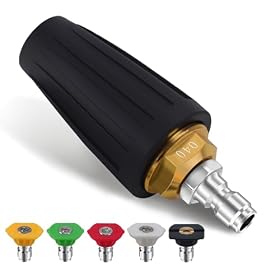
A wide-angle nozzle is normally safer for siding than a narrow, concentrated jet. Nozzle color conventions vary by manufacturer, so use the angle and safety guidance in the pressure washer manual rather than relying only on color.
Avoid using a zero-degree nozzle on siding. Narrow turbo or concentrated nozzles can also be too aggressive unless the manufacturer specifically approves them for the material and you maintain a safe distance.
A nozzle or wand with adjustable spray can be useful, but it does not remove the need to start at low pressure and test an inconspicuous area.
Match the pressure washer to the siding material
Vinyl siding
Vinyl siding usually responds well to low- to moderate-pressure washing with detergent and a wide spray. Keep the spray directed straight at the face of the panel or at a shallow downward angle. Spraying upward can drive water behind the siding through seams and overlaps.
Take extra care around soffits, window trim, vents, corner posts, and damaged panels. Do not use pressure to force loose siding back into place; repair or secure it first.
Painted wood siding
Wood siding is more vulnerable to paint removal, gouging, and water intrusion. Use the lowest effective pressure, a broad spray, and a greater working distance. Test a hidden section before cleaning a visible wall.
If paint is already peeling, pressure washing may make the problem worse. Scraping, repair, and repainting may be more appropriate than trying to remove loose coating with a pressure washer.
Aluminum siding
Aluminum can dent and may have a fragile or chalking finish. Use a gentle setting, keep the wand moving, and avoid close-range concentrated spray. Test for color transfer or chalking before applying detergent across the whole wall.
Fiber-cement siding
Fiber-cement siding can tolerate routine cleaning, but its coating and joints still need protection. Avoid forcing water into seams and use a setting approved by the siding and pressure washer manufacturers. Damaged, cracked, or unsealed areas should be addressed before washing.
Product prices and availability are accurate as of the date/time indicated and are subject to change. Any price and availability information displayed on Amazon.com at the time of purchase will apply to the purchase of this product.
Electric or gas pressure washer for siding?
Electric models
An electric pressure washer is often the practical choice for residential siding because it is generally lighter, quieter, and easier to start. It works well for periodic house washing when a suitable outdoor electrical outlet and water supply are available.
Use a properly rated outdoor extension cord only if the manufacturer permits one. Keep electrical connections dry, use ground-fault protection as required by local rules and the manual, and never operate electrical equipment in a way that leaves connections sitting in water.
Gas models
A gas pressure washer can provide more flow and longer continuous operation, which may help on large properties or when cleaning several surfaces. It is also heavier, louder, and capable of delivering more force than siding requires.
If you choose a gas machine, pressure control is especially important. Never run a fuel-powered pressure washer indoors, in a garage, or near doors and windows because of carbon monoxide risk.
Product prices and availability are accurate as of the date/time indicated and are subject to change. Any price and availability information displayed on Amazon.com at the time of purchase will apply to the purchase of this product.
How to pressure wash siding without damaging it
Inspect the siding first. Look for cracks, loose panels, failed caulk, peeling paint, damaged vents, and open seams.
Protect nearby areas. Move outdoor furniture and cover delicate plants or items that may be affected by detergent. Keep water away from electrical fixtures and openings.
Choose a wide spray and low setting. Start farther from the wall than you think necessary and increase force only if the surface remains undamaged and cleaning is inadequate.
Test a hidden area. Check for paint removal, denting, discoloration, or water intrusion before cleaning the main wall.
Apply detergent according to the manual. Allow it to dwell for the time recommended on the detergent label, but do not let it dry on the siding.
Rinse from top to bottom. Keep the wand moving and avoid directing water upward under laps, trim, soffits, or window edges.
Inspect the result. If grime remains, use a soft brush or a compatible cleaning solution rather than immediately increasing pressure.
Never use the pressure washer from a ladder while handling the wand. The recoil and changing balance can cause a fall. Use an extension wand or work from the ground where possible, and follow the equipment manufacturer's safety instructions.
Features that matter less than they seem
A very high PSI rating is not a substitute for control. A large detergent tank can be convenient, but an onboard tank is not essential if the washer supports an appropriate external detergent method. Long hoses improve reach, but the hose must match the washer's pressure rating and connection type.
Wheels, a stable frame, quick-connect nozzles, and a hose reel can make setup easier. These convenience features are worthwhile when they improve handling, but they should come after pressure control, safe operation, and nozzle compatibility.
When a pressure washer is not the right tool
Do not pressure wash siding that is structurally damaged, severely loose, or already allowing water into the wall. A garden hose, soft brush, and siding-safe cleaner may be safer for light dirt or fragile finishes.
Consider professional help when the home has extensive peeling paint, hard-to-reach upper stories, suspected asbestos-containing materials, significant water damage, or delicate historic siding. For older homes, confirm that the cleaning method is appropriate before using powered water equipment.
Bottom line
Choose a pressure washer for siding based on controllable pressure, a wide spray option, moderate water flow, and a detergent method that works at low pressure. An easy-to-handle electric model is often sufficient for routine residential siding, while a gas model makes more sense only when you need longer operation or higher water flow. Regardless of the machine, start gently, test first, and keep the spray directed away from seams and openings.
FAQ
What PSI is safe for washing siding?
There is no single safe PSI for every siding material or condition. Use the lowest effective pressure recommended by the siding and pressure washer manufacturers, start at a distance with a wide spray, and test an inconspicuous area first. Wood, painted surfaces, aluminum, damaged siding, and areas around openings require extra caution.
Can I use a 2,000 PSI pressure washer on vinyl siding?
A pressure washer with a 2,000 PSI maximum rating may be usable for vinyl siding, but the operating pressure, nozzle, distance, and spray direction determine the actual risk. Use a lower setting or wide-angle nozzle, avoid spraying upward under panels, and follow the siding and machine instructions.
What nozzle should I use to clean siding?
Use a wide-angle nozzle or another low-pressure nozzle approved for the surface. Avoid zero-degree and highly concentrated spray patterns on siding because they can damage finishes or force water behind panels.
Is a gas or electric pressure washer better for siding?
For many residential siding jobs, an electric model is easier to control and provides adequate performance. A gas model can be useful for larger properties or extended cleaning, but its greater capability increases the need for careful pressure control and safe outdoor operation.