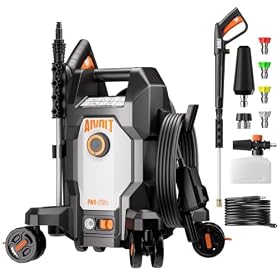
For most townhouse owners, a compact electric pressure washer is the practical choice when lower noise, easy storage, and controlled cleaning matter more than maximum power.
A compact electric pressure washer is usually the best fit for a townhouse because it is generally quieter, easier to store, and less disruptive than a gas machine. Choose based on the cleaning job rather than the highest advertised PSI: patios, siding, vehicles, and outdoor furniture often need less power than driveways or heavily embedded grime.
What makes a pressure washer townhouse-friendly?
A townhouse-friendly pressure washer should be:
Quieter than a gas model: Gas engines produce engine noise, exhaust, and vibration. Electric models still make pump and motor noise, but they are typically more suitable for close neighbors.
Compact enough to store: Look for a design that can fit in a garage, shed, closet, or designated storage area without leaving hoses and accessories scattered around.
Easy to connect: A standard outdoor water connection and a nearby properly rated electrical outlet make setup simpler.
Powerful enough for the surface: Excess pressure can damage siding, wood, paint, mortar, and vehicle finishes.
Equipped with a manageable hose and cord: A short hose can force you to move the unit repeatedly, while an unnecessarily long cord can create storage and safety problems.
Noise ratings are not always published in a consistent way, so do not assume that a lower advertised PSI automatically means a quieter machine. Electric operation, a compact pump, vibration control, and the ability to run the washer only when needed are more useful practical indicators.
Electric versus gas for a townhouse
Electric pressure washers
Electric models are normally the better starting point for townhouse use. They do not produce exhaust, usually require less maintenance than gas machines, and are easier to start. They are also better suited to short cleaning sessions, such as washing a small patio, rinsing outdoor furniture, or cleaning a vehicle.
Their limitations include dependence on an electrical outlet and potentially lower water output than larger gas units. If the machine will be used far from an outlet, check whether the manufacturer permits an extension cord and follow the specified cord requirements. Never use a damaged cord, indoor-rated extension cord, or an outlet that is not protected as required for wet locations.
Gas pressure washers
Gas models can provide more sustained power and may be useful for large driveways, extensive concrete cleaning, or locations without convenient electricity. However, they are usually a poor match for a townhouse when noise, exhaust, storage, and neighbor proximity are major concerns.
Do not operate a gas pressure washer in a garage, shed, enclosed porch, or other partially enclosed area. Carbon monoxide can build up quickly. For most townhouse jobs, a gas unit is only worth considering when the cleaning area and workload clearly exceed what a suitable electric model can handle.
Quiet electric pressure washers for townhouse cleaning
Product prices and availability are accurate as of the date/time indicated and are subject to change. Any price and availability information displayed on Amazon.com at the time of purchase will apply to the purchase of this product.
How much PSI and GPM do you need?
PSI is pressure, while GPM is water flow. PSI affects the force of the spray; GPM affects how quickly dirt and detergent are rinsed away. A machine with a very high PSI rating is not automatically the best choice for every surface.
For typical townhouse tasks:
Vehicles and delicate painted surfaces: Use a lower-pressure approach, a wider spray pattern, and adequate distance. Follow the vehicle or surface-care instructions.
Outdoor furniture and plastic items: Moderate cleaning power is often enough. Start with the widest nozzle and increase power only if necessary.
Vinyl siding: Use care around seams, vents, windows, and trim. Spraying upward can force water behind siding.
Wood decks and fences: Excess pressure can gouge wood and strip finishes. Use a suitable nozzle, keep the wand moving, and test an inconspicuous area first.
Concrete patios and walkways: More pressure and water flow can help with embedded dirt, but old concrete, cracks, joint sand, and coatings can still be damaged.
If a manufacturer lists both PSI and GPM, consider both figures. A pressure washer with lower pressure but useful water flow may clean more comfortably than a high-PSI model that encourages aggressive spraying. Also distinguish between maximum PSI and the machine's normal operating pressure when specifications provide both.
Product prices and availability are accurate as of the date/time indicated and are subject to change. Any price and availability information displayed on Amazon.com at the time of purchase will apply to the purchase of this product.
Features worth prioritizing
Adjustable or interchangeable nozzles
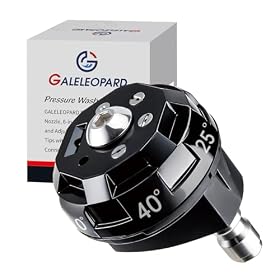
A wide-angle nozzle is the safer starting point for most townhouse surfaces. Narrower spray patterns increase the risk of damage and should be used only when the surface and cleaning task allow it. A nozzle set is useful only if each nozzle is clearly identified and compatible with the washer.
Avoid using a high-pressure nozzle on people, pets, windows, electrical equipment, vehicle tires, or fragile finishes.
Surface-cleaner compatibility
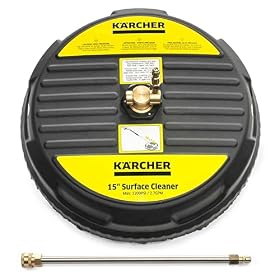
A surface cleaner can make flat concrete work more uniform and may reduce splash compared with a bare wand. Check that the accessory is compatible with the pressure washer's pressure and flow requirements. An oversized surface cleaner may perform poorly if the machine cannot supply enough water.
Hose length and storage
A longer high-pressure hose can reduce how often you move the machine, which is useful around a townhouse. However, hose length should not come at the expense of easy storage. Look for a reel, hooks, or another method that prevents tight kinks.
Detergent application
A built-in detergent tank or compatible detergent injector can simplify siding, patio, and vehicle cleaning. Use only detergents approved for pressure washers and the surface being cleaned. Keep runoff away from storm drains, neighboring property, pets, and plants where applicable.
Repairable parts
For a machine you expect to keep, replaceable hoses, nozzles, filters, connectors, and other service parts can matter more than extra peak pressure. Confirm that replacement parts are available for the specific model before buying.
Product prices and availability are accurate as of the date/time indicated and are subject to change. Any price and availability information displayed on Amazon.com at the time of purchase will apply to the purchase of this product.
How to keep pressure-washer noise down
Even a relatively quiet electric washer can disturb neighbors if used carelessly. To reduce disruption:
Clean during reasonable daytime hours and follow townhouse, condominium, or local noise rules.
Place the machine on a stable surface rather than a hollow deck or resonant platform.
Keep the washer as far from shared walls and neighboring windows as the hose safely allows.
Use the lowest effective pressure and avoid running the trigger continuously when you are not spraying.
Keep the pump supplied with water. Running a pressure washer without adequate water can create noise and damage the pump.
Store the hose and accessories so they do not rattle against the housing during operation.
A quieter machine cannot make an unreasonable cleaning schedule acceptable. If neighbors are especially close, a short cleaning session with an electric unit is generally more considerate than extended operation of a large gas machine.
Safety and townhouse setup
Before choosing a pressure washer, check the location where you will use it:
Use a grounded, outdoor-rated electrical connection with the required protection for wet areas.
Keep electrical connections, plugs, and extension-cord connections away from standing water.
Do not bypass a ground-fault protection device or use damaged electrical equipment.
Make sure the garden hose supplies the flow required by the pressure washer.
Never point the spray at people, animals, windows, outlets, meters, vents, or moving vehicle parts.
Be cautious around painted surfaces, mortar joints, window seals, roof materials, and outdoor lighting.
Wear eye protection and secure loose clothing.
Follow the owner's manual for startup, shutdown, detergent use, storage, and winterizing.
If an outlet, hose bib, drainage path, or electrical connection is questionable, have the setup checked by a qualified professional rather than improvising.
A practical buying decision
Choose a compact electric pressure washer when you primarily clean vehicles, furniture, siding, small patios, balconies, or limited walkways and want to keep noise and maintenance down.
Consider a more powerful electric model only when you regularly clean larger concrete areas and have the electrical and water supply needed for it. Consider gas power only when you have a substantial cleaning workload, a safe outdoor operating area, and a clear reason electric power will not meet the job.
The best quiet pressure washer for a townhouse is therefore not necessarily the machine with the lowest advertised noise or highest PSI. It is the model that provides enough pressure and water flow for your surfaces, stores easily, connects safely, and lets you finish the work without excessive runtime or disturbance.
FAQ
Are electric pressure washers quieter than gas pressure washers?
Usually, yes. Electric models do not have a gas engine, so they generally produce less engine noise and vibration. They still make pump and motor noise, and the actual sound level varies by design and operating conditions.
What PSI is safe for townhouse cleaning?
There is no single safe PSI for every townhouse surface. Use the lowest effective pressure, start with a wide spray pattern, keep the wand moving, and test an inconspicuous area. Vehicles, wood, paint, siding, mortar, and window seals require more caution than sound concrete.
Can I use an extension cord with an electric pressure washer?
Only if the manufacturer permits it and specifies the appropriate cord type and rating. Use a properly grounded outdoor-rated cord, keep connections dry, and do not use damaged cords or bypass required ground-fault protection.
Is a gas pressure washer a bad choice for a townhouse?
It can be impractical because of engine noise, exhaust, storage, and close neighbors. A gas model may make sense for extensive concrete cleaning when electric power is insufficient, but it must be operated outdoors with full ventilation and according to the manufacturer’s instructions.
Why does my pressure washer sound unusually loud?
Check for inadequate water supply, a kinked hose, air in the inlet, a clogged inlet filter, loose accessories, or a machine vibrating against a hard surface. Stop using it if the noise is accompanied by leaks, burning smells, surging, or loss of pressure, and consult the manual or a qualified service professional.