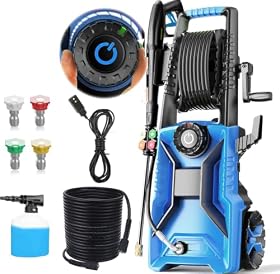
The best pressure washer for a boat in a driveway is one with adjustable pressure, a gentle spray option, useful detergent control, and enough hose length to work around the hull without forcing a high-powered jet onto delicate surfaces.
The best washer for a boat in a driveway is usually a small-to-medium electric pressure washer with adjustable pressure or multiple spray settings—not the most powerful machine available. Boats can have gelcoat, paint, decals, aluminum, vinyl, rubber seals, and inflatable materials, so controlled water flow matters more than maximum PSI.
Use the lowest pressure that removes the dirt, keep the nozzle moving, and follow the boat and pressure-washer manufacturer’s cleaning instructions. A garden hose and boat-safe soap may be safer for loose dirt and routine washing; use pressure washing mainly for stuck-on grime, algae, and mud.
What to look for in a boat pressure washer
Adjustable pressure or a gentle spray option
An adjustable-pressure washer gives you more control around the hull, hardware, fittings, decals, and seams. If the machine does not have pressure adjustment, its included spray tips become especially important.
A wide-angle spray is generally the safer starting point. Narrow, concentrated tips can damage gelcoat, lift decals, remove paint, force water past seals, or cut into inflatable fabric when used too close. Do not assume that a tip is safe simply because it came with the washer.
The goal is not to blast the boat clean. Start farther away, test an inconspicuous area, and move closer only if the surface and finish tolerate the spray.
Moderate water flow
Pressure is only part of cleaning performance. Water flow helps rinse away loosened dirt and soap, but higher flow can also create more runoff in a driveway. For most boat-washing jobs, a machine with moderate flow and controllable pressure is easier to manage than a highly aggressive gas-powered unit.
A pressure washer with a long hose can be more useful than a stronger motor. You can move around the boat without dragging the machine, pulling on connections, or placing the washer near wet areas.
Detergent compatibility
A built-in detergent tank or detergent-injection system can make it easier to apply a boat-safe cleaning solution. Check the pressure washer manual before using soap: some machines require a specific low-pressure nozzle or detergent setting.
Use a cleaner labeled as compatible with the boat’s surface and finish. Never mix cleaning chemicals unless the product instructions specifically allow it. Rinse thoroughly so soap does not dry on the hull, trailer, windows, hardware, or driveway.
A trigger gun and hose that are easy to control
Boat cleaning involves repeated passes around a large, curved surface. A comfortable trigger gun, quick-connect spray tips, and sufficient hose length reduce fatigue and make it easier to keep the spray at a consistent distance.
If the washer’s hose or wand feels difficult to control, the solution is not necessarily more power. Better handling can help prevent accidental close-range damage.
Match the washer to the boat material
Fiberglass and gelcoat
Fiberglass boats often have a gelcoat finish that can be scratched, dulled, or damaged by concentrated spray and abrasive dirt. Use a wide spray pattern, keep the wand moving, and avoid spraying directly into cracks, fittings, vents, trim, and hardware.
Pressure washing may remove loose grime, but stains, oxidation, and embedded growth may require a boat-specific cleaner and manual washing. A pressure washer cannot replace surface-appropriate detailing products.
Painted surfaces
Painted hulls and topsides need extra caution because pressure can chip weak areas or lift damaged paint. Inspect the finish first. If paint is already peeling, cracked, or blistered, avoid pressure washing that area and repair the finish according to the coating manufacturer’s guidance.
Aluminum
Aluminum boats can tolerate routine rinsing, but concentrated spray may damage decals, seams, protective coatings, or soft areas. Use a broad spray and avoid lingering on rivets, fittings, and damaged coating.
If the boat has oxidation or chalking, choose a cleaner intended for that condition rather than increasing pressure.
Inflatable boats and PVC or hypalon materials
Inflatable hulls, tubes, seams, valves, and glued attachments require particularly gentle treatment. Do not use a narrow high-pressure stream on seams, valves, patches, or fittings. Follow the inflatable manufacturer’s cleaning and pressure guidance; a hose, soft brush, and appropriate cleaner may be the better choice.
Decals, graphics, windows, and seals
Treat decals, registration numbers, plastic windows, rubber seals, hatches, and caulking as vulnerable areas. Keep the spray farther away and use the widest practical pattern. Avoid forcing water behind graphics or into openings.
Product prices and availability are accurate as of the date/time indicated and are subject to change. Any price and availability information displayed on Amazon.com at the time of purchase will apply to the purchase of this product.
A practical pressure-washing setup
Remove loose gear. Take cushions, covers, electronics, personal items, and removable hardware off the boat.
Rinse with a garden hose first. This removes loose sand and grit that could otherwise be driven across the finish.
Inspect the surface. Look for peeling paint, damaged gelcoat, loose decals, open seams, cracked caulk, and fragile fittings.
Choose a wide spray. Start with the gentlest suitable setting and test an inconspicuous area.
Apply boat-safe soap if needed. Use the pressure washer’s approved detergent method, or apply cleaner separately according to its label.
Work in sections. Keep the nozzle moving and wash from the top down so dirty water does not run over areas you have already cleaned.
Rinse thoroughly. Soap and loosened grime should not dry on the finish.
Dry and inspect. Check seams, fittings, drains, storage compartments, and trailer areas after washing.
Product prices and availability are accurate as of the date/time indicated and are subject to change. Any price and availability information displayed on Amazon.com at the time of purchase will apply to the purchase of this product.
What to avoid
Do not use the narrowest or most aggressive spray tip on the hull by default.
Do not hold the nozzle close to decals, seals, windows, vents, fittings, or inflatable seams.
Do not spray directly into bearings, electrical connectors, engine openings, fuel vents, steering components, or control cables.
Do not pressure-wash a running engine or use water as a substitute for the engine manufacturer’s flushing procedure.
Do not let detergent or dirty runoff enter storm drains, waterways, or neighboring property.
Do not use a surface-cleaner attachment on the boat. These attachments are designed for hard, flat surfaces such as concrete and can be unsuitable for curved or finished boat surfaces.
Product prices and availability are accurate as of the date/time indicated and are subject to change. Any price and availability information displayed on Amazon.com at the time of purchase will apply to the purchase of this product.
Electric or gas pressure washer?
For most boats washed in a residential driveway, an electric pressure washer is the more practical starting point. It is generally easier to move, produces no exhaust at the cleaning location, and offers adequate control for rinsing and light-to-moderate grime.
A gas pressure washer may provide more flow and cleaning force, but that extra capability is easy to misuse on a boat. It also creates exhaust, noise, fuel-handling requirements, and a larger machine to keep away from water and electrical equipment.
Choose a gas model only when you have a clear need for its capacity and can operate it safely outdoors according to the manufacturer’s instructions. More PSI is not automatically better for a boat.
Product prices and availability are accurate as of the date/time indicated and are subject to change. Any price and availability information displayed on Amazon.com at the time of purchase will apply to the purchase of this product.
Driveway and runoff considerations
Before washing, check local rules and the boat’s location. Detergent, oil, fuel residue, antifouling paint residue, algae, and other contaminants should not be allowed to flow into a storm drain or waterway.
Use absorbent materials, a berm, a collection mat, or another approved runoff-control method when appropriate. Dispose of collected water according to local requirements. Keep the pressure washer, extension cords, outlets, and connections arranged so they cannot sit in standing water. Follow the electrical safety instructions supplied with the machine, and use a properly protected outlet where required.
When a different tool is the better choice
Use a garden hose, soft brush, and boat-safe soap when the boat only has loose dust, salt, or light dirt. Manual washing gives better control around fragile components and often uses less aggressive force.
Consider a replacement nozzle or wand only when the pressure washer itself operates correctly but the original spray option is unsuitable or damaged. The replacement must match the washer’s connection and pressure rating; do not install an accessory that exceeds the machine’s instructions.
A replacement pressure washer makes sense when the current unit has an unreliable pump, damaged hose, leaking connections, unsafe electrical components, or controls that cannot provide a gentle enough spray. Stop using a machine with exposed wiring, repeated breaker trips, burning odors, or a damaged high-pressure hose, and have it evaluated or replaced rather than attempting an improvised repair.
Bottom line
For washing a boat in a driveway, prioritize control over maximum power. Look for an electric pressure washer with adjustable pressure or gentle spray settings, a manageable hose, detergent compatibility, and accessories that help you rinse without concentrating the jet. Use a wide spray, test first, avoid vulnerable components, and follow the boat manufacturer’s surface-specific guidance.
FAQ
What PSI is safe for washing a boat?
There is no universal safe PSI for every boat or finish. Start with the lowest practical setting, use a wide spray, keep the nozzle moving, and test an inconspicuous area. Follow the boat and pressure-washer manufacturers’ instructions, especially for paint, decals, inflatable materials, seals, and damaged surfaces.
Can I use a pressure washer on a fiberglass boat?
Yes, pressure washing can be appropriate for some fiberglass boats when done carefully. Use a broad spray, maintain distance, avoid concentrated tips, and do not spray directly at fittings, decals, seals, vents, or damaged gelcoat.
Is an electric pressure washer enough to clean a boat?
For most driveway boat-washing jobs, an electric unit can provide enough control and rinsing performance. A gas model is not automatically better because excessive pressure or flow can damage finishes and vulnerable components.
Can I pressure-wash an inflatable boat?
Use particular caution with inflatable boats. High-pressure spray can damage seams, valves, patches, and coatings. Follow the inflatable’s manufacturer instructions; a hose, soft brush, and compatible cleaner may be safer.
Should I use a surface cleaner on a boat?
No. Surface cleaners are designed primarily for hard, flat surfaces such as concrete. Their rotating spray can be unsuitable for curved boat surfaces and may damage finishes, decals, or fittings.