When you are rinsing soap from a driveway, siding, vehicle, or deck, GPM often matters more than PSI. PSI describes water pressure and helps loosen dirt; GPM describes water flow and determines how quickly that dirt and detergent are flushed away. A pressure washer needs both, but higher flow usually makes the rinsing stage faster and more thorough.
PSI & GPM · Mon Sep 07
GPM matters more than PSI for rinsing soap
PSI helps break up dirt, but GPM determines how much water carries soap and loosened grime away. Here is how to compare pressure washers for faster, more complete rinsing without damaging surfaces.
What do you need help with?
Open an answer, or tell us what we should cover next.
Answered in this guide
Compare pressure washers for faster soap rinsing
Compare pressure washers using the pressure and water flow they deliver during normal use. A higher PSI rating alone may not rinse soap faster if the machine does not provide enough GPM.
Understand what PSI and GPM each do
PSI measures spray force for loosening stuck-on dirt, while GPM measures water flow for carrying soap and grime away. Effective cleaning depends on using both specifications together.
Understand why water flow matters when rinsing soap
GPM matters during rinsing because more water can carry detergent and loosened grime away more quickly. Pressure helps loosen dirt, but flow controls how much water performs the rinse.
Match a pressure washer’s flow to its accessory
Check an accessory’s minimum GPM requirement before using a surface cleaner, foam cannon, turbo nozzle, or similar attachment. Enough flow helps the accessory work correctly and efficiently.
Choose the right GPM for a cleaning job
Choose flow based on the surface size, cleaning method, and accessory. Lower GPM can suit vehicles and small outdoor jobs, while larger cleaning tasks may benefit from more water flow.
Need something else?
Request a topic and help us choose what to build next.
Diagnose why a pressure washer runs without building pressure
Match a pressure washer to a weak garden faucet
Calculate cleaning power from PSI and GPM
Choose a safe PSI for a specific surface
Requests help us prioritize the next guide. No email required.
One anonymous request per topic.
PSI and GPM do different jobs
- PSI, or pounds per square inch, measures pressure. Higher PSI can provide more force at the spray tip, which helps remove stuck-on dirt, mud, and grime.
- GPM, or gallons per minute, measures water flow. Higher GPM moves more water across the surface, carrying away detergent and loosened debris.
A simple way to think about it: PSI helps break the bond between dirt and the surface, while GPM helps transport the dirt away.
This is why a machine with extremely high PSI but modest flow may feel powerful at one small spot yet take longer to rinse a large wall or driveway. A machine with more usable flow can cover and flush a wider area with each pass.
Pressure washer with useful flow for rinsing
 Greenworks 3000 PSI (2.0 GPM Max) Brushless Electric Pressure WasherGreenworks
$349.99 as of
View on Amazon Electric Pressure Washer 5000 PSI,4.0 GPM Heavy Duty Power Washer with 4 Nozzles,Foam Cannon,33FT Hose…Toyqqeow
$218.16 as of
View on Amazon Cordless Pressure Washer Battery Powered, Handheld Cordless Power WasherZestZenith
$79.97 as of
View on Amazon
Product prices and availability are accurate as of the date/time indicated and are subject to change. Any price and availability information displayed on Amazon.com at the time of purchase will apply to the purchase of this product.
Why flow matters during soap rinsing
Detergent clings to a surface until enough water reaches it and carries it away. More GPM can help you:
- Rinse larger areas with fewer passes
- Remove loosened dirt instead of redistributing it
- Clear detergent from siding, vehicles, patios, and decks more quickly
- Reduce the chance of soap drying before the final rinse
The effect is especially noticeable when using a wide spray pattern or a surface cleaner. These accessories spread the water over a larger area, so adequate flow becomes important for maintaining useful cleaning performance.
Replacement or higher-flow pressure washer hose
 Universal Pressure Washer Hose Replacement for Greenworks Power WasheShinelan
$17.69 as of
View on Amazon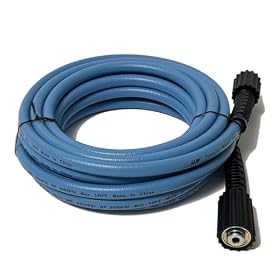 LULUW 25FT 1/4-inch High Pressure Washer Hose,3600PSI M22 14mm Replacement Power Washer Hose for Most…LULUW
$15.99 as of
View on Amazon Hourleey Pressure Washer Hose 50 FT, 3600 PSI Flexible Kink Resistant Power Washer Hose Replacement,…Hourleey
$35.99 as of
View on Amazon
Product prices and availability are accurate as of the date/time indicated and are subject to change. Any price and availability information displayed on Amazon.com at the time of purchase will apply to the purchase of this product.
PSI still matters—but it is not the whole specification
GPM does not replace PSI. If pressure is too low for the job, the spray may not loosen the dirt effectively in the first place. The best choice is a balanced machine with enough pressure for the surface and enough flow for the area you need to rinse.
For example:
- Vehicles and delicate surfaces: Moderate pressure, the correct nozzle, and controlled technique matter more than maximum power. Excessive pressure can damage paint, trim, seals, or soft materials.
- House siding and outdoor furniture: Moderate pressure with sufficient flow usually provides useful detergent rinsing without requiring extreme PSI.
- Concrete and masonry: More pressure may help with embedded grime, while higher flow can speed up rinsing across the larger surface.
- Decks and painted surfaces: Excessive PSI can gouge wood or strip paint. Use the lowest effective pressure and keep the nozzle moving.
Always follow the pressure washer and accessory manufacturer’s instructions, and test an inconspicuous area before cleaning the full surface.
Wide-area rinse accessory
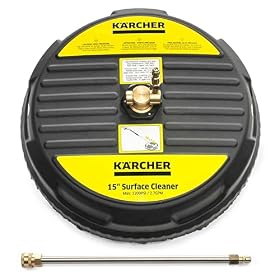 Kärcher Pressure Washer 15" Surface Cleaner Suitable for 2600 to 3200 PSIKÄRCHER
$64.99 as of
View on Amazon MEKOH 20'' Pressure Washer Surface Cleaner & Pressure Washer 4000 PSI, 10.5 GPM Spray GunMEKOH
$223.99 as of
View on Amazon BOVZOR 85.790.004 Rotary Swivel Head Pressure Washer Surface Cleaner Partbovzor
$64.99 as of
View on Amazon
Product prices and availability are accurate as of the date/time indicated and are subject to change. Any price and availability information displayed on Amazon.com at the time of purchase will apply to the purchase of this product.
Compare usable cleaning performance, not just maximum PSI
Pressure washer listings often emphasize a maximum or peak PSI number. That figure may not represent the pressure and flow the machine delivers continuously during normal use. When comparing machines, look for both:
- Operating or rated PSI, when provided
- Operating or rated GPM, when provided
If only maximum PSI is prominently shown, the number may not tell you how quickly the machine will rinse. Check the manufacturer’s specifications for the actual operating figures and confirm that the figures apply to the complete pressure washer, not only to a pump rating or a particular accessory.
You can also use cleaning units as a rough comparison:
Cleaning units = PSI × GPM
This calculation combines pressure and flow, but it is not a complete performance guarantee. Nozzle design, hose size, water supply, pump condition, spray distance, and accessory compatibility also affect results. For a soap-rinsing task, two machines with similar cleaning-unit totals may not feel identical if one produces more usable flow.
Match GPM to the accessory
Some accessories need a minimum flow rate to work correctly or efficiently. Before buying a surface cleaner, foam cannon, turbo nozzle, or replacement hose, check its required or recommended GPM and PSI ranges.
A surface cleaner with a large cleaning width may require more flow than a small pressure washer can provide. If the machine cannot supply enough water, the accessory may leave uneven cleaning patterns or perform slowly. A foam cannon also needs compatible pressure and flow to create the intended spray and foam pattern, although the final rinse still depends heavily on the pressure washer’s available water flow.
The pressure washer’s inlet water supply matters too. A restricted faucet, kinked garden hose, clogged inlet screen, or undersized supply hose can reduce the water reaching the pump. If the machine’s output seems weaker than its specifications suggest, check the water supply before assuming the pump has failed.
How much GPM do you need?
There is no single flow rate that is right for every job. Use the surface size, cleaning method, and accessory as your guide:
- For occasional vehicle and small outdoor cleaning, a lower-flow electric pressure washer may be adequate if you work in manageable sections.
- For larger driveways, patios, siding, or frequent rinsing, additional flow can reduce the time spent making repeated passes.
- For surface cleaners and other high-coverage accessories, confirm the accessory’s flow requirement before choosing the machine.
- For delicate surfaces, do not compensate for low cleaning results by simply choosing higher PSI. Technique, nozzle selection, detergent dwell time, and the correct distance may matter more.
Higher flow can also use more water, so make sure the available faucet and hose supply can support the pressure washer. A machine cannot maintain its advertised performance if the water source cannot provide enough flow.
Practical setup for a better soap rinse
To get the most from the pressure washer you already have:
- Remove heavy loose dirt before applying detergent.
- Use a detergent and injector or tank that is compatible with the machine.
- Let the soap dwell according to the detergent instructions, but do not let it dry on the surface.
- Switch to the recommended rinse nozzle or accessory.
- Rinse from the top down so dirty water does not run back over cleaned areas.
- Work in sections when the surface is large or the weather is hot and dry.
- Keep the spray moving and use a safe distance, especially on paint, wood, siding, and vehicle surfaces.
If the rinse is slow, first check for a clogged nozzle, kinked hose, restricted inlet screen, or insufficient water supply. A dirty filter or partially blocked hose can reduce flow even when the pump is operating normally.
Bottom line
For rinsing soap, GPM is often the specification that determines how quickly and completely the job finishes, while PSI determines how much force is available to loosen dirt. Choose a pressure washer with enough operating PSI for the surface, then favor higher usable GPM when the main task is rinsing large areas or using wide-coverage accessories. Do not rely on peak PSI alone, and verify that your hose, faucet, nozzle, and accessories are compatible with the machine’s flow requirements.
FAQ
Is higher GPM always better on a pressure washer?
Higher GPM can make rinsing faster, but it is not automatically better for every job. The machine must also have suitable PSI, match the accessory’s requirements, and receive enough water from the faucet and supply hose.
What is more important for washing a car, PSI or GPM?
Use controlled, moderate pressure and the correct nozzle to avoid damaging paint, trim, or seals. Adequate GPM helps rinse soap and loosened dirt efficiently, but technique and safe pressure are especially important on vehicles.
Why does my pressure washer have strong PSI but rinse slowly?
The advertised PSI may be a peak figure, while actual operating performance is lower. Also check for a clogged nozzle, kinked hose, restricted inlet screen, inadequate faucet flow, or an accessory that requires more GPM than the machine can provide.
What are cleaning units on a pressure washer?
Cleaning units are calculated by multiplying PSI by GPM. They provide a rough way to compare combined pressure and flow, but they do not account for nozzle design, hose restrictions, water supply, or accessory performance.