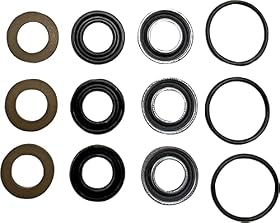
A pressure washer leaking at the pump may have a loose connection, damaged O-ring, clogged inlet filter, failed pump seal, or a cracked pump housing. Shut it down, relieve pressure, locate the leak, and follow these checks before buying parts.
A pressure washer leaking at the pump is often caused by a loose hose connection, worn O-ring, clogged inlet filter, damaged seal, or a cracked pump housing. Turn off the machine, disconnect the water supply, squeeze the spray-gun trigger to release pressure, and dry the pump area so you can identify exactly where the water or oil is coming from.
Safety first
Turn the pressure washer off and unplug an electric model before inspecting it.
For a gas model, switch off the engine and let hot components cool.
Disconnect the garden hose and spray hose, then release trapped pressure through the spray gun.
Do not run the machine with your hands near a pressurized leak. A small leak can produce a high-pressure jet that can injure skin.
Follow the manufacturer’s repair instructions. If the pump must be disassembled or the unit has electrical damage, use a qualified repair technician.
1. Identify what is leaking
Clean and dry the pump, then briefly connect the water supply without starting the motor or engine. Watch for the first wet spot. If necessary, use a paper towel around individual fittings to help locate the source.
Water leaking from a connection
Water around the garden-hose inlet, high-pressure outlet, thermal relief valve, or pump fittings usually points to a loose connection, damaged O-ring, missing washer, or worn fitting. These are generally more repairable than a leak from inside the pump housing.
Water leaking from the pump body
Water emerging from a seam, drain opening, or behind the pump manifold can indicate a failed pump seal, damaged piston seal, cracked housing, or freeze damage. A pump that leaks only while running may have an internal seal or pressure-related failure.
Oil leaking from the pump
Dark or oily fluid beneath the pump is different from a normal water leak. It may indicate a failed crankcase seal, damaged pump case, or low pump oil on a serviceable pump. Do not operate the machine until the owner’s manual identifies the correct oil and service procedure.
Product prices and availability are accurate as of the date/time indicated and are subject to change. Any price and availability information displayed on Amazon.com at the time of purchase will apply to the purchase of this product.
2. Check the inlet filter and water supply
A blocked inlet screen can restrict water flow and make the pump run abnormally. Remove the garden hose only after pressure is released, then inspect the small filter or screen at the water inlet.
Rinse dirt from a removable screen with clean water. Replace it if it is torn, permanently blocked, or missing. Also check that the garden hose is not kinked and that the water supply is fully open. Do not compensate for restricted water flow by repeatedly restarting the pressure washer; inadequate supply can contribute to pump damage.
Product prices and availability are accurate as of the date/time indicated and are subject to change. Any price and availability information displayed on Amazon.com at the time of purchase will apply to the purchase of this product.
3. Inspect the hoses and fittings
Examine both the garden-hose connection and the high-pressure hose connection at the pump. Look for:
Cracked or split hose ends
Cross-threaded plastic fittings
Flattened, cut, or missing O-rings
Damaged quick-connect plugs
Loose threaded adapters
Corrosion or cracks around the pump outlet
Replace a damaged O-ring, washer, fitting, or hose with a part specified for the pressure washer. Do not use an ordinary low-pressure hose on the high-pressure outlet. Avoid forcing a fitting that does not align correctly, since cross-threading can damage the pump housing.
Hand-tighten plastic fittings unless the manual specifies otherwise. Over-tightening can distort an O-ring or crack a plastic inlet or outlet.
Product prices and availability are accurate as of the date/time indicated and are subject to change. Any price and availability information displayed on Amazon.com at the time of purchase will apply to the purchase of this product.
4. Check for a clogged gun, wand, or nozzle
A blocked spray tip or restricted gun can leave pressure trapped in the system and place extra stress on pump components. Remove the nozzle and clean it with the method recommended in the owner’s manual. Inspect the wand and spray gun for damage, then reconnect the hose and confirm that water can flow freely through the gun before starting the machine.
Never clear a pressure-washer nozzle while the unit is running or pressurized. If the gun trigger sticks, leaks heavily, or does not release pressure, replace or repair the gun before using the washer.
Product prices and availability are accurate as of the date/time indicated and are subject to change. Any price and availability information displayed on Amazon.com at the time of purchase will apply to the purchase of this product.
5. Confirm the setup and startup procedure
Make sure water is flowing through the pump before starting the motor or engine. Connect the garden hose, turn on the water, and squeeze the spray-gun trigger until air is purged and water flows steadily. Starting a pump dry can damage seals and other internal components.
Use only the hose, fittings, detergent setup, and water supply arrangement approved for the machine. Do not run the pump against a closed trigger for longer than the manufacturer allows. The bypass or unloader system manages pressure when the trigger is released, and a malfunction can cause overheating or leaks.
6. Check for freeze damage or a cracked housing
Water left inside a pump can freeze, expand, and crack the pump manifold or housing. Look for a fine split, bulge, or leak that appears as soon as the water supply is turned on. Freeze damage may be more obvious around plugs, fittings, and pump seams.
A cracked housing normally requires replacement of the affected pump assembly or the pressure washer. Sealant, tape, or epoxy is not a dependable repair for a pressurized pump body.
When a pump seal may have failed
A failed internal seal is more likely when:
The leak comes from the center of the pump rather than a threaded connection.
Water appears only after the motor or engine starts.
The pump leaks from a drain or weep area.
Pressure pulses, drops significantly, or is difficult to maintain.
A previously stored machine begins leaking after long inactivity.
Some pumps have replaceable seal kits, while others are designed to be replaced as a complete pump assembly. Check the exact model number and the manufacturer’s parts diagram before ordering. A seal kit is only useful if the housing, pistons, bearings, and other mating surfaces are still serviceable.
Repair the pump or replace the pressure washer?
A fitting, inlet screen, washer, O-ring, hose, or spray gun is usually a reasonable repair when the pump itself is dry and undamaged. A pump replacement may make sense when the pump body is cracked, internal seals have failed, or repair labor and parts approach the cost of a compatible replacement pump.
Replacing the entire pressure washer is more practical when the machine also has engine or motor problems, damaged wiring, severe corrosion, missing parts, or a pump that is not available separately. Match any replacement pump to the manufacturer’s specifications, mounting pattern, shaft arrangement, water connections, and pressure and flow requirements. A pump that physically fits is not necessarily compatible.
If the leak continues
Stop using the pressure washer and photograph the leak location. Record the model number and whether the leak occurs with the machine off, with water connected, or only while operating. Use those details to identify the correct seal, fitting, pump assembly, or service procedure.
If the leak is near the motor, power cord, switch, or other electrical component, keep the unit unplugged and have it inspected. For gas models, avoid operating the machine if leaking water could reach hot engine parts or electrical controls.
FAQ
Can I use a pressure washer if the pump is leaking?
No. Shut it down, disconnect the water and power or fuel source, and release pressure first. A leak can worsen, create a dangerous high-pressure spray, or damage the motor, engine, and surrounding components.
Why does my pressure washer leak water when it is turned off?
A leak with the machine off but the water supply connected usually comes from an inlet fitting, O-ring, hose connection, thermal relief valve, cracked housing, or failed internal seal. Locate the first wet spot before replacing parts.
Can I fix a pressure washer pump leak with plumber’s tape?
Tape may help only on a compatible threaded connection if the manufacturer permits it. It will not repair a damaged O-ring, quick-connect seal, pump shaft seal, or cracked pump housing. Do not apply tape where it can enter the pump or block a passage.
Is a pressure washer pump seal worth replacing?
It can be worthwhile when the pump housing and other internal parts are in good condition and a correct seal kit is available. If the housing is cracked or the pump has multiple failures, replacing the pump assembly or pressure washer may be more practical.
How do I prevent a pressure washer pump from leaking?
Use a clean water supply, keep the inlet filter clear, purge air before starting, avoid running the pump dry or against a closed trigger, disconnect and drain the machine after use, and protect it from freezing temperatures according to the manufacturer’s storage instructions.