Pressure Washer Not Building Pressure: Causes and Fixes
If your pressure washer runs but will not build pressure, start with the water supply, inlet filter, hose, leaks, and spray nozzle before assuming the pump has failed.
What do you need help with?
Open an answer, or tell us what we should cover next.
Answered in this guide
Diagnose why a pressure washer runs without building pressure
Start with the water supply, inlet screen, hoses, leaks, nozzle, and detergent setting. If these are correct, compare the pressure symptom: consistently low pressure suggests restricted flow or pump wear, while trigger-related loss points toward pressure-control trouble.
Restore pressure by correcting water-flow restrictions
Confirm the washer receives enough water, then inspect the garden and high-pressure hoses for kinks, crushed sections, loose fittings, cracks, leaks, or undersized construction. Cleaning the inlet filter and correcting these restrictions can restore pressure without replacing the pump.
Clear air, nozzle, and setup problems causing low pressure
Purge trapped air after storage, movement, or an empty hose. Clean a blocked nozzle, open the water supply fully, use the correct connection and accessory, and avoid detergent settings when high pressure is expected.
Decide whether a part or the pressure washer needs replacement
Replace a clearly blocked or damaged nozzle, O-ring, inlet filter, or hose when a matched replacement is available. Consider pump replacement only after the water supply, hoses, seals, nozzle, and setup have been ruled out.
Request a topic and help us choose what to build next.
Test whether the pump or unloader has actually failed
Choose the correct water-supply hose size
Repair or replace a worn pressure-washer pump
Requests help us prioritize the next guide. No email required.
One anonymous request per topic.
If your pressure washer is running but not building pressure, the most likely causes are restricted water flow, a clogged inlet filter or spray nozzle, air entering the system, an incorrect setup, or a worn pump. Turn the machine off before disconnecting fittings, and never run a pressure washer without an adequate water supply.
Check the water supply first
A pressure washer cannot create full pressure if it is not receiving enough water.
Make sure the faucet is fully open.
Confirm the garden hose is connected directly to the water supply as the manufacturer specifies.
Check that the hose is not kinked, crushed, or unusually long and narrow.
Verify that the hose provides the flow rate required by the pressure washer.
If possible, test the machine from another faucet.
Do not assume that a running engine or motor means the pump has enough water. Insufficient inlet flow can cause weak pressure, surging, overheating, and pump damage.
Clean the inlet filter
Most pressure washers have a small screen or filter where the garden hose connects to the machine. Sediment, rust, mineral deposits, and bits of hose can restrict the inlet.
Turn off the pressure washer, close the water supply, and release pressure from the spray wand. Remove the inlet screen only if the manufacturer permits it. Rinse it with clean water and reinstall it carefully. Do not operate the machine without the filter if the manual requires one.
A damaged, missing, or heavily blocked inlet filter is a reasonable replacement-part purchase. Match the replacement to the pressure washer's inlet fitting and manufacturer specifications.
Product prices and availability are accurate as of the date/time indicated and are subject to change. Any price and availability information displayed on Amazon.com at the time of purchase will apply to the purchase of this product.
Inspect the garden hose and high-pressure hose
A restriction in either hose can reduce performance or cause pressure to pulse.
Look for:
Kinks or sharp bends
Flattened sections
Crushed connectors
Loose fittings
Cracks, bulges, or leaks
A hose that is too small for the machine's required flow
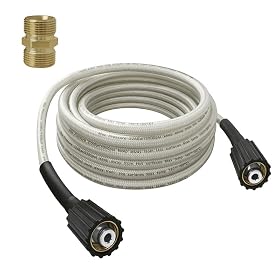
Disconnect the high-pressure hose and check whether water can pass through it freely. Never try to clear a suspected blockage while the machine is running. Replace a hose that is damaged, leaking, or internally restricted rather than attempting a temporary repair on a high-pressure line.
Product prices and availability are accurate as of the date/time indicated and are subject to change. Any price and availability information displayed on Amazon.com at the time of purchase will apply to the purchase of this product.
Look for water or air leaks
Leaks before the pump can reduce the water available for pressurization. Leaks after the pump can make the machine appear weak and may be dangerous at high pressure.
With the machine off, inspect the inlet connection, hose couplers, O-rings, wand connection, trigger-gun connection, and high-pressure hose. Replace damaged O-rings or seals with parts that match the equipment. Tighten connections by hand first; excessive force can damage plastic fittings.
If the pump makes a rattling or irregular sound, the spray surges, or bubbles continue after the air has been purged, stop using the machine and consult the manual or a qualified repair professional.
Product prices and availability are accurate as of the date/time indicated and are subject to change. Any price and availability information displayed on Amazon.com at the time of purchase will apply to the purchase of this product.
Purge air from the system
Air trapped in the pump or hose can cause pulsing or low pressure, especially after the machine has been stored, moved, or connected to an empty hose.
With the pressure washer switched off:
Connect the water supply and turn the faucet fully on.
Hold the spray-gun trigger open.
Allow water to flow until the stream is steady and mostly free of air.
Release the trigger, then start the pressure washer according to the manual.
Test the spray again.
Do not pull the trigger repeatedly to compensate for a weak water supply. If air keeps entering the system, inspect the inlet connection and seals.
Product prices and availability are accurate as of the date/time indicated and are subject to change. Any price and availability information displayed on Amazon.com at the time of purchase will apply to the purchase of this product.
Check the nozzle and spray wand
A partially blocked nozzle is one of the most common reasons a pressure washer seems to lose pressure. Dirt or scale can distort the spray pattern and restrict flow.
Turn off the machine, shut off the water, and release pressure before removing the nozzle. Clean it only as directed by the manufacturer. A nozzle-cleaning tool or soft cleaning method may be appropriate, but do not enlarge the opening with a drill, wire, or other improvised tool.
Also check that:
The nozzle is fully seated.
The nozzle is the correct type and size for the pressure washer.
The spray wand is not blocked.
The trigger gun opens fully.
A low-pressure detergent nozzle or soap setting is not still selected.
A nozzle with a damaged opening should be replaced. Using a nozzle with the wrong orifice can change the pressure and flow and may overload the pump.
Confirm the operating setup
Read the pressure washer's manual and verify the basic setup. Common mistakes include connecting the garden hose to the wrong port, using a detergent setting when high pressure is expected, failing to open the water supply fully, or using an incompatible accessory.
For electric pressure washers, make sure the machine is connected as specified by the manufacturer. Avoid long, undersized extension cords unless the manual explicitly allows them; voltage drop can reduce motor performance. For gas models, use the specified fuel and confirm that the engine is running normally, but do not adjust the governor or other safety controls to force higher speed.
Never bypass a thermal protector, electrical safety device, or pressure-control component.
Check for a full detergent system or stuck unloader
If the pressure washer works normally with the spray gun open but loses pressure when the trigger is released and pulled again, the unloader or pressure-control system may be sticking. Detergent residue, debris, or an incorrect accessory can also affect operation.
Do not disassemble the pump or adjust the unloader spring unless the manufacturer provides instructions for that procedure. High-pressure components can release stored energy, and incorrect adjustment can damage the pump or create an unsafe pressure condition.
When the pump may be the problem
If the water supply, inlet filter, hoses, seals, nozzle, and setup are all correct, the pump may be worn or damaged. Possible signs include:
Pressure remains low with the correct nozzle and unrestricted water supply.
The machine leaks oil or water from the pump area.
The pump is unusually noisy or vibrates heavily.
Pressure pulses continuously after air has been purged.
The motor or engine runs normally, but output stays weak.
The unit was operated without water or left with water or detergent inside while freezing temperatures were possible.
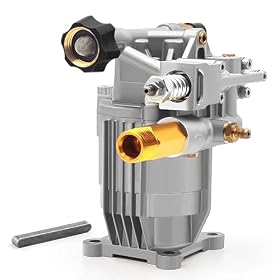
For some machines, a pump kit or replacement pump is practical. On others, the pump is not economical to repair, especially if the unit is older or has additional motor, engine, hose, or frame damage. Use the exact replacement specified for the model. If the pump housing is cracked, the machine has an electrical fault, or you are unsure how to safely test pressure components, stop and use an authorized service center or qualified professional.
Quick diagnosis by symptom
Pressure is low all the time
Check the water supply, inlet screen, hose restrictions, leaks, nozzle size, and detergent setting. If these are correct, suspect pump wear or a pressure-control fault.
Pressure pulses or surges
Purge air, inspect the inlet for leaks, clean the inlet filter and nozzle, and confirm adequate water flow. Persistent pulsing can indicate a stuck unloader or pump problem.
The motor or engine runs, but there is almost no pressure
Check that water is reaching the machine, the spray gun trigger opens, and the nozzle is installed correctly. A disconnected, blocked, or damaged high-pressure hose can also prevent normal output.
Pressure is normal until the trigger is released
This pattern points toward a pressure-control or unloader issue. Avoid repeatedly cycling the trigger and do not adjust internal components without the correct manufacturer procedure.
When to replace a part or the whole pressure washer
Replace a nozzle, O-ring, inlet filter, or hose when that component is clearly damaged or blocked and a properly matched replacement is available. A pump replacement may make sense when the rest of the machine is in good condition and the replacement procedure and cost are reasonable.
Replacement of the entire pressure washer is often more practical when the pump, motor or engine, electrical components, and hoses all show wear, or when the correct pump is unavailable. Match any replacement unit to the required PSI, gallons per minute, power source, and the surfaces you plan to clean. Higher pressure is not automatically better; an unsuitable pressure or nozzle can damage siding, wood, paint, or masonry.
If the machine trips breakers, smells burned, has exposed wiring, sprays from a cracked housing, or behaves unpredictably, disconnect it and seek qualified service rather than continuing to troubleshoot it while energized.
FAQ
Why is my pressure washer running but not building pressure?
Start by checking water flow, the inlet filter, kinked or blocked hoses, leaks, trapped air, and the spray nozzle. If those checks do not help, the pump or pressure-control system may be worn or faulty.
Can a clogged nozzle cause a pressure washer to lose pressure?
Yes. Dirt or mineral buildup can restrict or distort the spray. Turn off the machine, release pressure, and clean or replace the nozzle according to the manufacturer's instructions.
How do I get air out of a pressure washer pump?
Connect an adequate water supply, open the faucet fully, and hold the spray-gun trigger open with the machine off until the water stream is steady. Then start the pressure washer as directed in its manual.
Is it safe to run a pressure washer without water?
No. Running the pump dry can cause rapid damage. Connect the water supply, purge air, and confirm steady water flow before starting the machine.
When should I replace the pressure washer pump?
Consider a pump replacement when supply, filtration, hoses, seals, nozzle, and setup are correct but pressure remains low, or when the pump leaks, is excessively noisy, or has freeze damage. Use the exact compatible part or consult qualified service.