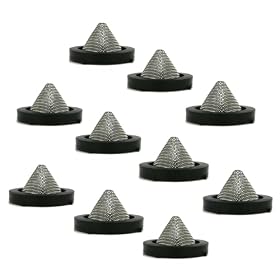
A pressure washer pump usually sucks air from a rain barrel because the inlet side cannot maintain a steady, debris-free water supply. Check the filter, hose, fittings, water level, and pump setup before blaming the pump.
A pressure washer pump that sucks air from a rain barrel is usually being starved of water rather than failing internally. Shut the pressure washer off quickly—running a pump dry can damage seals and other components—then check the inlet filter, suction hose, fittings, barrel water level, and whether the pump is being supplied with enough positive water pressure.
1. Stop the pump and check the inlet filter
Turn off the pressure washer and disconnect power or fuel operation according to the manufacturer’s instructions. Relieve pressure before disconnecting any hose.
Rain barrels often contain leaves, sediment, algae, and roof debris. A clogged inlet screen or filter can restrict flow enough for the pump to pull air through the supply line.
Remove and rinse the inlet filter or screen.
Check for sediment packed inside the filter housing.
Inspect the barrel outlet and any strainer for blockage.
Do not operate without the filter if the manufacturer requires one.
Replace a cracked, collapsed, or badly clogged filter.
Use only a filter suitable for the water flow required by the pump. A very fine filter can create excessive restriction if it is not designed for pressure-washer supply water.
2. Inspect the rain-barrel hose for clogs and air leaks
The suction hose must stay open and airtight. A hose can look fine externally while being kinked, partially collapsed, or loose at a fitting.
Check the hose from the barrel to the pump for:
Kinks or sharp bends
Soft sections that collapse under suction
Cracks, pinholes, or damaged ends
Loose hose clamps or threaded fittings
Debris lodged in quick-connect adapters
A hose that is too narrow for the pump’s inlet requirement
A regular garden hose may not be suitable on the suction side. Some garden hoses flatten when a pump draws water through them. Use a reinforced suction hose or the hose type specified by the pressure-washer or pump manufacturer.
If bubbles appear in a transparent section of hose, air is entering somewhere upstream of the pump. Tighten fittings, replace damaged washers, and check that threaded connections are sealed as directed. Do not use excessive thread sealant where loose material could enter the pump.
Product prices and availability are accurate as of the date/time indicated and are subject to change. Any price and availability information displayed on Amazon.com at the time of purchase will apply to the purchase of this product.
3. Check every connection on the suction side
A pump can pull air through a small gap without visibly leaking water. Pay particular attention to the connection at the barrel, the filter housing, hose adapters, and the pump inlet.
Remove and inspect sealing washers and O-rings. Replace flattened, split, or missing seals. Make sure fittings are aligned and fully seated, but avoid overtightening plastic parts.
The pump inlet connection must be airtight. A leak on the high-pressure outlet side normally causes water leakage or pressure loss, while a leak on the inlet side can introduce air without an obvious water leak.
Pump to supply a pressure washer from a rain barrel
Product prices and availability are accurate as of the date/time indicated and are subject to change. Any price and availability information displayed on Amazon.com at the time of purchase will apply to the purchase of this product.
4. Confirm the setup provides enough water
Many pressure-washer pumps are designed to receive water from a pressurized faucet. A rain barrel may provide only gravity-fed flow, and some pressure washers cannot draw reliably from an open container without an approved self-priming arrangement.
Check the following:
The pump is positioned as low as practical relative to the barrel outlet.
The supply hose runs continuously upward toward the pump rather than forming high loops that trap air.
The barrel outlet is fully open and large enough for the required flow.
The hose is filled with water before starting, if the manufacturer permits and requires priming.
The pump has an approved inlet or suction setup for a nonpressurized water source.
The pressure washer is not being operated beyond the height or hose-length limits in its instructions.
Do not assume that a pressure washer labeled “self-priming” can lift water from any rain barrel. Self-priming ability has limits, and the manufacturer may still require a specific hose, check valve, maximum lift, or minimum water flow.
A transfer pump can be a better solution when the pressure washer needs a steady pressurized supply. It must be compatible with the pressure washer’s required flow and inlet pressure. Adding a pump without checking those requirements can create a different safety or equipment problem.
5. Make sure the barrel has enough usable water
A full-looking barrel may still starve the pump if the outlet is mounted high, the water level has dropped below the outlet, or floating debris is blocking the intake.
Inspect the barrel for:
A water level below the outlet or pickup tube
A pickup tube that has moved above the water surface
Sediment blocking the outlet
A floating intake that is stuck against the barrel wall
A barrel lid or vent that prevents air from entering as water leaves
The barrel needs adequate venting. If air cannot enter as water flows out, a vacuum can form and reduce or stop the supply. Keep the barrel covered to limit debris, but do not block any required vent.
6. Prime and purge the system correctly
Air trapped in the supply hose or pump head can cause pulsing, rattling, low pressure, or no pressure. Follow the priming procedure in the pressure-washer manual rather than repeatedly starting the motor.
A common general procedure is to connect the water supply, open the supply valve, and allow water to flow through the pressure-washer gun with the machine off until the stream is steady and mostly free of air. Then start the machine only if the manual permits this procedure.
Never run the pump dry while trying to force it to prime. Stop if the pump becomes unusually loud, the water stream remains intermittent, or the machine overheats.
7. Check for a pump problem last
If the inlet filter is clean, the hose and fittings are airtight, the barrel provides adequate flow, and the system has been primed correctly, the pump may have damaged seals, valves, or an inlet component.
Possible signs of pump damage include:
Persistent air or pressure pulsing with a verified water supply
Water leaking from the pump body or seal area
Unusual grinding, knocking, or squealing
Pressure that remains low with a known-good pressurized supply
A pump that overheats quickly
Do not open a pressure washer pump unless the manufacturer provides a service procedure and you are qualified to follow it. A replacement inlet component, seal kit, or pump may be reasonable when the failed part is identified and available. If the machine was not designed for rain-barrel use, replacing the pump alone will not solve an unsuitable water-supply setup.
When to stop using the rain barrel
Use the manufacturer’s instructions as the final authority. If the pressure washer requires a pressurized faucet, do not keep experimenting with a gravity-fed barrel. Use a suitable pressurized water source or an approved transfer-pump arrangement instead.
Rainwater also carries more debris than treated tap water. Keep the barrel covered, use the required filtration, and avoid using collected water if the manufacturer warns against it. Disconnect power before servicing a corded unit, keep fuel-powered equipment outdoors, and never bypass protective devices or operate the washer with damaged hoses or fittings.
Can a pressure washer draw water directly from a rain barrel?
Sometimes, but not every pressure washer can do so. Many models expect a pressurized faucet supply and may not lift water reliably from an open container. Check the manual for self-priming, maximum suction lift, minimum flow, hose, and filtration requirements.
Why does my pressure washer lose pressure when connected to a rain barrel?
The barrel may not provide enough flow, or the inlet filter, pickup tube, or hose may be restricted. Air leaks, a low water level, an unvented barrel, and an unsuitable collapsible hose can also cause pressure loss.
Can running a pressure washer dry damage the pump?
Yes. Dry running can overheat or damage pump seals and other components. Shut the machine off if the supply is intermittent, the pump becomes unusually loud, or water is not flowing steadily.
Should I use a transfer pump with a rain barrel?
A transfer pump may help when the pressure washer requires a steady pressurized supply, but it must match the washer’s required flow and inlet conditions. Use only an arrangement approved by the pressure-washer and transfer-pump manufacturers.