For most residential concrete driveways, a pressure washer producing about 2,000–3,000 PSI and 2–3 GPM is a practical starting point. The best choice also depends on the surface, stains, driveway size, and whether you use a surface cleaner.
Most residential concrete driveways can be cleaned effectively with a pressure washer rated around 2,000–3,000 PSI and 2–3 GPM. Choose the lower end for routine dirt and algae, and consider more flow or power for large, heavily soiled driveways and stubborn stains.
Do not choose based on PSI alone. GPM controls how quickly the washer rinses away loosened dirt, while PSI provides the impact needed to break up grime. A pressure washer with moderate PSI and useful water flow is often more practical than a machine advertising very high PSI with little flow.
Recommended pressure washer size by driveway job
Driveway condition
Useful pressure washer range
Practical choice
Light dirt, dust, and occasional maintenance
About 1,500–2,000 PSI
Compact electric pressure washer
Typical residential concrete with dark grime or algae
About 2,000–3,000 PSI and 2–3 GPM
Mid-size electric or gas pressure washer
Large or heavily soiled concrete driveway
About 2,500–3,500 PSI with higher GPM
Higher-output gas pressure washer or commercial-style unit
Oil, grease, or embedded stains
Moderate-to-high pressure plus suitable detergent
Pressure washer with detergent application and a controlled nozzle
These are starting points rather than guarantees. Always check the pressure washer manual and begin with the least aggressive setting that cleans effectively.
PSI and GPM: which matters more?
PSI, or pounds per square inch, describes water pressure. Higher PSI can remove tough deposits, but excessive pressure can damage concrete, strip coatings, loosen joint material, or etch softer surfaces.
GPM, or gallons per minute, describes water flow. More flow helps rinse a larger area and reduces the time spent moving loosened dirt across the driveway.
For driveway cleaning, look at both figures. A machine with adequate PSI but very low GPM may clean slowly. A higher-flow machine can improve productivity, especially when paired with a surface cleaner.
Some manufacturers also list cleaning power using a PSI-by-GPM figure. Treat that number as a comparison aid, not a replacement for checking the actual PSI, GPM, included nozzles, and the conditions under which those ratings were measured.
Product prices and availability are accurate as of the date/time indicated and are subject to change. Any price and availability information displayed on Amazon.com at the time of purchase will apply to the purchase of this product.
Electric or gas pressure washer?
Electric pressure washers
An electric model is usually suitable for a small or average driveway with routine dirt. It is typically easier to start, quieter, and simpler to store. Its limitations may include lower water flow, a shorter working range because of the power cord, and the need for a properly rated outdoor extension setup if the manufacturer permits an extension cord.
Keep electrical connections away from standing water, use a properly grounded outlet protected by a GFCI, and follow the washer's instructions. Do not use damaged cords, plugs, or hoses.
Gas pressure washers
A gas model is more useful when the driveway is large, heavily soiled, or needs to be cleaned regularly. Higher water flow can make broad surfaces faster to rinse, but gas machines require fuel, ventilation, maintenance, and safe storage.
Never operate a gas pressure washer in a garage, shed, carport, or other enclosed or partly enclosed space. Carbon monoxide can build up quickly. Follow the manufacturer's starting, fueling, and shutdown instructions.
Product prices and availability are accurate as of the date/time indicated and are subject to change. Any price and availability information displayed on Amazon.com at the time of purchase will apply to the purchase of this product.
Use a surface cleaner for a driveway
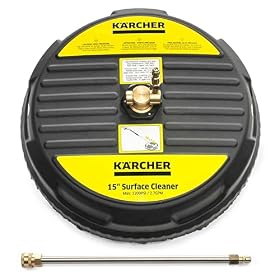
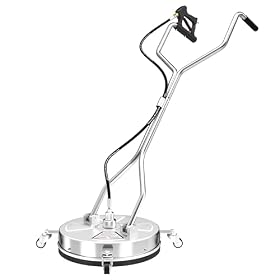
A pressure washer surface cleaner is often more important than buying the highest-PSI machine. It uses rotating spray arms beneath a housing to clean broad, relatively flat areas more evenly than a handheld wand.
Choose a surface cleaner that is compatible with the pressure washer's PSI and GPM. A cleaner designed for more water flow may spin poorly or clean unevenly when connected to a small electric washer. Check the accessory's requirements before buying.
A surface cleaner can help reduce:
Striping and visible wand marks
Overspray
Cleaning time on broad concrete areas
Uneven pressure from holding the wand at inconsistent distances
Use the wand for edges, steps, corners, and spots the surface cleaner cannot reach. Move the cleaner steadily rather than leaving it stationary in one place.
Product prices and availability are accurate as of the date/time indicated and are subject to change. Any price and availability information displayed on Amazon.com at the time of purchase will apply to the purchase of this product.
Which nozzle should you use?
Start with a wider spray pattern and increase aggressiveness only if necessary. Common pressure-washer nozzle colors are not perfectly universal, so confirm the meaning of each nozzle in the machine's manual.
Wide-angle nozzle: A safer starting point for general rinsing and unfamiliar concrete
Medium-angle nozzle: Useful for more concentrated cleaning while still covering a reasonable area
Narrow-angle nozzle: More aggressive and more likely to etch concrete or damage joints if held too close
Low-pressure or detergent nozzle: Used to apply compatible cleaning solution rather than provide deep cleaning force
Avoid using a zero-degree nozzle on a driveway unless the manufacturer specifically permits it and you understand the risk. A concentrated stream can leave marks, damage mortar or expansion joints, and create an uneven appearance.
Product prices and availability are accurate as of the date/time indicated and are subject to change. Any price and availability information displayed on Amazon.com at the time of purchase will apply to the purchase of this product.
How to pressure-wash a driveway without damaging it
Inspect the surface. Look for loose concrete, cracks, chipped edges, exposed aggregate, failing sealant, and damaged joints.
Sweep first. Remove leaves, gravel, and loose debris so they do not become projectiles or clog the equipment.
Protect nearby areas. Move vehicles and outdoor items. Cover delicate plants if detergent will be used, and keep runoff away from storm drains where local rules require it.
Test an inconspicuous spot. Use the widest suitable spray pattern and keep the nozzle farther away at first.
Apply detergent if needed. Use only a solution approved for the pressure washer and the surface. Allow it to dwell as directed, but do not let it dry.
Clean in overlapping passes. Keep the wand or surface cleaner moving at a consistent pace and distance.
Rinse thoroughly. Flush away detergent and loosened dirt, working toward an appropriate drainage area.
Let the driveway dry before judging the result. Some discoloration becomes less noticeable only after the concrete has dried.
A pressure washer will not always remove oil completely. Oil may have penetrated the concrete, and repeated treatment with a suitable degreaser may be necessary. Do not assume more pressure is the answer; excessive pressure can damage the surface without removing the stain.
Is higher pressure always better?
No. Pressure can remove dirt faster, but too much force can cause:
Surface etching or pitting
Flaking on weak or damaged concrete
Damage to painted or coated areas
Erosion around cracks and joints
Visible cleaning stripes
Water intrusion behind loose materials
Older concrete, decorative finishes, pavers, brick, asphalt, and sealed surfaces may require a lower-pressure approach. Asphalt in particular can be damaged by aggressive pressure and heat. If the driveway material is unfamiliar or already deteriorating, use conservative settings or ask a qualified surface-cleaning professional for guidance.
What size pressure washer is best for a large driveway?
For a large driveway, prioritize water flow and a compatible surface cleaner rather than selecting the highest advertised PSI. A machine in the approximate 2,500–3,500 PSI range with useful GPM can be a reasonable choice for heavy residential work, but the right size still depends on the washer's actual specifications and the accessory's requirements.
A smaller machine can clean a large driveway, but it may take longer and may not run a larger surface cleaner effectively. If you clean only once or twice a year, renting a suitable higher-output unit may be more practical than buying one. Follow the rental provider's instructions and verify that the included hoses, fittings, and surface cleaner match the machine.
When a pressure washer is not the right solution
Consider another approach or professional help when:
The concrete is crumbling, badly cracked, or structurally damaged
The surface has a fragile coating or decorative finish
Water could enter a basement, garage, or vulnerable wall
Runoff could carry oil, chemicals, or detergent into a storm drain
The stain may be hazardous or chemically contaminated
You cannot safely control the spray or operate the equipment outdoors
For most sound residential concrete, a mid-range pressure washer, a compatible surface cleaner, and a conservative starting technique are a better combination than maximum pressure alone.
FAQ
Is 2,000 PSI enough to clean a driveway?
It can be enough for light to moderate dirt on sound residential concrete, especially when the washer has useful water flow and is paired with an appropriate surface cleaner. Heavier grime, algae, or a large driveway may benefit from more GPM or a higher-output machine.
Is 3,000 PSI too much for concrete?
Not necessarily, but it can damage weak, cracked, coated, or decorative concrete if used too closely or with a narrow spray. Start with a wider nozzle, keep the spray moving, test a small area, and follow the surface and pressure washer manufacturers' instructions.
What GPM should a pressure washer have for a driveway?
About 2–3 GPM is a practical range for many residential driveway-cleaning jobs. Higher flow can rinse faster and may be needed for larger surface cleaners, but always match the accessory to the washer's published PSI and GPM requirements.
Can I use a surface cleaner with an electric pressure washer?
Yes, if the surface cleaner is rated for the electric washer's PSI and GPM. If the cleaner requires more flow than the washer provides, it may spin poorly or leave an uneven result.