An 1800 PSI electric washer is usually sufficient for vehicles, outdoor furniture, siding, and light cleaning. A 2300 PSI model offers more working headroom for patios, concrete, and heavier buildup, but nozzle choice, GPM, and technique matter just as much as PSI.
A 2300 PSI electric pressure washer is not automatically the better choice. For cars, outdoor furniture, siding, and light household cleaning, an 1800 PSI model is often easier to control and may be sufficient. The extra pressure becomes more useful for concrete, pavers, and stubborn outdoor grime—provided the washer also has useful water flow and you use the correct nozzle and distance.
Choose a 2300 PSI electric washer if you regularly clean:
Concrete driveways and sidewalks
Brick patios and pavers
Heavily soiled outdoor surfaces
Larger areas where faster cleaning matters
Dirt that an 1800 PSI washer struggles to remove
For delicate surfaces, either machine can cause damage if used too close or with an aggressive nozzle. A 2300 PSI washer gives you more cleaning potential, but it also leaves less room for careless technique.
PSI is only part of cleaning performance
PSI, or pounds per square inch, describes water pressure. Higher PSI can help break up hardened dirt, but it does not tell you how quickly the washer can rinse or cover an area.
GPM, or gallons per minute, describes water flow. More flow can improve rinsing and help move loosened dirt away. Two electric washers with similar PSI can feel different in use if one delivers more useful flow.
When comparing these machines, check:
The manufacturer's rated or working PSI, not only a maximum or peak figure.
The GPM rating and whether it is listed at the stated pressure.
The included nozzles and whether replacement accessories are easy to find.
Hose length, cord length, detergent capability, and storage features.
Electrical requirements and whether your outdoor outlet is properly protected.
A washer advertised with a higher peak PSI may not clean better in every situation. Use comparable specifications whenever possible, and treat maximum figures cautiously.
Product prices and availability are accurate as of the date/time indicated and are subject to change. Any price and availability information displayed on Amazon.com at the time of purchase will apply to the purchase of this product.
1800 PSI electric washers: where they make sense
An 1800 PSI washer is a practical fit for lighter residential work. Its lower output can make it easier to control around paint, trim, screens, and vehicle finishes.
Good uses
Rinsing road film from a car with a suitable vehicle-safe nozzle
Cleaning patio furniture and plastic bins
Washing vinyl siding from a safe distance
Removing loose dirt from fences and decks
Rinsing bikes, garden tools, and outdoor equipment
The main limitation is speed on hard, porous surfaces. An 1800 PSI washer may remove surface dirt from concrete, but stubborn stains, embedded grime, algae, and years of buildup can require more passes, closer technique within safe limits, or a surface cleaner.
Product prices and availability are accurate as of the date/time indicated and are subject to change. Any price and availability information displayed on Amazon.com at the time of purchase will apply to the purchase of this product.
2300 PSI electric washers: where the extra output helps
A 2300 PSI electric washer is better suited to tougher residential cleaning when the surface can tolerate it. The additional pressure can reduce the effort needed to loosen stuck-on dirt, especially when paired with an appropriate nozzle and adequate water flow.
Good uses
Concrete walks and driveways
Brick and paver surfaces
Heavily soiled patios
Outdoor areas with compacted mud or grime
Larger cleaning jobs where an 1800 PSI unit feels slow
The extra capability is not a license to use the narrowest nozzle at close range. Paint, wood, soft stone, mortar joints, vehicle finishes, and damaged concrete can be harmed by concentrated spray.
Product prices and availability are accurate as of the date/time indicated and are subject to change. Any price and availability information displayed on Amazon.com at the time of purchase will apply to the purchase of this product.
Which pressure is safer for common surfaces?
Cars and motorcycles
An 1800 PSI washer is generally the easier option to manage, but either pressure level can be used only with care. Keep the spray moving, begin farther away, and use a broad spray pattern. Avoid forcing water into door seals, bearings, electrical connectors, and damaged paint.
Use a vehicle-safe detergent and a suitable wash method rather than relying on pressure alone to remove grit.
Vinyl siding
Either model can clean siding when used from a safe distance with a broad spray. Spray in a direction that does not drive water behind overlapping panels. Check the manufacturer's guidance for the siding and washer before cleaning.
Wood decks and fences
Start with the widest spray and the lowest practical pressure. Wood fibers can become fuzzy, gouged, or stripped when the tip is too close. An 1800 PSI washer may be easier to control, but technique matters more than the number on the machine.
Concrete and pavers
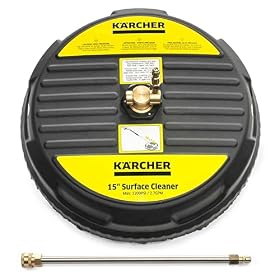
A 2300 PSI washer usually offers more useful headroom for this work. Keep the nozzle moving and watch for loose aggregate, damaged joints, and uneven color. A surface cleaner can produce more consistent results than a narrow wand stream and may reduce striping.
Painted surfaces and soft stone
Use conservative pressure and test an inconspicuous area first. A pressure washer may remove paint, loosen coatings, or damage soft stone regardless of whether it is rated at 1800 or 2300 PSI.
Nozzle choice can matter more than the PSI difference
The nozzle determines how widely the water spreads. A wider spray generally produces a gentler cleaning effect, while a narrow spray concentrates more force in a smaller area.
For a new surface or an unfamiliar material:
Start with the widest appropriate spray.
Hold the wand farther away than you think necessary.
Test a hidden area.
Keep the nozzle moving rather than dwelling in one spot.
Move closer or select a more concentrated pattern only if the surface remains undamaged.
Never remove safety guards or use accessories outside the pressure and temperature limits stated by the manufacturer.
Consider the job size, not just cleaning force
For occasional small jobs, an 1800 PSI electric washer may be the more sensible purchase because it can provide enough performance without encouraging unnecessarily aggressive cleaning.
For recurring concrete, paver, or large-area work, a 2300 PSI unit may save time. However, compare its flow rate, hose reach, included accessories, and electrical requirements. A higher PSI rating alone does not guarantee faster cleaning.
An electric washer also needs a suitable water supply and outlet. Use the extension-cord guidance in the manual, avoid damaged cords or wet electrical connections, and use a properly protected outdoor circuit. If the outlet, wiring, or connection is questionable, have it evaluated by a qualified professional.
1800 PSI versus 2300 PSI: decision table
Cleaning job
Better starting point
Why
Cars and motorcycles
1800 PSI
Easier to control for vehicle-safe cleaning
Patio furniture
1800 PSI
Usually enough for loose dirt and grime
Vinyl siding
Either
Distance and spray width are critical
Wood decks
1800 PSI
Lower output can provide more control
Light patio cleaning
1800 PSI
Adequate for routine dirt
Concrete driveway
2300 PSI
More useful headroom for embedded grime
Brick and pavers
2300 PSI
Better suited to tougher buildup, with care
Heavily soiled outdoor areas
2300 PSI
Can reduce passes when the surface permits it
Bottom line
For general household use, choose 1800 PSI when your priority is controlled cleaning of vehicles, siding, furniture, fences, and lighter dirt. Choose 2300 PSI when concrete, pavers, and stubborn buildup are regular parts of the job.
Before deciding, compare rated PSI, GPM, nozzle options, hose reach, and the manufacturer's surface guidance. If your main concern is protecting delicate surfaces, the lower-pressure machine is not automatically safe—but it gives you a more forgiving starting point when combined with the right technique.
FAQ
Is 2300 PSI too much for washing a car?
It can be used for vehicle cleaning only with the correct broad spray, safe distance, moving technique, and vehicle-safe detergent. Begin conservatively and follow the washer and vehicle manufacturer's guidance. Never aim concentrated spray at damaged paint, seals, bearings, or electrical components.
Is 1800 PSI enough to clean concrete?
It can handle light dirt and some routine concrete cleaning, but it may require more passes on embedded grime or large areas. A 2300 PSI washer, adequate GPM, and a compatible surface cleaner are generally more useful for tougher concrete work.
What matters more, PSI or GPM?
Neither number should be considered alone. PSI helps loosen dirt, while GPM helps rinse and move that dirt away. Compare rated PSI and GPM under similar conditions rather than relying only on a maximum PSI claim.
Can a pressure washer damage vinyl siding or wood?
Yes. Excessive pressure, a narrow nozzle, close distance, or holding the spray in one place can damage siding and wood. Start with a wide spray, test an inconspicuous area, keep moving, and follow the surface manufacturer's instructions.