2800 PSI versus 3400 PSI Gas Washers: Which Should You Buy?
A 3400 PSI gas washer is not automatically better. The right choice depends on GPM, surface sensitivity, cleaning speed, hose reach, and how often you tackle demanding jobs.
2800 PSI versus 3400 PSI gas washers
A 3400 PSI gas pressure washer can clean large, heavily soiled surfaces faster than a 2800 PSI model, but higher pressure also increases the risk of damaging siding, wood, paint, and mortar. For most homeowners, a 2800 PSI washer is easier to control and capable of common jobs. Choose 3400 PSI when you regularly clean concrete, equipment, trailers, or other durable surfaces and want more production speed.
The short answer
Choose a 2800 PSI gas washer if you mainly need to clean:
Cars, SUVs, boats, and outdoor furniture
Fences and decks, with the correct nozzle and technique
Siding and patios
Small to medium driveways
Routine household maintenance
Choose a 3400 PSI gas washer if you often clean:
Large concrete driveways and patios
Garage floors and masonry
Farm, lawn, or construction equipment
Trailers and heavily soiled vehicles
Larger areas where shorter cleaning time matters
Before comparing the PSI numbers, check each machine's GPM, or gallons per minute. PSI describes pressure; GPM describes how much water the washer moves. A machine with higher PSI but substantially lower flow may not clean faster than a lower-PSI machine with better water output.
PSI versus cleaning power
Pressure washers are commonly compared using cleaning units:
Cleaning units = PSI × GPM
This is a useful comparison tool, not a guarantee of real-world performance. Pump design, nozzle condition, engine output, hose diameter, and the operator's technique also affect results.
For example, a 3400 PSI washer may have a meaningful advantage when its GPM is also higher. If two washers have similar GPM, the 3400 PSI model can apply more force to stubborn deposits. However, that extra force is not always useful on delicate surfaces and does not replace proper detergent, dwell time, or a surface cleaner.
When comparing specific models, look for:
Rated or working PSI: The pressure the manufacturer expects during normal operation.
Maximum PSI: A peak figure that may not represent sustained cleaning pressure.
GPM: Water flow, which influences rinsing and area coverage.
Cleaning-unit output: PSI multiplied by GPM, useful for a quick side-by-side comparison.
Do not compare a model's maximum PSI with another model's rated PSI as though they are equivalent specifications.
Product prices and availability are accurate as of the date/time indicated and are subject to change. Any price and availability information displayed on Amazon.com at the time of purchase will apply to the purchase of this product.
Which one is better for common surfaces?
Cars and other vehicles
A 2800 PSI washer is generally the easier choice for vehicle washing, provided you use the correct nozzle, maintain distance, and avoid forcing water into seals, bearings, electrical connectors, and damaged paint. A 3400 PSI machine can also be used, but its higher potential output leaves less room for poor technique.
Use a wider spray pattern for rinsing and keep the nozzle moving. Use a foam or detergent application step to loosen dirt instead of relying only on pressure.
Siding
Vinyl siding, painted siding, and older siding can be damaged by excessive pressure or by spraying behind panels. A 2800 PSI washer provides adequate capacity for many siding-cleaning jobs, but the nozzle and distance matter more than the headline PSI.
Start at a greater distance with a wider spray pattern. Spray downward rather than forcing water upward beneath laps, vents, or trim. For fragile, cracked, or deteriorated siding, lower-pressure cleaning or professional service may be safer.
Decks and fences
Wood can show streaks, raised grain, gouges, and visible spray marks when the nozzle is too close. Neither 2800 nor 3400 PSI is automatically safe for wood.
A 2800 PSI machine is usually easier to manage for this work. Use a broad fan pattern, keep the wand moving, and test an inconspicuous area first. A 3400 PSI washer may be appropriate for experienced operators who need its capacity, but it requires more care rather than simply a closer spray distance.
Concrete and masonry
Concrete, brick, and some masonry surfaces are where a 3400 PSI washer can make the biggest practical difference. Higher pressure and flow can help remove embedded grime, algae, tire marks, and some coatings more quickly.
Still, old concrete, mortar joints, decorative finishes, and painted surfaces may be vulnerable. A surface cleaner can produce more even results than a narrow wand stream and helps reduce visible striping.
Equipment and trailers
For mud, grease, and dried debris on durable equipment, a 3400 PSI machine can reduce cleaning time. Use detergent when appropriate and avoid directing high-pressure water at bearings, control panels, engine air intakes, seals, and electrical components.
A 2800 PSI model remains suitable for lighter-duty equipment and occasional cleaning, especially when portability and easier control matter more than maximum production.
Product prices and availability are accurate as of the date/time indicated and are subject to change. Any price and availability information displayed on Amazon.com at the time of purchase will apply to the purchase of this product.
2800 PSI advantages and limitations
Advantages
Usually easier to control around delicate surfaces
Sufficient for many household cleaning tasks
May be simpler for occasional users to manage
Lower pressure can reduce the consequences of a technique mistake
Often a better match for vehicle, siding, and general-property cleaning
Limitations
May take longer on large concrete areas
Can struggle more with deeply embedded grime if its GPM is also modest
May require more detergent, dwell time, or repeated passes on tough buildup
Might be less efficient for frequent commercial or farm-equipment cleaning
The best 2800 PSI choice is not necessarily the machine with the highest advertised PSI in this range. Compare its rated PSI, GPM, hose length, nozzle options, and pump service information.
Product prices and availability are accurate as of the date/time indicated and are subject to change. Any price and availability information displayed on Amazon.com at the time of purchase will apply to the purchase of this product.
3400 PSI advantages and limitations
Advantages
More force for durable surfaces and difficult buildup
Can reduce cleaning time on large concrete or masonry areas
Better suited to frequent equipment, trailer, and property-maintenance work
May provide more useful capacity when paired with strong water flow
Limitations
Greater potential for stripping paint, damaging wood, or cutting soft surfaces
Requires more careful nozzle selection and working distance
Can be excessive for routine car and siding cleaning
Higher output does not compensate for a worn nozzle, restricted hose, or poor water supply
A 3400 PSI washer makes the most sense when you have regular jobs that actually benefit from its extra output. Buying one only for occasional light cleaning may add complexity without improving the result.
Product prices and availability are accurate as of the date/time indicated and are subject to change. Any price and availability information displayed on Amazon.com at the time of purchase will apply to the purchase of this product.
Nozzle choice matters more than many buyers expect
The nozzle changes the spray angle and concentrates or spreads the available pressure. Narrower spray patterns generally deliver more aggressive cleaning in a smaller area, while wider patterns are easier to control and better suited to delicate surfaces.
General guidance:
Use a wide fan pattern for fragile surfaces and initial rinsing.
Use a more concentrated pattern only on suitable, durable material.
Avoid using a narrow tip on painted surfaces, wood, vehicle trim, windows, or damaged masonry.
Do not assume a nozzle is safe just because it came with the washer; follow the nozzle and washer manufacturer's instructions.
Keep the wand moving and test first in an inconspicuous area.
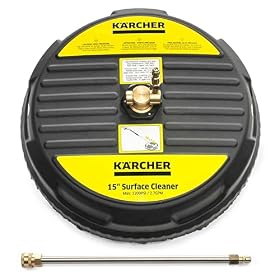
A surface cleaner is often a better upgrade for flat concrete than simply moving from 2800 PSI to 3400 PSI. It can help distribute the spray more evenly and reduce wand marks.
Water supply and hose setup
Both machines need an adequate water supply. A restricted faucet, kinked garden hose, clogged inlet screen, or undersized hose can reduce performance and cause pump problems.
Before operating either washer:
Confirm the required water flow in the owner's manual.
Use a suitable, fully opened water source.
Remove kinks and sharp bends from the supply hose.
Clean the inlet filter if the manufacturer permits it.
Connect the water and squeeze the trigger until air is purged before starting the engine.
Do not run the pump without water.
A 3400 PSI machine with inadequate water flow may surge, lose pressure, or operate poorly. Resolve the water-supply issue before assuming the pump or engine is defective.
Portability, fuel, and maintenance
Gas pressure washers are useful when electrical power is unavailable or when you need extended outdoor operation, but both sizes require fuel, engine maintenance, winterization, and safe ventilation. The larger-output machine may also be heavier or less convenient to move, depending on its design.
Consider the complete setup rather than PSI alone:
Can you move it across the property?
Is the hose long enough for the work area?
Does the pump require specific maintenance or storage procedures?
Is the engine easy to start and service?
Do you have a dry, ventilated storage location?
Will you use the washer often enough to justify gas-engine maintenance?
Never operate a gas pressure washer indoors, in a garage, or near doors and windows because of carbon monoxide risk. Follow the manual for fuel handling, hot surfaces, grounding-related precautions, and storage.
Which should you buy?
Buy the 2800 PSI model when your priority is versatile household cleaning, easier control, and regular work on vehicles, siding, wood, furniture, and moderate-size hard surfaces.
Buy the 3400 PSI model when your priority is faster cleaning of large, durable surfaces or frequent removal of heavy buildup from equipment, trailers, concrete, or masonry. Make sure its GPM and other specifications support the higher-pressure claim.
If you are between the two, compare the actual rated PSI and GPM, then consider whether a surface cleaner, longer hose, or better detergent setup would solve your problem more effectively than extra pressure. More PSI is useful only when the surface can safely handle it and the job benefits from the additional output.
FAQ
Is 3400 PSI better than 2800 PSI for a pressure washer?
Not in every situation. A 3400 PSI washer can clean durable surfaces and heavy buildup faster, but a 2800 PSI model is often easier to control for vehicles, siding, decks, and routine home use. Compare GPM and rated PSI rather than maximum PSI alone.
Can I use a 3400 PSI washer to clean my car?
You can, but use a wide spray pattern, maintain a safe working distance, keep the wand moving, and avoid seals, trim, electrical connectors, and damaged paint. A 2800 PSI washer may provide more practical margin for vehicle cleaning.
What matters more, PSI or GPM?
Both matter. PSI is the force available at the spray tip, while GPM is the amount of water moving through the system and affects rinsing and area coverage. PSI multiplied by GPM provides a useful cleaning-unit comparison, but nozzle choice and technique also matter.
Is 2800 PSI enough to clean concrete?
It can be enough for many residential concrete-cleaning jobs, especially with suitable GPM, detergent, and a surface cleaner. A 3400 PSI washer may work faster on large or heavily soiled areas, but old, painted, cracked, or decorative concrete still requires conservative technique.
Can higher pressure damage wood or siding?
Yes. Excessive pressure, a narrow nozzle, or spraying too close can gouge wood, remove paint, damage siding, or force water behind panels. Start with a wide pattern at a greater distance and test a hidden area first.