Best pressure washer if you only wash a patio twice a year
If patio cleaning is your only pressure-washing job, a compact corded electric model is usually the sensible choice. It is easier to store and maintain than a gas washer while providing enough cleaning power for many concrete and paver patios—provided you use the right nozzle and technique.
Best pressure washer if you only wash a patio twice a year
If you clean a patio only twice a year, the best fit is usually a compact electric pressure washer, not a large gas model. Look for adjustable or moderate pressure, a usable detergent system, and hose and cord storage that will not make occasional setup unnecessarily frustrating. For many concrete patios, a washer in roughly the 1,500–2,000 PSI range with about 1.2–1.5 GPM is a practical starting point, but the correct setting depends on the patio material and its condition.
The goal is not maximum pressure. Excessive pressure can remove joint sand, damage mortar, strip paint, etch soft concrete, or force water under coatings.
The best type for occasional patio cleaning
Compact electric pressure washer
A corded electric washer is generally the most convenient option for a twice-yearly job because it:
Starts without fuel or engine preparation
Usually requires less maintenance during storage
Is lighter and easier to move around a patio
Produces less noise and exhaust than a gas model
Provides enough power for routine dirt, algae, and surface grime on many hard patios
For occasional use, avoid choosing solely by the highest advertised PSI. A washer with manageable pressure, a reasonably long hose, and simple storage may be more useful than a more powerful machine that is difficult to set up.
When a gas pressure washer makes sense
A gas washer is more appropriate if you regularly clean very large areas, need to work far from electrical outlets, or also plan to wash heavy equipment, trailers, or other demanding surfaces. For one patio twice a year, its fuel handling, engine maintenance, noise, and storage requirements are usually difficult to justify.
PSI and GPM: what matters for a patio
PSI, or pounds per square inch, describes pressure. GPM, or gallons per minute, describes water flow. Cleaning performance depends on both, along with the nozzle, distance, dwell time, and detergent.
For a typical concrete or paver patio, a moderate electric washer can be sufficient. A higher PSI rating is not automatically better because the wrong pressure can damage the surface. Flow rate also affects how quickly loosened dirt is rinsed away, so do not compare machines using PSI alone.
Use the lowest setting that removes the dirt effectively:
Start with a wider spray pattern and greater distance from the surface.
Test a hidden or inconspicuous area first.
Move the nozzle continuously rather than holding it in one spot.
Keep the spray wand at a consistent distance and angle.
Reduce pressure around joints, edges, cracks, painted areas, and coatings.
Always follow the patio material manufacturer's cleaning guidance when available.
Product prices and availability are accurate as of the date/time indicated and are subject to change. Any price and availability information displayed on Amazon.com at the time of purchase will apply to the purchase of this product.
Match the washer to the patio surface
Concrete
Sound, unpainted concrete generally tolerates more pressure than delicate masonry, but old or weak concrete can still be etched or damaged. Watch for exposed aggregate, flaking, cracks, and areas where the surface is already deteriorating.
Concrete pavers
Pavers can usually be cleaned with a moderate setting, but strong spray can remove sand from the joints. Keep the nozzle from pointing directly into the joints, and consider using a surface cleaner designed for pressure washers if the patio is large and relatively level.
You may need to replace joint sand after cleaning. If the joints contain polymeric sand, follow the sand manufacturer's instructions for rinsing and curing.
Brick, natural stone, and older masonry
These materials vary significantly in hardness and condition. Soft brick, porous stone, weak mortar, and weathered surfaces can be damaged by concentrated spray. Use a wider nozzle, lower pressure, and a greater distance than you would on sound concrete. Test first.
Painted, sealed, or coated patios
Pressure washing can lift paint, remove sealer, or drive water beneath a coating. Check the coating manufacturer's recommendations before cleaning. A low-pressure wash with an appropriate detergent may be safer than trying to remove dirt using a narrow, high-pressure stream.
Product prices and availability are accurate as of the date/time indicated and are subject to change. Any price and availability information displayed on Amazon.com at the time of purchase will apply to the purchase of this product.
Features worth paying for when use is infrequent
Adjustable pressure or useful nozzle choices
An adjustable spray wand or multiple interchangeable nozzles helps you use less pressure on vulnerable areas and more on sound concrete. A wide-angle nozzle is the safer starting point. Avoid using a narrow, aggressive nozzle on a patio unless the surface instructions specifically allow it and you understand the risk.
A detergent tank or detergent-compatible intake
Detergent can loosen organic grime before rinsing, reducing the temptation to use excessive pressure. Confirm that the washer supports the detergent you intend to use and follow its dilution instructions. Do not put bleach or unapproved chemicals through the pump; chemical compatibility varies by machine.
Hose length and storage
A longer high-pressure hose can reduce how often you move the machine, but it should remain flexible and rated for the washer's pressure. Compact storage is especially valuable when the machine will sit unused for months.
A surface cleaner connection
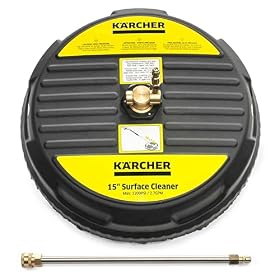
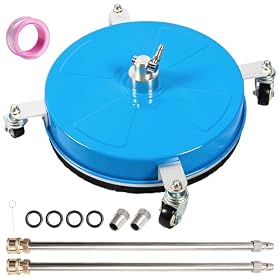
A pressure-washer surface cleaner can make broad, even passes over a flat patio and may reduce visible striping. It must be compatible with the washer's pressure and flow range. A surface cleaner is not essential for a small patio, but it can be a worthwhile accessory if you dislike wand cleaning or want more uniform results.
Electrical safety features and setup
Use a properly grounded outdoor outlet protected by a GFCI where required. Keep electrical connections away from standing water, inspect the cord before use, and follow the manufacturer's instructions for extension-cord limits. If the outlet, wiring, or GFCI repeatedly trips, stop using the washer and have the electrical issue evaluated rather than bypassing the protection.
A simple patio-cleaning process
Sweep first. Remove leaves, loose grit, and debris so the washer does not turn them into spray or sludge.
Protect nearby areas. Move furniture and cover delicate plants or objects as appropriate. Check local rules before using detergent near drains or waterways.
Apply detergent if needed. Allow it to dwell according to the product instructions, but do not let it dry on the surface.
Rinse with a wide spray pattern. Start at a low setting and test a small area.
Clean in consistent passes. Overlap passes slightly and keep the wand moving.
Rinse thoroughly. Remove loosened dirt and detergent from the patio, walls, furniture, and nearby plants.
Inspect the joints and surface. Look for removed sand, etching, coating damage, or areas that need a gentler second pass.
What not to buy for this use
A large gas pressure washer is usually unnecessary unless the washer will have other demanding jobs. A tiny low-flow unit may also be frustrating if it takes too long to rinse a patio or cannot maintain the performance required by a surface-cleaner attachment.
Be cautious with models selected only for an extreme PSI number. The machine still needs a suitable flow rate, reliable hose connections, a practical spray setup, and safe control of pressure at the surface.
Storage between cleanings
Because the washer may sit for several months, storage matters as much as cleaning power. After use, follow the manual's shutdown procedure, disconnect the water supply, relieve pressure, and drain the hose and pump as directed. Store the unit in a dry, protected area where freezing temperatures will not damage water-filled components.
For an electric model, coil the power cord without sharp bends and inspect it before the next use. Keep nozzles, adapters, and hose fittings together so a missing small part does not make the next cleaning session impractical.
Bottom line
For washing a patio twice a year, choose a compact corded electric pressure washer with moderate, controllable pressure, a practical hose, and detergent compatibility. A surface cleaner can be helpful on a larger flat patio, but it is optional. Prioritize control and storage convenience over the highest PSI rating, and use a gentle test pass before cleaning the entire surface.
FAQ
What PSI is best for cleaning a patio?
For many sound concrete patios, a moderate electric pressure washer in roughly the 1,500–2,000 PSI range can be suitable. Start lower or farther away and increase cleaning power only if the surface tolerates it. Brick, stone, coatings, old concrete, and patio joints may require substantially gentler treatment.
Is an electric pressure washer enough for a patio?
Usually, yes. A compact electric model can handle routine dirt, algae, and grime on many residential patios. A gas washer is more useful for large areas, frequent work, or jobs far from electrical outlets.
Can pressure washing damage patio pavers?
Yes. A concentrated spray can remove joint sand, chip edges, or damage weak pavers. Use a wide spray pattern, keep the wand moving, avoid spraying directly into joints, and test an inconspicuous area first.
Do I need a surface cleaner for a patio?
No. A spray wand can clean a small patio. A compatible surface cleaner is more useful for larger, level areas because it can make overlapping passes more uniform and may reduce visible striping.
Should I use detergent when pressure washing a patio?
Detergent can help loosen organic grime and reduce the need for high pressure. Use only a product compatible with the washer and patio surface, follow its dilution and dwell instructions, and prevent it from drying on the surface.