For most residential two-car driveways, an electric pressure washer is the simpler choice if you have a suitable outdoor outlet and moderate cleaning needs. Gas is worth considering when you need more sustained power, faster cleaning, or cannot rely on electricity near the driveway.
A two-car driveway usually does not require a gas pressure washer. An electric model is often the better fit for occasional residential cleaning because it is quieter, easier to start, and needs less maintenance. Choose gas when the driveway is heavily soiled, the work area is large or remote from an outlet, or you want stronger sustained performance with a compatible surface cleaner.
Electric versus gas: the quick decision
Choose an electric pressure washer if you:
Clean the driveway once or a few times per year
Have a suitable outdoor electrical outlet nearby
Prefer lower noise and minimal maintenance
Also want to wash vehicles, patio furniture, siding, or outdoor equipment
Are comfortable working within the limits of the power cord and hose
Need to work where household power is unavailable or inconvenient
Expect long, repeated cleaning sessions
Are prepared for fuel, oil, engine maintenance, exhaust, and louder operation
For ordinary concrete with light to moderate dirt, electric is usually sufficient. Gas provides more performance margin, but that extra power can also make surface damage more likely if the nozzle, distance, or pressure is wrong.
Power and cleaning speed
Pressure washer performance depends on more than PSI. PSI describes water pressure, while GPM describes water flow. Flow helps carry loosened dirt away and can affect how quickly a surface is rinsed. Compare both figures rather than choosing based on PSI alone.
Gas machines commonly offer more sustained output than compact electric models, but electric machines vary widely. A small electric unit may be adequate for light driveway cleaning, while a more capable electric model may handle routine concrete washing with a suitable surface cleaner.
A two-car driveway is not automatically a gas-only job. The condition of the concrete matters more than the number of parking spaces:
Light dust and surface dirt: electric is generally adequate.
Mud, tire marks, and moderate organic growth: a stronger electric model may work, though cleaning will take patience.
Heavy algae, ground-in grime, or years of buildup: gas may reduce cleaning time, especially when paired with an appropriately rated surface cleaner.
Oil stains: neither pressure washer type is a complete solution by itself. Use a concrete-safe degreaser as directed, and follow local rules for wastewater and runoff.
Do not assume more pressure always means better results. Excessive pressure can etch concrete, remove loose material, damage expansion joints, or leave visible cleaning lines.
Product prices and availability are accurate as of the date/time indicated and are subject to change. Any price and availability information displayed on Amazon.com at the time of purchase will apply to the purchase of this product.
Electric pressure washers: strengths and limitations
Advantages
Electric models are usually easier to start: connect the water supply, plug into an appropriate outlet, and follow the manufacturer's startup procedure. They also avoid gasoline storage, engine oil changes, fuel-system issues, and exhaust fumes.
Their lower noise level is useful in residential neighborhoods, and many are easier to store. An electric unit can also be convenient when the same machine will be used for cars, outdoor furniture, windows, and light household cleanup.
Limitations
The cord restricts where you can work. Use an outdoor-rated extension cord only when the manufacturer permits it and specifies the required type, wire size, and maximum length. Keep connections dry, use a properly protected outlet, and do not operate electrical equipment in standing water. A ground-fault circuit interrupter, or GFCI, is commonly important for outdoor power use; follow local electrical requirements and the product instructions.
Electric motors may also have less performance headroom than gas machines, particularly when water flow, extension-cord setup, or the home's electrical supply limits operation. Do not use an extension cord as a substitute for an inadequate electrical setup.
Product prices and availability are accurate as of the date/time indicated and are subject to change. Any price and availability information displayed on Amazon.com at the time of purchase will apply to the purchase of this product.
Gas pressure washers: strengths and limitations
Advantages
Gas machines can provide strong, sustained cleaning performance and are not tied to an electrical outlet. That can be valuable for a long driveway, a property with difficult access, or repeated cleaning jobs.
They may also reduce the time needed to remove stubborn buildup when the machine's flow rate and accessory are matched correctly. A gas unit is more likely to make sense if you regularly clean driveways, large patios, retaining walls, or other broad concrete areas.
Limitations
Gas pressure washers are louder, heavier, and more involved to operate. They require fuel and engine oil, and they must be run outdoors in a well-ventilated area. Never operate a gasoline pressure washer in a garage, shed, enclosed porch, or other enclosed space because carbon monoxide can build up quickly.
Follow the manufacturer's instructions for fuel, oil, storage, starting, transport, and winterization. Keep fuel away from ignition sources, let the engine cool before refueling, and stop using the machine if you notice a fuel leak or other unsafe condition.
Product prices and availability are accurate as of the date/time indicated and are subject to change. Any price and availability information displayed on Amazon.com at the time of purchase will apply to the purchase of this product.
The surface cleaner may matter more than the power source
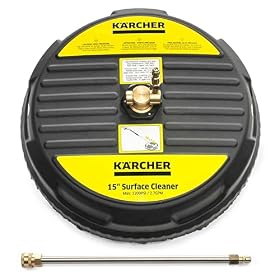
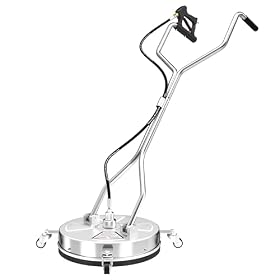
For a two-car driveway, a compatible pressure-washer surface cleaner can make a larger practical difference than simply moving from electric to gas. Its rotating spray arms cover a wider area and help produce more even results than waving a narrow nozzle back and forth.
Check the surface cleaner's required pressure and flow range against the pressure washer's actual specifications. A cleaner that is too large for the machine may rotate poorly or leave stripes. A cleaner that is too small may work, but it can slow the job.
Use a surface cleaner designed for the driveway material. Concrete, pavers, and asphalt have different risks. Avoid aggressive settings on weak, cracked, painted, or deteriorating surfaces.
Product prices and availability are accurate as of the date/time indicated and are subject to change. Any price and availability information displayed on Amazon.com at the time of purchase will apply to the purchase of this product.
Driveway cleaning technique for either type
Sweep first. Remove loose grit, leaves, and stones so the spray does not move debris across the surface.
Check the concrete. Look for cracks, loose aggregate, damaged joints, peeling coatings, and areas that have already started to spall.
Test a small inconspicuous area. Begin with a wider spray pattern, greater distance, and lower effective pressure than you think you need.
Apply detergent only if appropriate. Use a product labeled for pressure washers and the driveway material. Allow the recommended dwell time without letting detergent dry.
Clean in consistent passes. Keep the nozzle or surface cleaner moving at a steady pace and maintain a consistent distance.
Rinse thoroughly. Direct dirty water away from doors, garages, landscaping, storm drains, and neighboring property where practical.
Inspect after drying. Some stains become less visible only after the concrete dries, and aggressive repeat cleaning can cause damage.
A narrow zero-degree nozzle is usually a poor starting point for a driveway. It concentrates force in a small area and can mark concrete. Use the manufacturer's recommended nozzle and technique instead.
Which option is better for common driveway conditions?
Lightly dirty concrete
An electric pressure washer is normally the sensible choice. A surface cleaner and good pre-treatment may improve results more than additional PSI.
Shaded concrete with algae or mildew
Either type can work, but treatment and dwell time matter. Use a compatible cleaner carefully, protect nearby plants, and avoid forcing contaminated runoff into storm drains.
Oil and automotive-fluid stains
Start with an appropriate degreaser or absorbent treatment. Pressure alone may spread the stain or drive contamination deeper. Follow the cleaner label and local disposal guidance.
Cracked, old, or soft concrete
Use the least aggressive approach that can do the job. A gas machine's additional output may be unnecessary and increases the chance of damage. Consider professional advice for severely deteriorated concrete.
A driveway far from an outlet
Gas is more convenient if safe outdoor electrical power is unavailable. A long extension cord can create voltage-drop, overheating, and trip hazards when it is not approved for the machine.
Setup and ownership differences
Consideration
Electric
Gas
Starting
Usually push-button or simple switch operation
Engine-start procedure varies by model
Noise
Generally quieter
Generally louder
Maintenance
Basic pump, hose, filter, and connection care
Adds fuel, oil, engine, and storage maintenance
Runtime
Limited by electrical access and machine duty requirements
Limited by fuel and operating conditions
Portability
Often lighter, but tied to cord access
More mobile, but usually heavier
Exhaust
No engine exhaust at the machine
Must be operated outdoors with ventilation
Best fit
Routine residential cleaning
Larger, tougher, or remote jobs
Specific pressure, flow, electrical, fuel, and duty-cycle requirements vary by model. Read the manual before connecting a hose, extension cord, surface cleaner, detergent system, or accessory.
Bottom line
For cleaning a typical two-car driveway, start with an electric pressure washer if you have safe outdoor power and the concrete has light to moderate buildup. Add a properly matched surface cleaner for more even coverage. Move to gas when the driveway is heavily soiled, the cleaning area is extensive, or electrical access would make the job impractical.
Whichever type you choose, prioritize suitable water flow, accessory compatibility, safe electrical or fuel handling, and a conservative cleaning technique. More pressure is not a substitute for the right detergent, dwell time, and controlled passes.
FAQ
Is an electric pressure washer strong enough for a two-car driveway?
Often, yes. An electric model can handle light to moderate dirt on many residential concrete driveways, especially with a compatible surface cleaner and appropriate detergent. Heavy buildup, large areas, or difficult electrical access may justify gas.
How much PSI do I need to clean a concrete driveway?
The correct pressure varies with the machine, surface condition, nozzle, distance, and accessory. Avoid choosing by PSI alone; compare flow rate and use the least aggressive setting that removes the dirt. Test a small area first and follow the surface cleaner and pressure washer instructions.
Is gas better than electric for removing oil stains?
Not necessarily. Oil stains usually need a compatible degreaser or absorbent treatment before pressure washing. More pressure can spread or drive the contamination deeper, so gas is not automatically the better solution.
Can I use an extension cord with an electric pressure washer?
Only if the manufacturer permits it and specifies the required cord type, wire size, and maximum length. Use a properly protected outdoor outlet, keep connections dry, and avoid operating in standing water. A qualified electrician should address inadequate or unsafe outdoor power.
Should I buy a surface cleaner for a two-car driveway?
A surface cleaner is often useful because it covers a wider area and can produce more even results than a narrow spray nozzle. Confirm that its pressure and flow requirements match the pressure washer before buying.