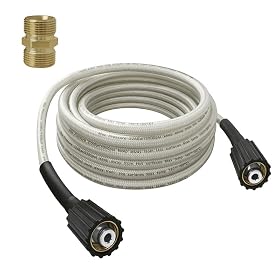
If no water comes from your pressure washer gun, start with the water supply and inlet filter, then check the hose, trigger, nozzle, and pump. These steps help identify a simple blockage before you consider replacement parts or service.
No water coming from the pressure washer gun usually means the machine is not receiving enough water, the inlet screen or spray nozzle is blocked, or air is trapped in the pump. Turn the pressure washer off before inspecting fittings or removing a nozzle, and work through the checks below in order.
1. Check the water supply first
Make sure the outdoor faucet is fully open and that the supply hose is connected to the pressure washer’s water inlet—not the high-pressure outlet.
Check that:
The garden hose is not kinked, crushed, or tightly coiled.
The hose is long enough to reach without pulling on the machine.
Water flows from the hose at a steady rate before connecting it.
Any faucet splitter, timer, shutoff valve, or hose reel is fully open.
The hose connector has a washer and is not blocked by debris.
Do not run a typical pressure washer without an adequate water supply. A pump can be damaged if it operates dry or is repeatedly starved for water.
2. Purge air from the pump and hose
Air in the inlet line can prevent water from reaching the gun, especially after the machine has been stored, the hose was disconnected, or the water supply was interrupted.
Turn the pressure washer off.
Connect the garden hose and open the faucet fully.
If the gun has a spray wand, remove the wand or nozzle if the manufacturer allows it.
Hold the gun trigger open for about 30 seconds, or until water flows steadily without spurting.
Release the trigger and reconnect the wand or nozzle.
Turn the pressure washer on and try the trigger again.
Follow the manufacturer’s instructions if they specify a different priming procedure.
Product prices and availability are accurate as of the date/time indicated and are subject to change. Any price and availability information displayed on Amazon.com at the time of purchase will apply to the purchase of this product.
3. Clean the water-inlet filter
Many pressure washers have a small mesh screen or inlet filter where the garden hose connects. Sediment, rust flakes, and bits of hose can restrict flow enough to stop the pump from supplying the gun.
With the machine off and the faucet closed, disconnect the garden hose and inspect the inlet. If the filter is removable, rinse it with clean water and gently brush away debris. Do not poke or enlarge the mesh, because the filter protects the pump.
Replace a damaged, missing, or permanently clogged inlet filter with the correct part for your pressure washer. Avoid operating the machine without this screen unless the manufacturer specifically says it is not required.
Product prices and availability are accurate as of the date/time indicated and are subject to change. Any price and availability information displayed on Amazon.com at the time of purchase will apply to the purchase of this product.
4. Inspect the spray nozzle and wand
A blocked nozzle can make it seem as if no water is coming from the gun. Mineral scale and dirt are common causes, particularly when the washer has been used with hard water.
Turn the machine off, shut off the water, and squeeze the trigger to release pressure. Remove the nozzle and inspect its opening. Clean it only with the tool and method recommended in the owner’s manual. A nozzle that is damaged, corroded, or still blocked after cleaning should be replaced with the correct spray angle and orifice size.
Never look directly into a pressurized nozzle, and do not try to clear it while the pressure washer is running.
Product prices and availability are accurate as of the date/time indicated and are subject to change. Any price and availability information displayed on Amazon.com at the time of purchase will apply to the purchase of this product.
5. Check the gun, trigger, and hose connections
Inspect the spray gun for a stuck trigger, visible cracks, or a damaged quick-connect socket. Make sure the wand is fully seated and locked into the gun. A partially connected fitting can prevent flow or leak heavily.
Also inspect both ends of the high-pressure hose. Tighten connections by hand as directed by the manufacturer, but do not force plastic fittings or use tools where they are not intended. Look for:
Cuts, bulges, kinks, or crushed sections in the hose
Water leaking at the gun or pump connection
Damaged O-rings or missing connector washers
A quick-connect collar that does not lock into place
A high-pressure hose with a damaged outer jacket or fitting should be replaced rather than patched. Do not use ordinary garden hose as the high-pressure hose.
Product prices and availability are accurate as of the date/time indicated and are subject to change. Any price and availability information displayed on Amazon.com at the time of purchase will apply to the purchase of this product.
6. Confirm the setup and operating controls
Check the owner’s manual for the correct startup sequence. Some models require the water to be turned on and the gun trigger to be opened before the motor starts. Others may have separate controls for detergent, bypass, or a spray wand.
Confirm that:
The power switch is in the correct position.
The gun is connected to the high-pressure hose.
The wand is connected to the gun.
The nozzle is fully inserted and locked.
A detergent selector is not set in a way that restricts water flow.
The machine is not connected to a hot-water supply unless it is rated for hot water.
If the washer has a thermal or overload reset, let it cool and follow the reset instructions. Do not bypass a safety switch.
7. Listen for pump behavior
After the water supply, inlet filter, air lock, nozzle, and connections have been checked, briefly observe what happens when the machine is switched on.
The motor runs but no water exits: The pump may still be airlocked, the inlet may be restricted, or the gun/nozzle path may be blocked.
The motor runs and water leaks from the pump area: A seal, fitting, valve, or pump component may be damaged.
The motor hums, trips a breaker, or stops immediately: Turn it off and disconnect power. This can indicate an electrical fault, seized pump, low-voltage condition, or extension-cord problem.
The motor does not run at all: Check the outlet, GFCI, plug, power switch, and reset procedure. Stop if the cord or plug is damaged.
Electrical covers, switches, capacitors, and pump assemblies should be inspected or repaired by a qualified professional unless the manufacturer specifically provides a safe user procedure. Always unplug an electric model before inspecting it.
When to replace a part or the pressure washer
A replacement nozzle, inlet filter, O-ring, gun, or high-pressure hose is reasonable when that component is visibly damaged or remains blocked after cleaning. Use a part that matches the pressure washer’s connection type and manufacturer requirements; an apparently similar fitting may not be rated for the machine.
If the pump leaks, the unit runs without producing water after all inlet checks, or the motor repeatedly trips protection, professional service is usually more sensible than continued troubleshooting. Replacement may be practical when the pump or motor is damaged and the repair cost, parts availability, or age of the machine makes service uneconomical.
Quick restart checklist
Before trying the washer again, confirm that:
The faucet is fully open.
The garden hose supplies steady water and has no kinks.
The inlet screen is clean and installed.
Air has been purged through the gun.
The gun, wand, hose, and nozzle are locked together.
The nozzle is clean and undamaged.
There are no major leaks.
The machine is connected to the correct power source and has not tripped a safety device.
If water still does not reach the gun after these checks, stop operating the pressure washer and consult the manual or a qualified repair technician.
FAQ
Why does my pressure washer have water at the inlet but none at the gun?
The inlet screen, pump inlet, gun, wand, or nozzle may be blocked, or air may be trapped in the pump. Purge air with the machine off and the gun trigger open, then inspect the inlet filter and nozzle for debris.
Can I run a pressure washer without a nozzle?
Only if the manufacturer’s instructions allow it for troubleshooting or priming. Never operate the machine without an adequate water supply, and keep the gun pointed in a safe direction because water may exit unexpectedly.
Why does my pressure washer motor run but produce no water?
Common causes include a closed or restricted faucet, kinked garden hose, clogged inlet filter, airlock, blocked nozzle, incorrectly connected hose, or a pump fault. Check these in that order before investigating the motor or electrical system.
Should I replace the pressure washer hose if it leaks?
Replace a high-pressure hose with cuts, bulges, damaged fittings, or a persistent leak. Do not patch it or substitute an ordinary garden hose, because the replacement must be rated and fitted for pressure-washer use.