If your pressure washer motor hums but does not start, unplug it first and check for a blocked inlet, trapped pump pressure, incorrect setup, low voltage, or a failed motor capacitor. Here is a safe order for diagnosing the problem.
A pressure washer motor that hums but will not start is usually struggling to turn the pump, receiving inadequate power, or dealing with a failed start component such as a capacitor. Unplug the machine before inspecting it, and do not keep holding the trigger or repeatedly cycling the switch while it hums. Repeated attempts can overheat the motor.
The checks below apply mainly to electric pressure washers. Gas-powered machines do not normally produce this symptom in the same way; if a gas washer will not start, inspect its fuel, oil-level safety system, spark plug, and engine controls according to the manufacturer’s instructions.
First, make the pressure washer safe
Turn the power switch off.
Unplug the washer from the outlet. If it is connected through a GFCI, reset it only after the washer is unplugged.
Shut off the water supply.
Squeeze the spray-gun trigger to release trapped pressure.
Let the motor cool for at least several minutes if it has been humming or repeatedly tripping protection.
Never remove an electrical cover or touch a capacitor unless you are qualified to service electrical equipment. Capacitors can retain a charge even when the washer is unplugged.
Check the water supply and inlet screen
A restricted water supply can make the pump work improperly and may contribute to a motor that hums rather than starts.
Confirm the faucet is fully open.
Make sure the garden hose is not kinked, crushed, or unusually long and narrow.
Remove the hose from the pressure washer inlet and inspect the small inlet screen or filter.
Rinse dirt and mineral deposits from the screen. Replace a damaged screen rather than running the washer without its required filter.
With the pressure washer still switched off, turn on the water and verify that water flows steadily from the inlet before reconnecting the hose.
Do not run most pressure washers without an adequate water supply. A pump can be damaged quickly if it runs dry.
Product prices and availability are accurate as of the date/time indicated and are subject to change. Any price and availability information displayed on Amazon.com at the time of purchase will apply to the purchase of this product.
Look for a blocked hose, wand, or nozzle
A clog downstream can leave pressure trapped in the pump or make the machine difficult to restart.
Inspect the high-pressure hose for sharp bends, crushed sections, or visible damage. Check the spray wand and nozzle opening for packed dirt. If the nozzle is removable, clean it using the method specified in the owner’s manual; do not enlarge the opening with a hard wire.
Try starting the washer with the spray gun connected and the trigger released only if the manufacturer’s instructions permit that setup. If the motor starts only after the trigger is squeezed, trapped pressure or a sticking unloader valve may be involved. Do not operate the unit in a configuration that the manual prohibits.
Product prices and availability are accurate as of the date/time indicated and are subject to change. Any price and availability information displayed on Amazon.com at the time of purchase will apply to the purchase of this product.
Check for leaks and loose connections
A damaged O-ring or loose connection can cause pressure loss, but it can also let water reach electrical components or cause the pump to behave abnormally.
Inspect these points with the washer unplugged and depressurized:
Any visible cracks, wet electrical connectors, or water inside the motor compartment
Replace a missing or damaged O-ring with the correct size and material. If water has entered the motor, switch, plug, or wiring, do not reconnect power. Have the unit inspected or replaced as appropriate.
Product prices and availability are accurate as of the date/time indicated and are subject to change. Any price and availability information displayed on Amazon.com at the time of purchase will apply to the purchase of this product.
Confirm the washer is set up correctly
Incorrect setup can create a no-start condition that sounds like a motor fault.
Use the correct power source and outlet for the washer’s nameplate.
Avoid a lightweight or excessively long extension cord. Voltage drop can cause an electric motor to hum without developing enough starting torque.
If an extension cord is allowed, use one with the gauge and maximum length specified by the manufacturer.
Do not share the circuit with a heavy-load appliance.
Check that the power switch is fully in the ON position.
Reset a tripped GFCI or circuit breaker once, but do not repeatedly reset it if it trips again.
If the washer has a thermal-reset button, allow it to cool before pressing the reset.
Test the outlet with another appropriate device or have the circuit checked by a qualified professional. Stop if the plug, cord, outlet, or GFCI is hot, discolored, cracked, or smells burned.
Product prices and availability are accurate as of the date/time indicated and are subject to change. Any price and availability information displayed on Amazon.com at the time of purchase will apply to the purchase of this product.
Release trapped pump pressure
Pressure trapped in the pump can make restarting difficult, especially if the washer was switched off while the gun trigger was released.
With the washer unplugged, water connected, and the faucet open, squeeze the spray-gun trigger for several seconds. This should relieve pressure through the gun. Then release the trigger, switch the washer on, and follow the normal starting procedure from the manual.
If the motor still only hums, disconnect power again. A stuck unloader valve, seized pump, or internal mechanical obstruction may be preventing the motor from turning. These parts are not always accessible or serviceable by the owner.
Consider a full detergent tank or incorrect accessory
A detergent tank normally will not make the motor hum by itself, but an incorrectly fitted attachment or a blocked downstream accessory can cause abnormal pressure. Remove nonessential accessories and reinstall only the standard hose, gun, and nozzle specified for the washer.
Do not use a nozzle with a smaller orifice than the machine is designed for. A mismatched nozzle can raise operating pressure and place extra load on the pump and motor. A surface cleaner or other accessory should also match the pressure washer’s rated flow and pressure.
When the motor or capacitor is the likely problem
If the water path is clear, the washer has the correct power supply, trapped pressure has been released, and the motor still hums, likely causes include:
Failed or weakened motor-start capacitor
Seized or partially seized pump
Worn motor bearings
Jammed pump components
Faulty switch, thermal protector, wiring, or control module
Low voltage at the motor under load
A humming motor that becomes hot quickly is a strong reason to stop using the washer. Do not repeatedly flip the switch to “help” it start, and do not bypass a thermal protector, GFCI, or other safety device.
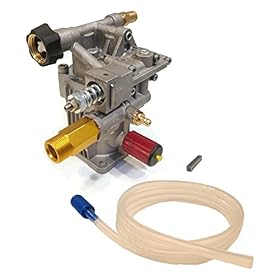
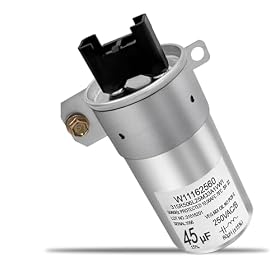
Some capacitors and pumps are replaceable, but compatibility depends on the exact pressure-washer model, motor design, pump type, voltage, frequency, and manufacturer’s parts list. A capacitor with the wrong electrical rating can damage the motor or create a shock and fire hazard. Have electrical diagnosis and capacitor replacement handled by a qualified technician unless the manufacturer specifically provides a safe, owner-serviceable procedure.
Repair or replace the pressure washer?
A repair is usually reasonable when the washer is otherwise in good condition and the fault is clearly limited to a compatible inlet filter, hose, switch, capacitor, or pump component. Use manufacturer-approved parts and follow the service instructions.
Replacement is often the practical choice when the pump and motor are both worn, the housing or wiring has water damage, replacement parts are unavailable, or repair labor approaches the cost of a comparable new unit. If the washer trips the breaker, smells burned, sparks, or has a damaged power cord, discontinue use and seek professional advice rather than continuing to troubleshoot it.
FAQ
Why does my electric pressure washer only hum?
The motor may not be receiving enough starting voltage, the pump may be jammed, pressure may be trapped in the system, or the start capacitor may have failed. First check the water supply, inlet screen, hose, nozzle, outlet, extension cord, and pressure release procedure. Unplug the washer before inspecting it.
Can a clogged nozzle make a pressure washer motor hum?
A clogged nozzle can create abnormal pressure and make restarting difficult, although a persistent hum often points to a pump, power, or motor-start problem. Clean or replace the nozzle according to the manufacturer’s instructions and do not use a smaller-than-specified nozzle.
Should I keep trying to start a humming pressure washer?
No. Repeated attempts can overheat the motor and worsen a capacitor or pump problem. Switch it off, unplug it, release water pressure, let it cool, and check the basic water and power conditions first.
How do I know if the pressure washer capacitor is bad?
A washer that hums, fails to start, trips its overload, or starts only intermittently may have a weak capacitor, but these symptoms can also come from a seized pump or low voltage. Capacitor testing and replacement involve electrical hazards and should follow the manufacturer’s procedure or be performed by a qualified technician.
Is it worth replacing a pressure washer pump?
Pump replacement can make sense when the motor, frame, hoses, and electrical system are sound and a correct replacement pump is available. If the machine has multiple worn parts, water-damaged wiring, or a severely overheated motor, replacing the complete pressure washer may be more practical.