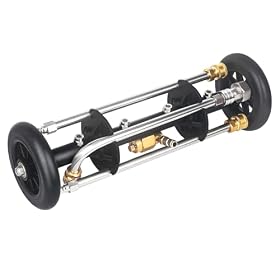
A short wand improves control in tight spaces, while an undercarriage attachment directs spray beneath vehicles and equipment. Choose based on reach, connection type, pressure rating, spray pattern, and the surfaces you need to clean.
A short wand and an undercarriage attachment solve different pressure-washing problems. A short wand makes it easier to control the spray in confined areas, while an undercarriage attachment is designed to wash beneath cars, trucks, trailers, lawn equipment, and other low-clearance surfaces without forcing a standard wand into an awkward position.
Before buying either attachment, verify the pressure washer’s connection type, maximum pressure, flow requirements, and the attachment’s compatibility with your machine. Using an accessory that does not match the washer can cause leaks, poor performance, or unsafe spray behavior.
Short wand vs. undercarriage attachment
Short wand
A short wand replaces or supplements a full-length pressure-washer lance. It is useful when a longer wand is difficult to maneuver around:
Vehicle wheels and wheel wells
Patio furniture
Grills and outdoor equipment
Deck railings and stairs
Tight areas near walls, fences, or landscaping
The main advantage is control. A shorter tool reduces leverage and makes it easier to keep the nozzle pointed where intended. The tradeoff is reduced reach, so you may need to bend, kneel, or work closer to the surface.
A short wand is usually the more versatile choice if you want one accessory for general detail cleaning. Look for a model with a connection that matches your pressure washer and a pressure rating at least as high as the washer’s maximum working pressure.
Undercarriage attachment
An undercarriage attachment typically uses one or more spray nozzles mounted on a low-profile bar, arm, or wheeled frame. It directs water upward to clean mud, salt, sand, and road debris from underneath vehicles and equipment.
This design can be more comfortable and consistent than trying to angle a standard wand beneath a vehicle. Some attachments are intended to be pushed under a car, while others are compact spray bars that connect to a wand or trigger handle.
An undercarriage attachment is the better match when your main job is cleaning:
Passenger vehicles and trucks
Trailers and recreational vehicles
Lawn tractors and other outdoor equipment
Vehicle frames, axles, and suspension areas
Muddy or salt-covered undersides
It is not a substitute for a surface cleaner. A surface cleaner is designed to spray downward across flat floors, while an undercarriage tool sprays upward into a confined area.
What to check before buying
Connection type
Pressure-washer accessories commonly use different quick-connect, threaded, bayonet, or proprietary connections. A wand or undercarriage tool may not attach directly even if its pressure rating appears suitable.
Check the pressure washer manual, the existing wand, and the accessory specifications. Do not assume that a common-looking fitting is interchangeable. An adapter can solve some connection mismatches, but it also adds another potential leak point and must be rated for pressure-washer use.
Pressure and flow requirements
Match the accessory to both the washer’s maximum PSI and its gallons-per-minute flow rate. PSI describes pressure; GPM describes water volume. Two pressure washers with similar PSI ratings may behave differently if their flow rates are different.
An attachment rated below the washer’s maximum pressure should not be used. If an accessory lists a minimum flow requirement, a lower-flow washer may produce a weak or uneven spray pattern.
For vehicle cleaning, more pressure is not automatically better. Excessive pressure or a concentrated nozzle can damage paint, loosen trim, force water past seals, or remove decals. Follow the accessory and vehicle manufacturer’s guidance, start at a greater distance, and use the least aggressive setting that removes the dirt.
Spray pattern and nozzle design
For a short wand, consider whether it accepts interchangeable nozzles or has a fixed spray tip. Interchangeable nozzles provide more flexibility, but they also require careful selection. A narrow spray pattern concentrates force; a wider pattern is generally easier to control on painted or delicate surfaces.
For an undercarriage tool, examine the nozzle layout and spray direction. Upward-facing jets should provide coverage across the area you want to clean without forcing you to place the tool against the vehicle. A guarded or low-profile design can help reduce accidental contact with components underneath.
Length, height, and maneuverability
A short wand should be short enough to improve control but long enough to keep your hands away from spray and runoff. An undercarriage attachment should fit beneath the vehicle or equipment without requiring you to lift it into place.
A wheeled undercarriage cleaner may be easier to guide across a large vehicle, while a compact bar can be better for tight spaces and occasional use. Check the tool’s overall height and width, not just the hose or wand connection.
Materials and corrosion resistance
Pressure-washer accessories are exposed to water, detergent, dirt, and sometimes road salt. Look for construction appropriate to the environment, with fittings and fasteners that are protected against corrosion. After use, rinse away salt and grit, drain the attachment, and store it where it can dry.
The material alone does not determine durability. The connection, swivel, nozzle mounts, wheels, and trigger or valve assembly may be the parts that receive the most wear.
Product prices and availability are accurate as of the date/time indicated and are subject to change. Any price and availability information displayed on Amazon.com at the time of purchase will apply to the purchase of this product.
Which attachment should you choose?
Choose a short wand if you want better control for general close-range cleaning and detail work. It is usually the more flexible option for wheels, outdoor furniture, steps, and equipment.
Choose an undercarriage attachment if cleaning beneath vehicles or machinery is the main reason for the purchase. It can reduce awkward bending and keep the spray directed upward across a wider area.
Choose both if you regularly clean vehicles and also need a compact tool for tight spaces. They perform different jobs, and one does not fully replace the other.
Product prices and availability are accurate as of the date/time indicated and are subject to change. Any price and availability information displayed on Amazon.com at the time of purchase will apply to the purchase of this product.
Safe use around vehicles and equipment
Before spraying underneath a vehicle, make sure it is parked securely, the engine is off, and the parking brake is engaged. Never crawl under a vehicle supported only by a jack. Use properly rated stands or follow the equipment manufacturer’s safe-access procedure.
Keep high-pressure water away from electrical connectors, exposed bearings, engine air intakes, wheel hubs, and damaged seals unless the manufacturer specifically permits cleaning those areas. Avoid forcing water into door, trunk, hood, or bearing seals. Do not spray a hot exhaust or hot engine component with cold water.
Start with a wider spray pattern and a greater distance. Move the attachment steadily instead of holding the spray in one place. If you are cleaning painted body panels, test an inconspicuous area first and use a vehicle-safe detergent when needed.
Product prices and availability are accurate as of the date/time indicated and are subject to change. Any price and availability information displayed on Amazon.com at the time of purchase will apply to the purchase of this product.
Common fit and performance problems
The attachment will not connect
Turn off the pressure washer and release pressure from the trigger before inspecting the fitting. Confirm that the accessory uses the same connection standard as the washer or wand. Check for a damaged O-ring, dirt in the socket, or a fitting that is cross-threaded.
Do not force a connection. Replace damaged seals or use only an adapter specifically rated for the pressure and connection types involved.
The spray is weak or uneven
Inspect the nozzles for grit or mineral buildup. With the machine off and pressure released, clean them according to the accessory instructions. Also check whether the pressure washer supplies the minimum GPM listed for the attachment.
A partially blocked inlet screen, kinked hose, restricted garden-hose supply, or worn pressure-washer nozzle can also reduce performance.
Water leaks at the fitting
Stop using the attachment and release pressure. Check the O-ring and mating surfaces for cuts, flattening, dirt, or damage. A replacement seal may solve a small leak, but a cracked fitting, damaged quick-connect socket, or leaking swivel generally calls for replacement of that component or the attachment.
The tool is difficult to control
A short wand may be too short for the task or may be fitted with a nozzle that is too aggressive. Move farther away, use a wider spray pattern, and reduce the washer’s pressure if the machine allows it. For undercarriage work, a wheeled or longer-reach design may be more practical than a compact spray bar.
When a replacement is the sensible choice
Replace an attachment when its body is cracked, its fitting will not lock securely, its swivel leaks after seal replacement, or its spray bar is bent enough to change the spray direction. Do not continue using a tool that vibrates excessively or ejects a fitting under pressure.
If the accessory is compatible but consistently underperforms because the pressure washer cannot meet its flow requirement, replacing it with a lower-flow-compatible attachment is more reasonable than trying to modify the nozzles. Always follow the pressure washer and accessory manufacturer’s instructions for installation and use.
FAQ
Can an undercarriage attachment replace a short pressure-washer wand?
Not completely. An undercarriage attachment is specialized for upward cleaning beneath vehicles and equipment. A short wand is more useful for general close-range work such as wheels, steps, furniture, and tight spaces.
Will any pressure-washer undercarriage cleaner fit any pressure washer?
No. Check the connection type, maximum PSI, minimum and maximum GPM, and any brand-specific requirements before buying. An adapter may be needed, but it must be rated for pressure-washer use.
Can I use an undercarriage attachment on a car?
Yes, if the attachment is rated for the pressure washer and appropriate for vehicle cleaning. Use conservative pressure, keep the tool moving, and avoid sensitive components such as electrical connectors, exposed bearings, seals, and hot engine or exhaust parts.
Why is my pressure-washer attachment leaking?
Common causes include a damaged or dirty O-ring, cross-threaded fitting, incompatible connector, cracked housing, or worn swivel. Turn off the machine, release pressure, inspect the connection, and replace damaged seals or parts before use.