If spring mud is the reason you need a pressure washer, buying when the work is actually in front of you can be more practical than shopping in mid-winter. Here is how to choose the right pressure, flow rate, power source, and accessories without overbuying.
Buying after a muddy spring instead of mid-winter
If muddy spring conditions are what created the need for a pressure washer, buying after the weather turns wet can be more useful than purchasing in mid-winter. You can identify the surfaces that need cleaning, estimate how often you will use the machine, and choose accessories for real jobs instead of guessing months in advance.
The main decision is not the highest PSI number. Match the washer's pressure, water flow, power source, and included accessories to the work you expect to do.
Why buying after spring mud can make sense
Spring cleanup often reveals the actual jobs a pressure washer must handle:
Mud on vehicles, trailers, bikes, and lawn equipment
Dirt on siding, patios, walkways, and decks
Algae or grime on outdoor furniture and fencing
Muddy tire tracks on concrete or other hard surfaces
Debris around garage doors, porches, and entryways
Seeing those jobs first helps you avoid buying a machine that is too aggressive for delicate surfaces or too weak for large areas. It also gives you a better idea of whether you need a surface cleaner, a longer hose, a vehicle-safe nozzle, or a detergent system.
A mid-winter purchase can still be reasonable if you find a suitable washer, need it for indoor or commercial work, or want time to compare models before the busy season. But storage matters: freezing water left in the pump, hose, or spray gun can cause damage. Follow the manufacturer's winterizing instructions and do not assume a stored pressure washer is protected from freezing temperatures.
Match the pressure washer to the cleanup
Light household cleaning
For vehicles, outdoor furniture, small patios, and occasional spot cleaning, a compact electric pressure washer is often the simplest fit. It is usually easier to carry and store than a gas machine, but it depends on a nearby electrical outlet and water supply.
Use a lower-pressure setting or the manufacturer's recommended nozzle for painted surfaces, vehicle finishes, screens, and other materials that can be damaged by concentrated spray.
Larger patios, driveways, and frequent outdoor work
For broad hard-surface areas or repeated seasonal cleanup, water flow becomes just as important as PSI. A machine with more flow can move loosened mud and dirt faster, while a washer with high pressure but limited flow may take longer to rinse a large area.
Check the washer's published PSI and gallons-per-minute rating together. Do not compare pressure alone. Also confirm that your home's water supply can provide the required flow.
Heavy or professional-style work
Gas-powered machines may be appropriate when you need longer run times, higher output, or more mobility away from electrical outlets. They are louder, require fuel and engine maintenance, and must be operated outdoors because of carbon monoxide risk.
For ordinary spring cleanup, buying a gas washer solely because it has a larger PSI number can be unnecessary. Higher pressure also increases the risk of removing paint, damaging wood fibers, etching concrete, or forcing water behind siding.
Product prices and availability are accurate as of the date/time indicated and are subject to change. Any price and availability information displayed on Amazon.com at the time of purchase will apply to the purchase of this product.
Choose accessories for muddy spring jobs
The right attachment can matter as much as the washer itself.
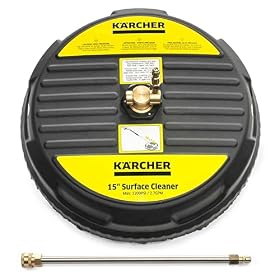
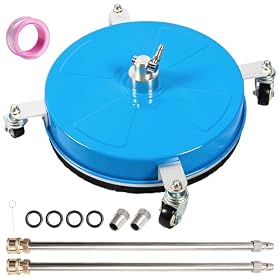
Surface cleaner
A pressure-washer surface cleaner can make patios, sidewalks, and driveways easier to clean with more consistent results than a narrow spray wand. Check the attachment's required pressure and flow range before buying it. A washer that cannot supply enough water may produce poor rotation or leave streaks.
Nozzles
Nozzle angle affects both cleaning speed and surface risk. A narrow spray concentrates force, while a wider spray covers more area with less impact. Use the nozzle and standoff distance recommended for the material, and start farther away than you think necessary.
Do not use a zero-degree or similarly concentrated nozzle casually on siding, wood, vehicles, painted surfaces, or masonry. Never aim the spray at people, pets, electrical equipment, windows, or fragile trim.
Longer hose
A longer pressure-washer hose can reduce the need to carry the machine around a house or driveway. Verify that the hose uses the correct fittings, pressure rating, and connection size for the washer. An ordinary garden hose is not automatically suitable as a high-pressure replacement.
Detergent system
Detergent can help loosen organic grime and road film, but use only a product approved for pressure-washer use and the surface being cleaned. Follow the machine's instructions for detergent dilution and application. Rinse thoroughly so cleaner does not dry on the surface or run into areas where it could cause damage.
Product prices and availability are accurate as of the date/time indicated and are subject to change. Any price and availability information displayed on Amazon.com at the time of purchase will apply to the purchase of this product.
Electric or gas: a practical spring decision
Choose an electric model when you value easier starting, lower routine maintenance, quieter operation, and simpler storage. Before buying, check the outlet location, extension-cord guidance, hose reach, and whether the washer's electrical requirements are compatible with the circuit.
Choose gas when you need greater mobility or longer outdoor operation and are prepared to handle fuel, oil, engine maintenance, noise, and ventilation requirements. Never operate a fuel-powered pressure washer in a garage, shed, enclosed porch, or other enclosed space.
For either type, look for accessible connections, a spray gun that is comfortable to hold, onboard storage that fits the included nozzles, and clear instructions for draining and storing the unit.
Product prices and availability are accurate as of the date/time indicated and are subject to change. Any price and availability information displayed on Amazon.com at the time of purchase will apply to the purchase of this product.
What to check before buying
Use the muddy areas around your property as a buying checklist:
List the surfaces: vehicle paint, concrete, pavers, wood, vinyl siding, fencing, or equipment.
Estimate the area: a small patio has different flow and hose needs than a long driveway or whole-house exterior.
Check water and power access: confirm your spigot, outlet, circuit, and hose path are practical.
Compare PSI and GPM together: avoid choosing based only on the largest pressure figure.
Confirm accessory compatibility: especially for surface cleaners, replacement hoses, foam or detergent systems, and spray tips.
Plan storage: protect the washer from freezing, rain, and unauthorized access, and drain it according to the manual.
Check replacement-part availability: filters, hoses, nozzles, fittings, and pump-related parts can determine whether the washer remains useful after a problem.
Avoiding spring-cleaning damage
Test the spray on an inconspicuous area first. Keep the wand moving rather than holding it in one spot, and maintain the distance specified by the manufacturer or surface-care instructions.
Be especially careful around window seals, exterior outlets, light fixtures, door thresholds, soffits, vents, vehicle bearings, and areas where water can enter behind siding. Do not pressure-wash asbestos-containing materials, damaged surfaces, or uncertain materials without professional guidance.
Disconnect power before inspecting electrical connections, and stop using the washer if the cord, plug, hose, spray gun, or housing is damaged. Electrical repairs and pump repairs should follow the manufacturer's instructions or be handled by a qualified professional.
When waiting is not the best strategy
Buying after spring mud is sensible when you want to match the machine to observed needs. It is less useful to wait if a current cleanup project is causing damage, if you need to prepare a property for sale or rental, or if you already know the required size and accessories.
The best purchase is usually the smallest pressure washer that can supply the needed flow and pressure for your surfaces, with compatible accessories and manageable storage. A more powerful machine is not automatically a better choice if it creates more risk or adds maintenance you will not perform.
If a pressure washer will be used only once or twice, renting may be more practical than buying. If you expect recurring spring cleanup, vehicle washing, patio maintenance, and equipment cleaning, buying can make sense—but budget for hose, nozzle, detergent, storage, and eventual replacement parts as well as the machine itself.
FAQ
Is spring a good time to buy a pressure washer?
Yes. Buying when muddy cleanup is actually needed makes it easier to match the washer to your surfaces, cleaning area, water supply, and accessory needs. Mid-winter can be better if you need more time to compare options or have suitable indoor work.
What matters more for spring mud, PSI or GPM?
Both matter. PSI describes cleaning force, while GPM describes water flow and rinsing capacity. Compare the two ratings together, especially for large patios, driveways, and surface-cleaner attachments.
Can I use a pressure washer on a car?
Usually, but use a vehicle-appropriate nozzle, safe distance, moderate settings, and a suitable detergent. Avoid concentrated spray around paint damage, seals, bearings, windows, and electrical components.
Should I buy an electric or gas pressure washer for spring cleanup?
Electric models are generally simpler for occasional residential work when an outlet is available. Gas models can offer greater mobility and longer outdoor operation but require fuel, maintenance, ventilation, and more careful storage.
How should I store a pressure washer through winter?
Drain and winterize it exactly as the manufacturer directs. Protect the pump, hose, spray gun, and fittings from freezing temperatures, because trapped water can cause damage.